A bit of wisdom I’ve found lately is stunningly simple- when you feel helpless or hopeless, make something.
Sitting by my computer as I write is a glass of my latest batch of mead. Making honey wine is the one hobby I have that I swore up and down that I would never ever ever try to make a buck off of. Baking and writing went that way, rapidly turned into work or the job, and to an extent I lost a lot of what made them enjoyable as hobbies in the first place. Meadmaking is my excuse to create for the sake of creation- putting something into the world that didn’t exist before that I can take joy in creating, finishing, and then sharing.
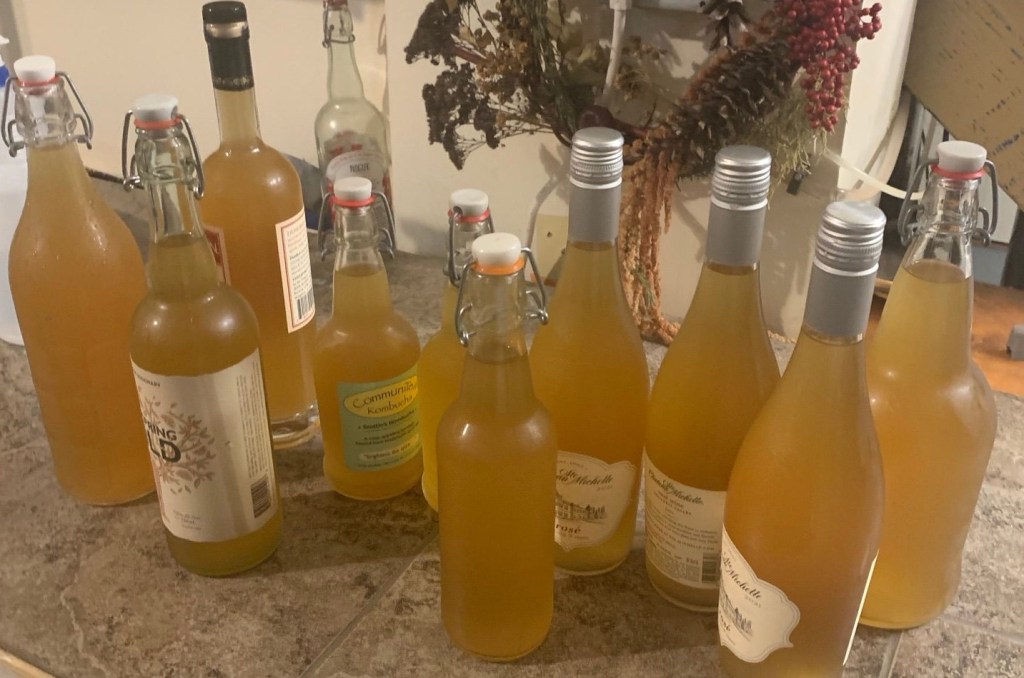
This mead in particular came out quite nicely. It’s a metheglin, or a spice mead. The honey was basic “wildflower” honey from the local restaurant supply store, so I didn’t worry so much about infusing it heavily with cardamom, cinnamon, clove, black pepper, star anise, and allspice. It finished strong, spicy, and dry- flavors I mollified with a week spent in the wineries fridge with a toasted oak spiral. The oak would add vanilla and caramel notes while sanding down some of the sharp edges of the young wine.
I don’t have a profit motive in making mead. No “I need to get this done by this date or someone’s gonna have my guts for dinner” pressure. It’s an expenditure of money, labor, time, and materials that is entirely for my own satisfaction and learning to do it better. In a way it’s an investment in myself- specifically, keeping me from going postal on a world that seems to crave our despair.
Ultimately, what came to me sitting at my desk, hammering together a story, and sipping something I made with my own hands, was the Gift of Creation. Maybe I can’t do much about the state of the world, my job, people’s troubles, or whatever nightmare du jour I’m expected to opine on, but I can make the world a little better simply by putting something good into it that wasn’t there before.
There’s quite a few perks to being a craftsman. I mentioned a few before in this post about “recognizing the good.” One I didn’t mention is simply the ability to create by itself. We create tools. We create art. We make houses, grow crops, raise and love animals, cook for each other, and in a way all of it is sacred. All of it can be holy by virtue of being a creation.
In the ritual that I start work with in the kitchen, as I mix the first recipe together, I invoke the Shechinah.
(R. Meir, Midrash Tanchuma Peikudei 11), with research credit to Kohenet Claudia Hall
יהי רצון שתשרה שכינה במעשי ידי
“Yehi ratzon shetishreh shechinah b’ma’asei yadai.”
“May it be Your will that the Shechinah reside within the work of my hands.”
In Judaism, the Shechinah is the aspect of God that is the “feminine” aspect- protective, nuturing, creative, constantly in action on Earth while the masculine aspect attends to the cosmos.
Invoking the Shechinah in this way, I am saying “I am a craftsman- a creator within Your Creation. I hope that what I make will be a worthy addition to the cosmos.”
That’s a pretty ballsy ask when you consider it. “Hey, great job on Existence, Omnipotent Omniscient Master Crafter of All That Is… but you know what would make it better? A little something from Yours Truly!” According to at least one Jewish philosopher, however, that may have been the point.
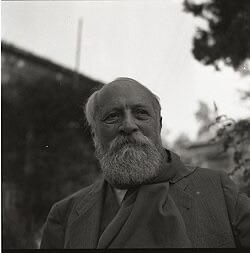
Martin Buber was not exactly popular, even among fellow Jews. His philosophy followed the logic that to understand a person, you study their culture and their neighbors. To understand a religion, you do the same and look at the religions it came in contact with historically. Comparing Judaism to it’s temple-worship origins, the various theo-political factions active during the Temples destruction, and the various faiths Judaism has come in contact with, Buber proposed that the reason God created humans was to see us become like God. God wanted partners in Creation.
Why not just “poof” us that way then? Buber didn’t suggest to know God’s intention that far. He’d already gone plenty far enough to be deemed heretical by some Jewish communities. I think we can find reasoning in our own lives though.
“If God wanted us to be partners in Creation, why not just make us that way?”
For the same reason children are sent to school, taught, and allowed to make mistakes.
For the same reasons people love to grow and tend gardens when they have the money to buy all the produce and flowers they want.
For the same reason people write stories when they already own books.
The desire to create, the joy of creation, and the will to make our dreams real- to “let there be light”- was baked into all of us from the beginning.
You may have noticed this blog post was a long time in coming. I’ve had it simmering in my drafts pile for over a month, but I could never quite find the best way to finish it. I could never find the ability to finish it. The last few months have found me in a pretty dark place. A lack of sleep and a lot of draws on my energies both creative and emotional put me in a situation where there was simply nothing left in the tank.
In Yiddish, one of my favorite phrases is “lign in der erd aun bakn beygl”- “Lying in the earth and baking bagels.”
Why are you lying in the earth? Because you’re dead.
But you’re baking bagels in the grave. So you’re crammed in your grave with a noisy mixer, a boiling kettle, a dusty work bench, and a blazing hot bread oven, making bagels that go nowhere.
Why nowhere? Because you’re dead. You can’t eat the bagels, you can’t give the bagels away to anyone, but still there you are.
In just a few words, that Yiddish phrase expressed a dark side of creating- “I am ground under by endless useless labor and not even death can save me.”
The Gift of Creation is easy to forget when it becomes “the job”- when you can’t rest or can’t see the worth in it. As a workaholic, I absolutely know the toxic alchemy that can come from equating your self-worth with your productivity, and ultimately my body (once again, if you’re keeping track) reminded me that rest is a vital part of creation, not an avoidance or denial of it.
Even God had a seventh day when They rested. Us silly mortal artists and gods-to-be can afford to take a break.
Stay Classy,