The Gift of Creation

A bit of wisdom I’ve found lately is stunningly simple- when you feel helpless or hopeless, make something.

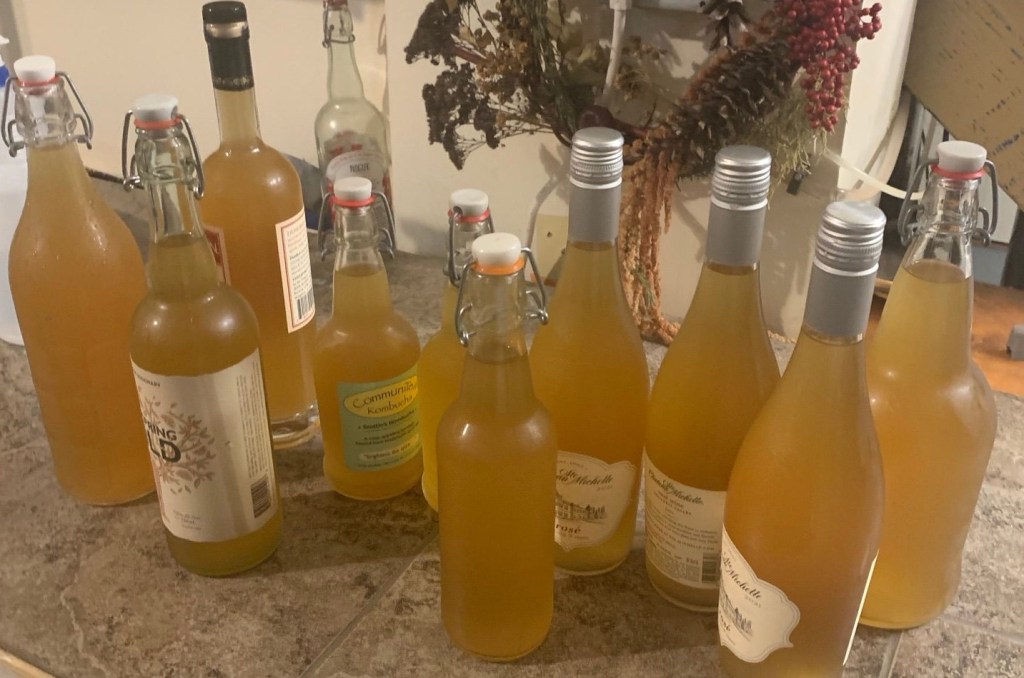
Sitting by my computer as I write is a glass of my latest batch of mead. Making honey wine is the one hobby I have that I swore up and down that I would never ever ever try to make a buck off of. Baking and writing went that way, rapidly turned into work or the job, and to an extent I lost a lot of what made them enjoyable as hobbies in the first place. Meadmaking is my excuse to create for the sake of creation- putting something into the world that didn’t exist before that I can take joy in creating, finishing, and then sharing.

A time-consuming but delightful and cost-effective method to acquire booze for home and gift-giving… making it yourself.
Continue reading

The Real Role of Ritual

I spent a solid chunk of my life trying to figure out how I was going to save the world. Then I realized I couldn’t, so I decided to just do what I could.

I sometimes romanticize this in my mind as “I wanted to save the world, but I was only one person so I became an EMT so I could save people and make them happy. As an EMT I learned I couldn’t save everyone and even then I couldn’t make them happy. Then I decided to just give people more reasons to be happy and become a baker. That’s when it started working.”

That’s adorable and might make a good eulogy for me someday, but the truth is that’s what we all do. Everyone at some point fights with themselves over where they fit in the world, what they want to be, and what they want to leave behind. Some figure out, some resent the question and never do, and others just decide to let the world figure itself out and they’ll go where they fit.

I’m lucky as hell I found my way to baking and culinary. It’s not just a trade and career for me, it’s a calling and spiritual expression. I’d love if it paid more- who wouldn’t?- but it’s work that activates Heart, Mind, Body, and Soul for me and I can make something like a living doing it. That’s not nothing.

Continue reading

Shadows of Loss

Portland is full of tannin shadows, and so are we.

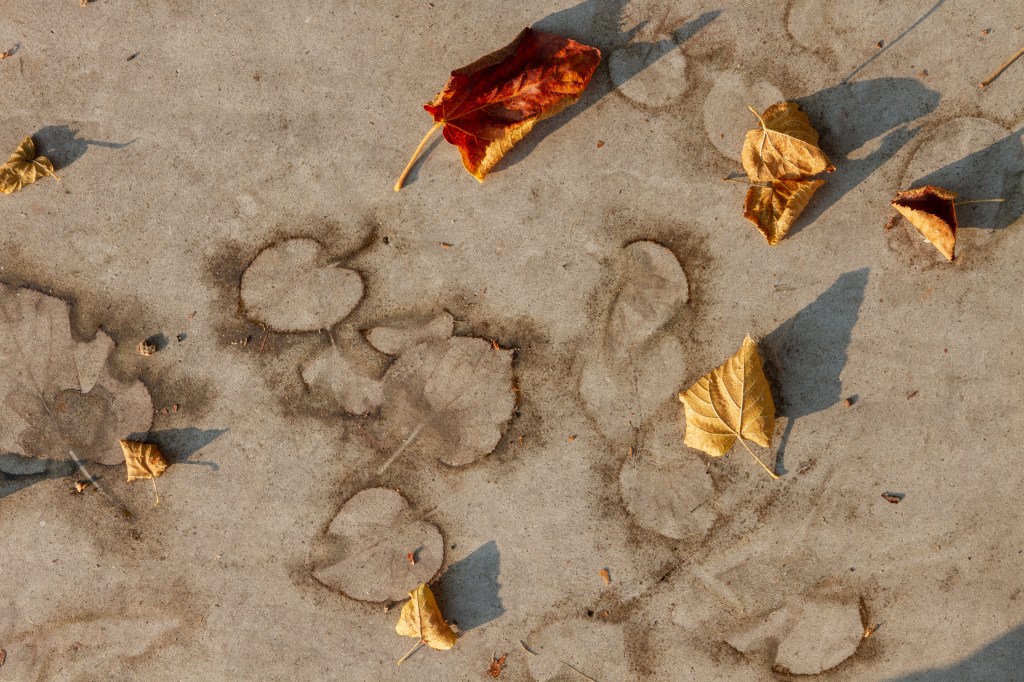
It’s one of those things that you see, appreciate, but don’t know the actual word for until the memory tickles you enough to do a conversational, unspecific Google search. “What is it called when fallen leaves leave imprints on the sidewalk before they are cleared away?” The unsought-for “AI Summary” regurgitated the fact that there was no specific term, or that the term depended on whether they fell on set concrete and left an imprint or if it was set and left a stain from rotting.

As it was, the summary’s “scientific cause” description was adroit and perfect, because I am a sentimental nerd. Tannins are the compounds in leaves that, when they are wet, can leech out into the porous concrete and leave a “shadow” before the leaf itself is swept or blown away. Wine and tea snobs will also appreciate that tannins are the compounds that make their beverage of choice “dry” and crinkle the sides of the tongue, and cause the stains in a teacup. Equally poetic is the fact that consuming tannins too regularly or in high enough concentrations can cause anemia as they prevent the uptake of nutrients and minerals like iron.

For our autumnal purposes, however, “tannin shadow” is perfect because it’s the impact of a loss, left in bitterness. Fall in Portland is rainy and blustery, calling everyone to get cozy and reflect on the year, and the tannin shadows aren’t just on the sidewalk. Sitting in my sweaters and scarves, looking into my dark beers and whiskeys, and staring at patterns in pipe smoke on the back porch, I can’t help but acknowledge the legacies of losses.

Continue reading

The Bookworms

“Think not of the books you’ve bought as a ‘to be read’ pile. Instead, think of your bookcase as a wine cellar. You collect books to be read at the right time, the right place, and the right mood.”

– Luc van Donkersgoed

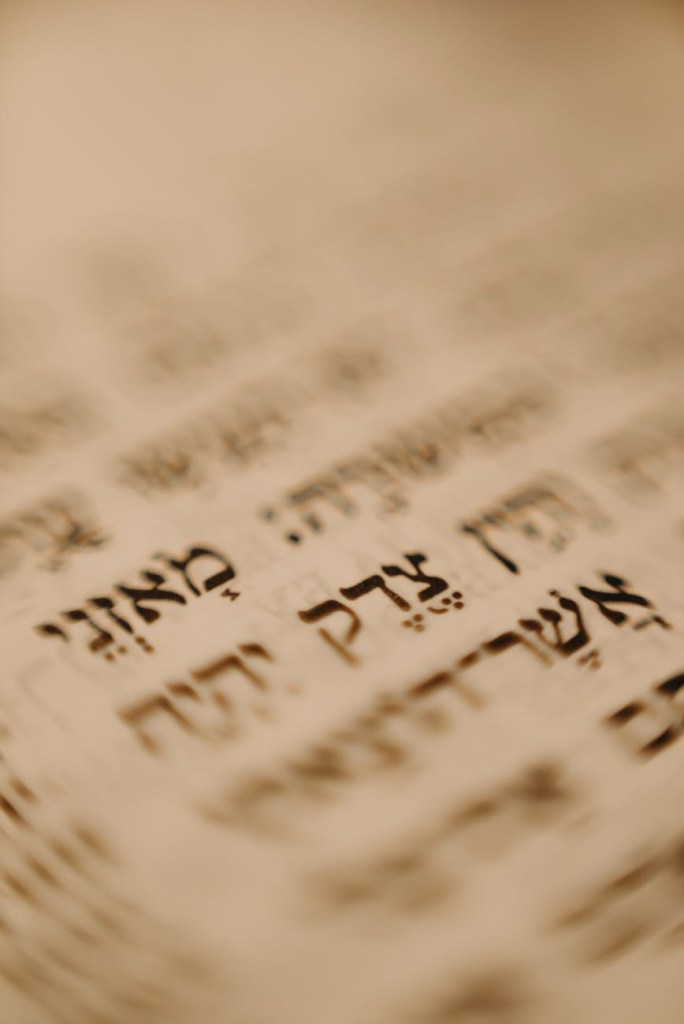
Years ago, one of my relatives indicated the piles of books in his house and told me “Booksellers love Jews, because Jews buy books. Why? Because we’re always the ones that have to remember.” It could also be that we’re historically not that great at sports and needed something to do on the playground.

Photo by Rafael Cosquiere
Continue reading

The Sabbath Day

What smells do you associate with holiness?

If not “holiness,” then let’s call it “sanctity.” “Austerity” could also work, I think. Whatever word you want to use, it’s the idea of being in a very large place where a lot of people do a lot of generally serious things in the name of something arguably intangible, and it has a unique smell. The government buildings I have been in don’t have that kind of smell (“why” is something others can argue), but synagogues, the right kind of churches, and museums definitely do.

Somewhere a while back, I read that the reason people love the smell of “old books” is because lignen- the fibrous matter in plants and trees that paper is made of- has compounds that decompose over time into a yellowish color and is related to vanillin, the compound that (you may have guessed) gives vanilla its smell and flavor. Synagogues and churches inevitably have a LOT of old books in them unless they are brand new. Hymnals, prayer books, and holy texts to service a whole congregation don’t come cheap, and there aren’t “new editions” of ancient vows and praise that require refreshing the stock. The same prayer books (ideally) serve generations. The next time you walk into a place of worship, it might be interesting to wonder who held your hymnal before you. What were they going through? What were they thinking, if anything? What did they pray for if they could? Were they praying for you?

Photo by cottonbro studio on Pexels.com
Continue reading