There are times when I walk into the winery kitchen in the morning, punch in, get to my bench, and my ritual feels a bit like rehearsing into a mirror in public. It’s for no one’s benefit but mine, and others either don’t care or pretend not to see and be curious. It’s still important because beyond the centering, grounding aspects of the act, it’s how I belong to myself.
The routine of the morning grows ignominiously but slowly. I come in, punch in, put my stuff down on the bench and decide what needs to be out and what needs to be in the locker. Going over the prep sheet and whiteboard is next. If something fucked up after I left the day before (or will fuck up without my immediate intervention,) that’s where I’ll find it. Make a plan for the day, then the coffee I’ll never drink. Check the covers for the day, then back to the office for emails on what amounts to the professional version of gossip. Very little of it has anything to do with me or requires my attention yet, and if things got really bad on the pastry station, that’s how I’ll find out.
Back to the kitchen. Temperature logs handed down by the higher-ups, then my ritual and work begins.
I put on my coat, check my tools, scale the first recipe, and consecrate what is still My Place in this world- laboratory, dojo, and sanctuary.
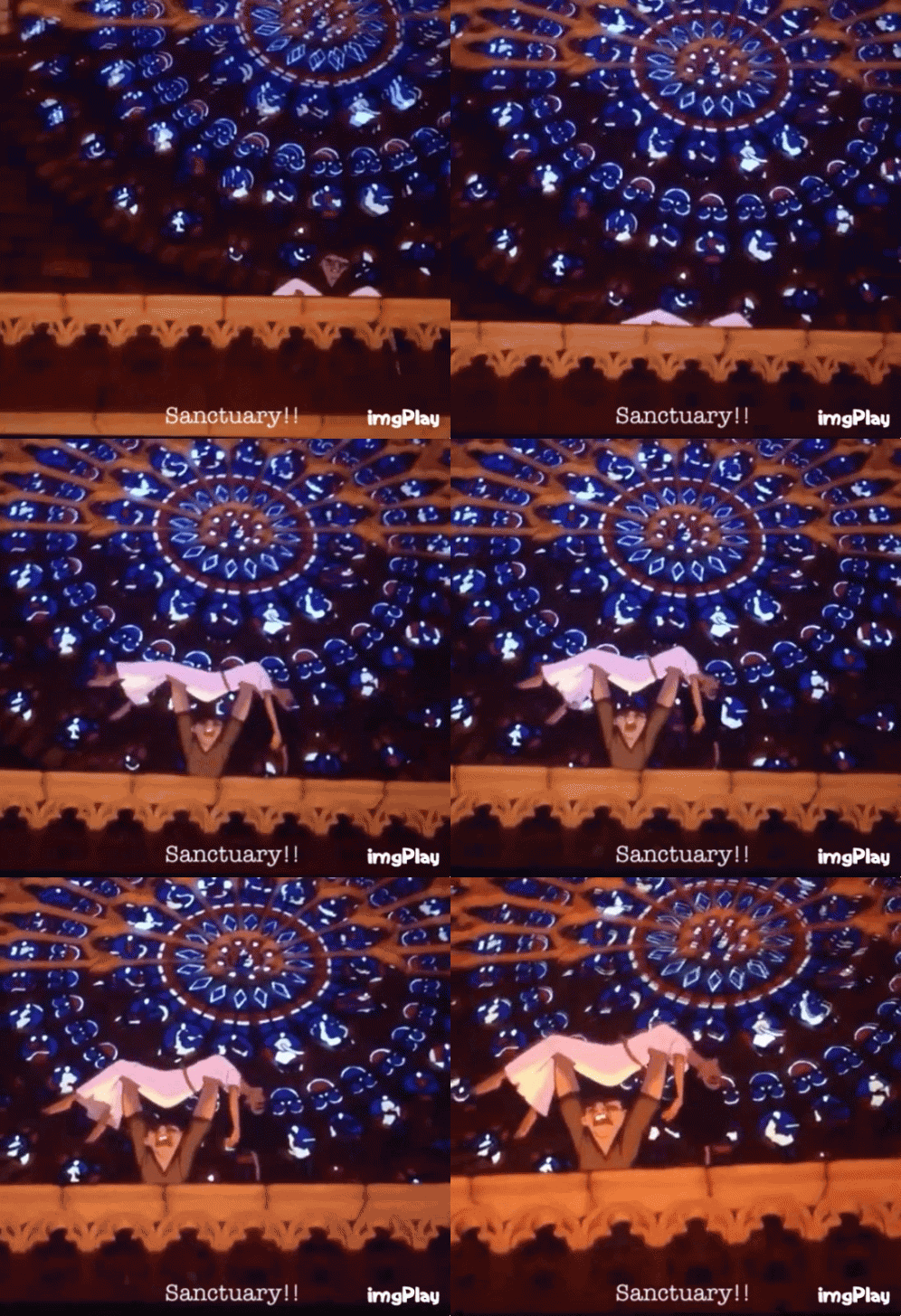
There was a time when I belonged nowhere. I hated it, then pretended to love it, then reluctantly began to accept it.
I was bullied as a kid. Usually one of very few Jews in my classrooms and rejected even among them. I don’t think I had any real friends before high school, and no close friends before college. One guy in high school even said “Matt, what are you even about? Everyone seems to know you, but no one seems to know a damn thing about you!” At the time I felt a strange “man of mystery” kind of vibe. That was more or less code for “I’m lonely as fuck and I’m putting a Banksy painting on it.”
In college, I finally found more weirdos like me. We did all the stupid late teens early 20s dumb-assery with and around each other, and most of us got it. We got each other right up until the times came that we didn’t. Sooner, later, quieter, uglier- reality and adulthood came for us all.
I’m one of those people that the kitchen saved from themselves. Without a masters degree, my BA in Psychology was worth squat when I graduated. Being an EMT paid the bills, but it was a world I felt useful and active in, but never quite part of. I still stay in touch with some people from those days. It’s a different kind of life where I arguably earned my stripes… but I needed different.
The kitchen was that. All the adrenaline with lower stakes- and being a BAKER! Precision! Scheduling! Chemistry! Patience! In the discipline I found freedom. In the work, I found wonder and curiosity. In the kitchen, I finally found belonging. The legendary meritocracy spoke to my tired and bullied soul- “If you can do what you say you can, and show up and work hard when you say you will, you belong.”
Nearly a dozen years later, that promise was something I embodied. I was the pastry chef- the resident sorcerer, writer, philosopher, inscrutable monk at a butcher-block bench.
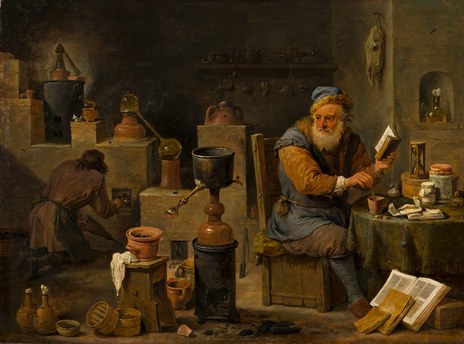
It’s definitely still a Job and Work, but some days in the best moments, I almost feel like I can look at what I’m doing like Dr. Manhattan, watching a universe of interactions and reactions play out in the mixing bowl to wind up where I need the whole to be. The acid strengthens the egg whites so they’ll whip stronger and finer for merengue.
The cracker dough rests, letting all the water molecules matchmake with the wheat proteins to form a smooth ball of gluten.
The relentless heat cooks the sugar, breaking it’s structure further and further so that when it finally cools, the fine processed cane I started with turns into amber glass.
In some kitchens, the pastry department is carved out and separated a bit from the rest of the kitchen. Climate control is a factor, for example, if the restaurant does a lot of chocolate and sugar work. A nod is also given to the ponderous and scheduled work of baking- if the bread is ready to be baked, waiting for someone to finish roasting their strip loin in the oven can mean over-proofing the bread. A friend told me a story about how one pastry chef they worked once attacked a young cook who decided the oven containing her sponge cakes was the perfect temperature to roast garlic in.
In that sense, separate facilities may also help prevent a hostile work environment- and well-behaved cooks and servers always know which door to knock on if they need a snack.
I don’t quite have that in the winery. Not only is the pastry area the back half of a main thoroughfare resulting in a number of terse reminders to say “Behind”, but the bizarre acoustics of the kitchen means that whoever is standing at the station can hear nearly everything happening in the kitchen, but that no one can hear us. Consequently, I’ve learned to enjoy having music playing in my area just loud enough to drown out the daily cacophony but not so loud that I can’t hear a voice raised in my direction.
I still Belong in the Kitchen. My colleagues know it and so do I- but at the same time, I’m learning to value that “man apart” identity again. It’s not because I feel forced out of life per se- instead, it’s because I feel drawn back in to myself.
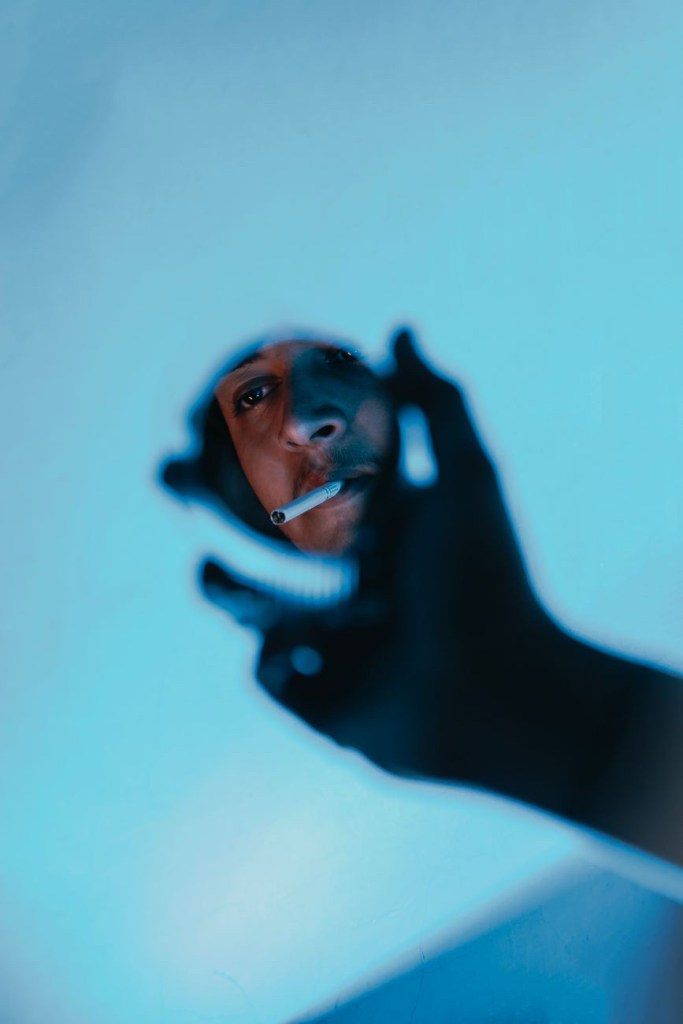
“Inhabiting solitude” is the name that Brene Brown gave learning to enjoy one’s own company. It’s a good skill to develop. The only person who will truly be with you every moment from the day you are born to the day you die is you, so you’d better learn to get along with yourself. It’s a little different when you learn the skill as a coping mechanism.
As a kid, the feeling of being “a man apart” was called Isolation or Exclusion. It came in the form of name-calling, epithets, cruel pranks, and generally teaching a young kid to hate others as much as he thought he needed to hate himself. Those things leave habits and scars that take patience, grace, love (self and outside) and a shitload of effort to manage and heal. It took years, but I finally figured I’d gotten past it. I was an adult now. My stammer was under control, as was my weight. I was strong, smart, skilled, and I had people around me who knew it. I belonged, and I’d never have to justify myself again.
After 10/7, I was proved wrong as the Isolation and Exclusion came back in a new, less snot-nosed form. They came as a revelation– cold and indifferent as a doctor’s syringe directly to the pallid tissue under the scar, delivered by people in leftist groups and organizations that I’d truly thought were friends, or at least allies. “You were never really one of us. We never really saw you in your fullness, and you are utterly disposable.”
“You never belonged. You will never belong. Not with us. Nowhere. With anyone. Not as long as you’re you.”
I looked around at my kitchen, my colleagues, and realized I could never explain to them exactly what this felt like or what I was feeling. I felt muted. Silenced, scared, gaslit, and made to mask to get through the days. I didn’t know how I could possibly describe it to them, if they would care- or if they would see it as a crack in the meritocracy. “Matt’s cracking.” “What’s Matt so upset about?”
Self-doubt crippled me for months. Could I truly belong nowhere? Could I even trust my heart to be kind and open?
Again, therapy. Talk. Learning to be open, but guarded. I learned to hold that pain in my palm and squeeze hard. I knew that I would always and forever have to belong to myself first- and I would never let anyone I knew feel this pain.
I keep doing my rituals, because that is what Matt does in the morning. I make the coffee I don’t drink, listen to my music, check my tasks, and focus on the minutia that add up to the food I make, because that is what I do. I let others come to me, and I let them talk. I don’t want anyone to feel alone, because this is my sanctuary. It is open to others- but it is always mine.
Stay Classy,



Another great essay! I see the roots of this in our writing group’s exercise from last week. Very moving and vulnerable. Thanks for sharing this with us all!
Thank you so much 🙂