When you work in a restaurant with enough backing and fancy enough clientele (or minimal backing and working-class clientele, but you’re the chef-owner with a shtick), menu flips make the tedious bits of the job worth it. After making the same dishes over and over again for months, sometimes beyond the season it even makes sense to keep selling them, doing a little spring cleaning on the menu feels positively invigorating.
This years dessert menu is already selling well, but the core theme of the selection isn’t just “seasonality”. Pick a menu from any restaurant- from the neighborhood diner to the latest Michelin-starred hotspot- and what goes into the menu is just as much about convenience, defensibility, economics, and business sense as any high-minded philosophy about sustainability, slow food, or “decolonizing the diet.” That’s because we don’t just sell food- we sell a night out. We sell a fantasy. We sell pleasure– so we make sure there’s something we can sell to as many people as possible.

Start with the “big picture”- our winery is owned by larger company, and that means levels of bureaucracy have to be satisfied, with plenty of red tape and boxes to check before we can do something like change the menu. It’s one of the prices we pay. Want the resources to get rare and quality ingredients at your fingertips? The people holding the purse strings need to be convinced to loosen them first- and they aren’t letting go unless you’ve got a plan to put more back later.
New ingredients and labor have to be justified to the ownership. Anything that gets offered “complimentary”- or at least without being listed on the bill- is a measured and calculated expense, from specials to after-dinner mints. If it’s “free,” it’s because we are hoping it’ll pay dividends later. When was the last time you paid for fortune cookies? Never- but going out for Chinese just isn’t the same without that rush of “what am I going to get” is it?
Sales metrics of the previous season get pored over to make sure strong sellers stay on- though maybe with a seasonally appropriate garnish or sauce, a practice I call “putting a different hat on it.”
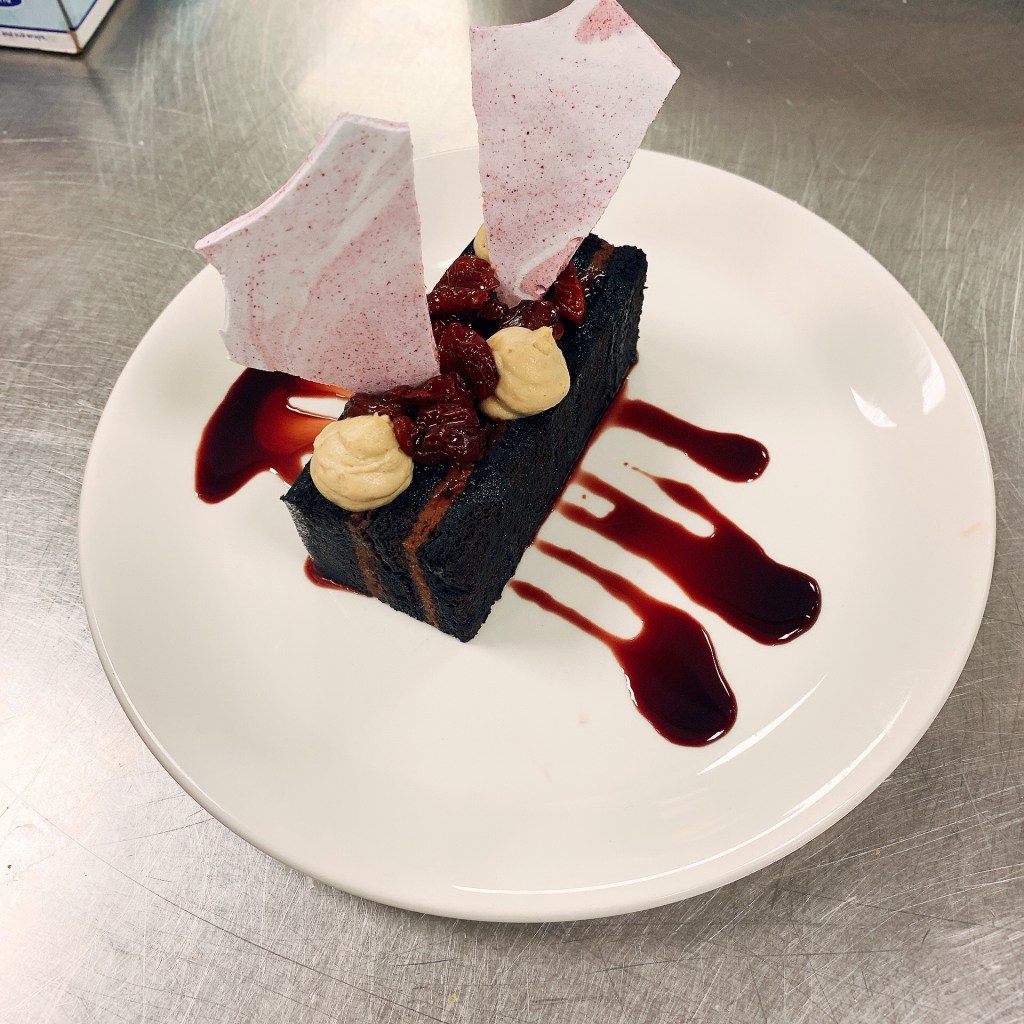
“Okay everyone,” I’ll say when we do the tasting and descriptions for the front-of-house staff. “Got a couple new things on this menu, but first and foremost, the chocolate cake. You know it, you love it, and more importantly the customers love it. This season, it’s wearing a hat of rose-plumped cherries and fennel-hibiscus dehydrated merengue.” Nods of understanding all around- chocolate cake is the Safe Choice. Customers might feel excited but wary about the new stuff, “analysis paralysis” might set in, and they’ll pick the familiar.
After the numbers are crunched comes the question “What does the boss/owner/chef want on the menu?” Any professional cook will tell you that there are three ways to make any recipe:
1. The way the chef likes it,
2. The way the customer likes it,
and 3. The way you like it.
One keeps you paid, one keeps you employed, and one is nice to do on your own time with your own money buying the ingredients.
You have to choose your battles wisely, so that’s why menu meetings always start with me deciding in advance which hills I want to die on. I might have a killer idea for a Pandan Diplomat Parfait with Spiced Marmalade and Caramelized Almonds, and the whole staff may like it- but if it doesn’t quite fit the menu, the chef is convinced that cocktail glass/mason jar desserts are out, or they think it’s too exotic for our clientele, I need to defend the dessert against those charges or out it goes. Ideas that are too much trouble to defend- especially those with an Achilles Heel like “it should be in a special glass”- aren’t worth the effort to discuss if you can’t massively compensate for it elsewhere in the pitch. To convince the chef that they need to try to convince the pencil-pushers that they need to spring for new glassware for an awesome dessert idea with non-English words in it, it better be falling from God’s own hands for free.
It’s annoyingly high-stakes putting a new item on the menu. A restaurant has to pay rent, taxes, utilities, insurances, and- of course- they have to pay for folks like me to be spending time in their kitchen trying to make them more money than we cost. As a manager, then, I’ve got to make choices that ensure that cost isn’t questioned. I’ve got to make them money as efficiently as possible.
That means that, with the cost of labor and ingredients increasing, I need to pick ideas and recipes based on what I can do with what’s on hand, what can effectively be batch-produced, and how many “touches”- elements that need to be placed, dropped, piped, dropped, or torched- go into a plate. A dessert can look and taste marvelous, but if every plating requires my line guy to spend 20 minutes making sure every part is done just so, it doesn’t matter if I was giving away a tart made with mermaid tears and berries hand-picked by supermodels- no one’s gonna wait that long for a dessert, and they’ll remember their impatience more than they remember how good it tasted.
Finally, I need to think of dishes that will allow for our time allotment. One of the ways we in the pastry department justify our cost to the business is no longer “just making the desserts.” Besides the dessert menu for the restaurant and events, my little team of three people (myself included) also makes
- the house bread- a solid mashup of herb-bread, fougasse, and brioche.
- lavash crackers for our lunch menu.
- jams and preserves to make the most of overripe/bruised fruit. The last stop for any non-meat product before it goes in the compost is “can pastry do something with this?” Again, this is a business.
- candies and snacks for our dessert slates. Originally an easy way to burn through extra banquet portions and edible decor, dips in business meant making a few small things specifically for the slate. A small extra cost, yes- but when you have a staff with the skills to make something delicious out of the stuff just laying around, it’s easier to justify.
- Pasta dough for our house pasta
- Pastry dough and Pate Au Choux for savory appetizers on our banquet menu.
Efficiency, efficiency, efficiency. “We’ve got a lot on our plate that can’t get passed on,” I think. “What can we make that can be batched and then frozen or stored so that someone on my team isn’t sinking time into making it every day?”
Don’t be shocked that I suggested the dessert you ordered may have once been frozen. This is the pastry station of a restaurant- not a bakery, not even a cafe that specializes in its baked goods. As good as my work might be, I know for a fact that last year only about 20% of all customers ordered something off this menu. Going out to eat is already considered a luxury- getting dessert is an extravagance on top of it, and the first thing to fall off the bill of a price-conscious diner. That means two things. First, I need to understand that bakery isn’t the star of the show. I cannot justify making desserts that have no shelf life unless I also justify and arrange for them to be made to order. See my point about “choosing which hills to die on.”
Second, it means that regardless of everything I just mentioned, I need each dessert to be a showstopper. It needs to be something that looks, sounds, feels so damned good that it would be a bargain at half the price.
This is the part where my team and I really justify our presence in the kitchen. The old line goes “If you think a good chef is expensive, wait till you hire a bad one-” and the inverse is also true. My team and I have the skills to make basic (read “cheap, non-special”) ingredients into stuff that make the promise worth the price.
In business jargon, this is called “adding value.” In the kitchen, this is called taking a few techniques we learned from previous places we worked, a few tried-and-true formulas we know by heart, the kind of basic ingredients you can find at any supermarket, and the practiced skills to use those ingredients right to make someone’s childhood memories of summer camp-outs flood back to them for just $15- with the bonus that they are of legal drinking age. Beyond everything else my team and I do, I can justify my teams employment and the respect we get by simply pointing to the menu and saying “Just get a little more of the stuff you’re already buying for the restaurant, maybe some yeast, chocolate, and vanilla- we’ll take care of turning $30 worth of ingredients and $72 in labor into $800 of revenue.”

Good cooks and chefs are craftsmen, scientists, artists, and workmen– being businessmen, negotiators, and social psychologists isn’t outside the realm of reason. It’s not “selling out” to want to keep the money coming in (within reason) so you can do what you want the majority of the time. We all make deals with the devil eventually, so it’s worth learning how to make a good one.
Stay Classy,

 The Black Hat Baker
… Literally not what the post is about.