When I’m not exhausted beyond reason, furious at pompous bureaucracy and the odious input of “higher ups” that outsource their problem-solving to ChatGPT, I do still in fact love to bake.
I truly do still love making things for people. I love giving my work to others, watching them eat it, knowing their day got better for a moment because of my work, and maybe even teaching others how to do that magic for themselves.
As much as previous cafe jobs put me through, it was always the environment and the management, never the work. Even when I was dragging my ass out of the French bakery at 10am after starting at 2, hoping to find a place that wouldn’t question giving me a post-shift beer over brunch, I loved looking in the display case as I left. I saw everything I’d made that morning, people and kids pressing their noses against the glass at crusty kouign-aman and caneles, and think to myself “I helped make their day start better. It was all worth it.”
It took and takes a LOT for me to lose sight of that fact. Fine dining has always been a pleasure of mine and that kind of work- being a pastry chef- is the best way to gain access to good ingredients, new technology, and have excuses to experiment. Your local bakery cafe doesn’t mess around with agar agar (unless they are vegan.) They don’t need a PacoJet, and getting obscure or rare materials is not always a priority- or even in the budget. They’re making delicious breakfast pastries, cookies, and pies- not plated desserts for $15 a hit.
When you set off on a culinary career, it’s good to know what you love about it and find the path that support it. It’s never too late to learn more about yourself and change.
Production Baking
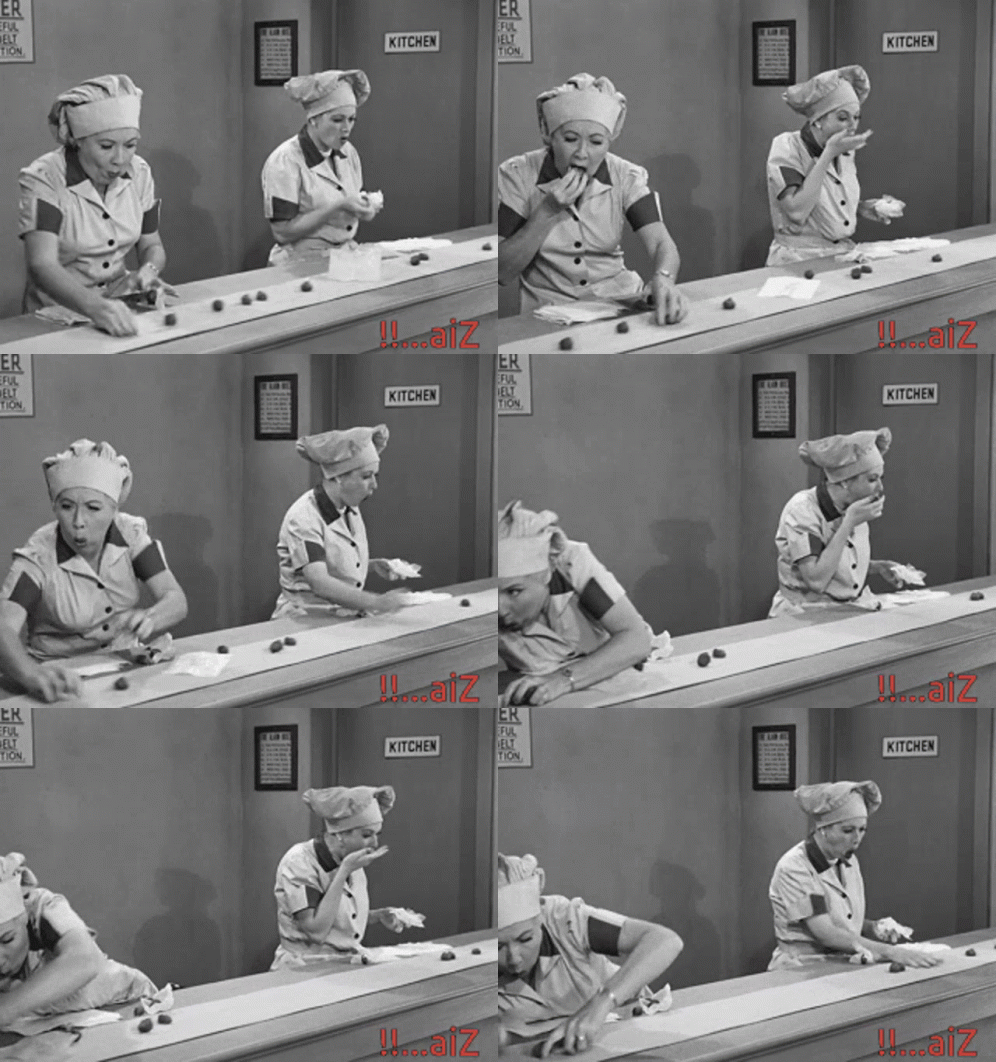
All that bread in the supermarket aisle came from somewhere. All those biscuits, rolls, and baked goods you find had to be made by someone, somewhere. Baking and even catering franchises have massive production factories that mix, proof, bake, and package thousands of pounds of product a day. There is no guesswork or experimentation. A place that has gone this “all in” on their product controls everything to the degree, ounce, and minute. You are there to get the job done right- NOT to have ideas.
If you’re just looking for a job where you can keep your head down, get work done, (hopefully) have union representation, and get a decent days pay for your trouble, this may work out for you- even in the short term. There’s no shame in being a cog in the machine as long as you are okay with it.
Organizational

When was the last time you were in a cafeteria? Maybe your job has one. Maybe it was college or high school. More than likely, you’ve grabbed snacks at a snack bar in a stadium. The people who work in and run those kitchens operate at scale. Much like the Production Bakers, unless you are running the show (and even then,) you are sticking to the menu your bosses have agreed on. It may not be food you like or would even want to eat, and maybe– if you work in the healthcare field- you’ll get to learn about different diets.
The pluses here are that in addition to possibly having union representation, you’ll likely get benefits from the organization you work for even if there isn’t unionization. Large teams means schedules are more stable, and working for schools means regular downtime to either work a side hustle or (possibly) just have vacation.
Catering/Banquets
Whether you are attached to a specific venue or not, Catering/Banqueting again works at scale, but on a contract basis. That means there are good seasons and bad seasons. Feast or Famine. You are counting on your sales team or your bosses to make sure you stay busy and have hours, so the schedule can be a bit dodgy and you might want a supplemental paycheck unless you’re higher up in the business.
The plus sides here are that smaller teams mean you can have a bigger impact. You can make yourself “The Guy” for certain dishes, help come up with better ways to do them, and even help come up with new ones if your chef is open to it. Unless you are on site for events, there aren’t many late nights. Your hours may vary or vanish, but they will likely at least be at a humane time of day.
Retail
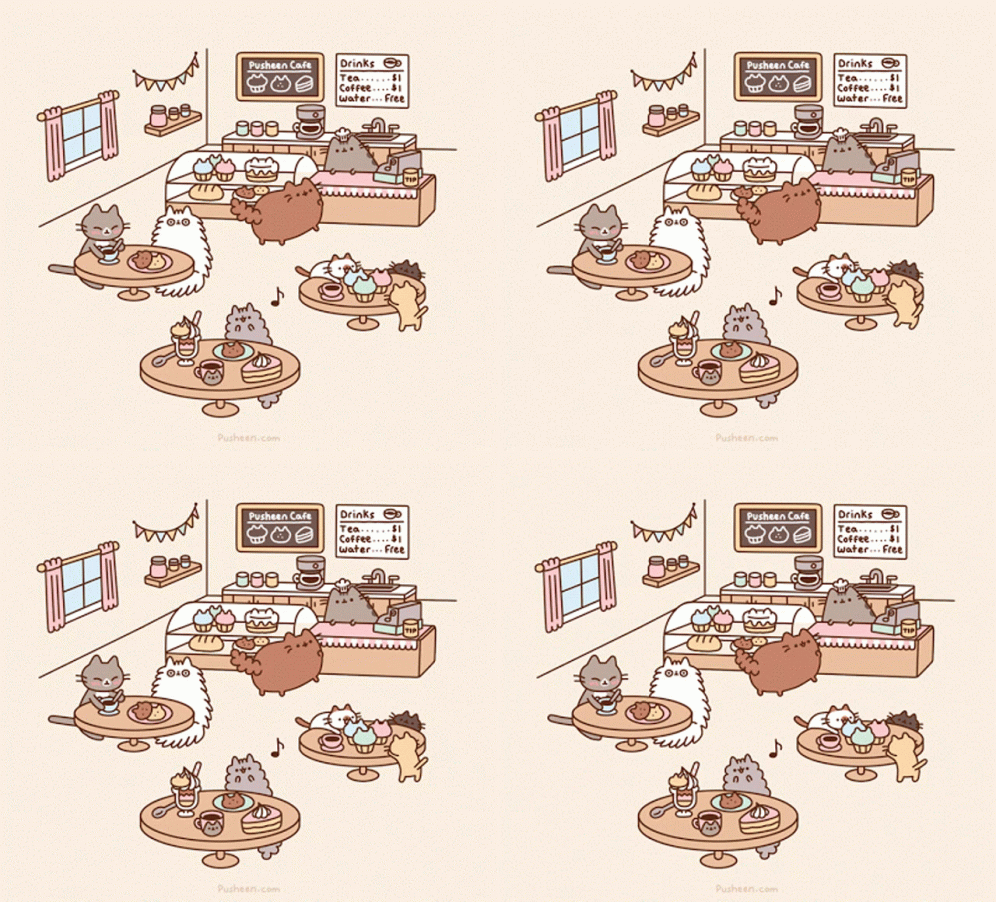
When people ask me what my “dream” is for my career, this is part of it. I want to make delicious things at a small scale, know my customers by there first names, be part of their lives, and make things they love. That is kind of the romanticized, village ideal of retail baking- running a bakeshop/cafe. The hours may vary, work may be seasonal, and you may not have access to things like health benefits or 401(K)s or whatever. You will absolutely be able to see the impact of your work, though. You’ll feel a part of your community and connected with your customers rather than shoved into the back.
Teaching
My older sister hates the H.L. Mencken maxim “Those who can, do. Those who can’t, teach.” She (and others) take it as a slight against people who choose to teach for a living. I can see how they feel, but I interpret the maxim a little differently. Baking and cooking are hard on the body, and the industry is not a kind one. Eventually, some professionals decide it’s time to step out of chaos of a kitchen for their own health or evolving priorities.
Instead of taking their knowledge and experience with them into the sunset, however, some choose to teach as much as they can to others. Whether it’s volunteering to do municipal skill classes, vocational/technical schools, or stand-alone culinary schools, some people choose to make (or supplement) their living sharing the skills and knowledge they’ve acquired.
For one reason or another, maybe they can’t “do” more time in the kitchen than they have. Therefore, the best of us choose to “teach.” This is the other part of my dream bakery- a place where those curious about the baking industry can earn while they learn what I can teach them- and then decide if they want to move on to learn more.
Sales
When it comes to selling ingredients, utensils, cookware, even whole import/export food services- who better than a chef? Celebrity chefs regularly accept sponsorships and advertising revenue for hocking cookware with their names on them, ingredients from a particular provider, or product placements in their shows and appearances.
This is another direction some chef go after they step away from the kitchen. Those with a gregarious and charismatic personality might sign on with a supplier or a specific company and pitch to their former colleagues. Who else knows what a chef is looking for in a product than another chef? Who else could demonstrate what’s possible about the New Hot Ingredient They’re Selling? If you find a company you don’t consider utterly objectionable- and maybe you want to swallow your pride a bit- it’s not a bad way to make a living if running service gets too rough.
Private Chef
I used to work with someone who had a side hustle as a private chef. She would claim that she was “paid as a chef for 17 years” as proof of why people in the kitchen should listen to her bullshit and clean up her messes that- to her- were just “experiments” and “ideas.” I would just barely keep myself from telling her I’d spent 2000 years “paid” as Jesus Christ and it meant just as much.
The truth is, if you can find enough clients- or one extremely well-paying one and become part of their household- you can live pretty free and easy as a private chef. It means making menus and preparing meals for a particular client over and over again- adhering to their likes, dislikes, diets, changes, social occasions, even travel plans. Another friend of mine once even suggested that I join the Navy early in my career with the hope I could become the personal chef to an Admiral. If you like being a one-man show, being at someone’s beck and call, but having a LOT of latitude to how you go about what you do, this isn’t a bad idea. Maybe don’t flout it about if you ever join a restaurant kitchen though- we have a VERY different definition of what makes a “chef.”
Food Science

Maybe you don’t want to do any of that. You like food fine and are interested in cooking, but not for serving people- at least, not directly. You consider yourself a chemist or a biologist first and your focus just happens to be in foodstuffs. You love getting into the science of it all- how fats work, how caramelization works, what different sugars and salts do, how to make preserved food survive an apocalypse. You are a scientist, and food just happens to be your study of choice.
Enterprises large and small rely on food scientists. Giant companies that sell frozen or canned foods need to know exactly what they need to do how in order to make their food shelf-stable for years and still safe and enjoyable(?) to eat. Smaller start-ups that want to sell packaged foods and need a Nutritional Information label for their product need someone to take their Chocolate-Covered Vegan Cheez Quesdilla and subject it to all the tests that will determine for the customer how many calories, how much protein, iron, fat, carbs etc they are debating shoving into their faces.
For some folks, food is a means to an end. If that end is Nutrition and Curiosity, consider switching your majority to chemistry and looking at jobs in this field. We’ll need more in the future.
Stay Classy,

 The Black Hat Baker