It’s easy to be staggered by even a small selection. If the legendary Fountain of Youth were real and the Water of Life changed character and flavor with every drop, I’m not sure I’d care which one I got. When each “drop” can cost between $20 and $2000+, though… one feels the need to be a little choosy.
While my dad loves wine and passed his knowledge of tasting and experiencing wine down to me well enough, wine just never sang in me the same way whiskey and beer have. No less an art form, requiring no less craft and patience and care, people have spent their lives in pursuit of their perfect dram, let alone the perfect one. Among my goals in life is to have my own little whiskey collection- not large by any means, but each bottle curated with care to suit any situation myself or my guest might bring to my bar.
What’s stopping me? In order to have a collection of whiskeys, one must either make enough money to buy more whiskey than one can buy quickly, or drink it slowly enough that a collection can accumulate. Either track is, alas, remarkably challenging.
Tellingly, the word “whiskey” is derived from the Gaelic “uisgebatha,” which translates to “water of life.” If legends and folktales tell us anything, the quest for the Water of Life is anything but easy or short. In my own meandering experience, however, it is incredibly enjoyable.

Where It Began
Whiskey is, at its heart, distilled and concentrated beer. A selection of grains and cereals (classically corn in the United States, but truly any grain can be used to different effects) are milled, steeped and boiled in water to release their flavors and sugar to become “wort,” which then has malt and yeast added to it.
After being allowed to ferment, rather than simply being bottled and sold as beer, the beer is distilled and filtered several times over to capture the alcoholic spirits and leave as much of the water behind as possible.
At this point, the brand new grain spirit is harsh, strong, potentially dangerous, and lightly flavored “white whiskey.” You might have heard of it as “white lightning” or “moonshine.” Young whiskey certainly has its uses- but it’s far from done being made into proper whiskey.
I got into whiskey in a similar way- curious, functional, but little more. I first tried whiskey in college after learning one of my “personal style” icons, Frank Sinatra, famously enjoyed Jack Daniel’s “on the rocks with lemon.” Emulation bubbled into enjoyment, which slowly fomented a curiosity to try more and more.
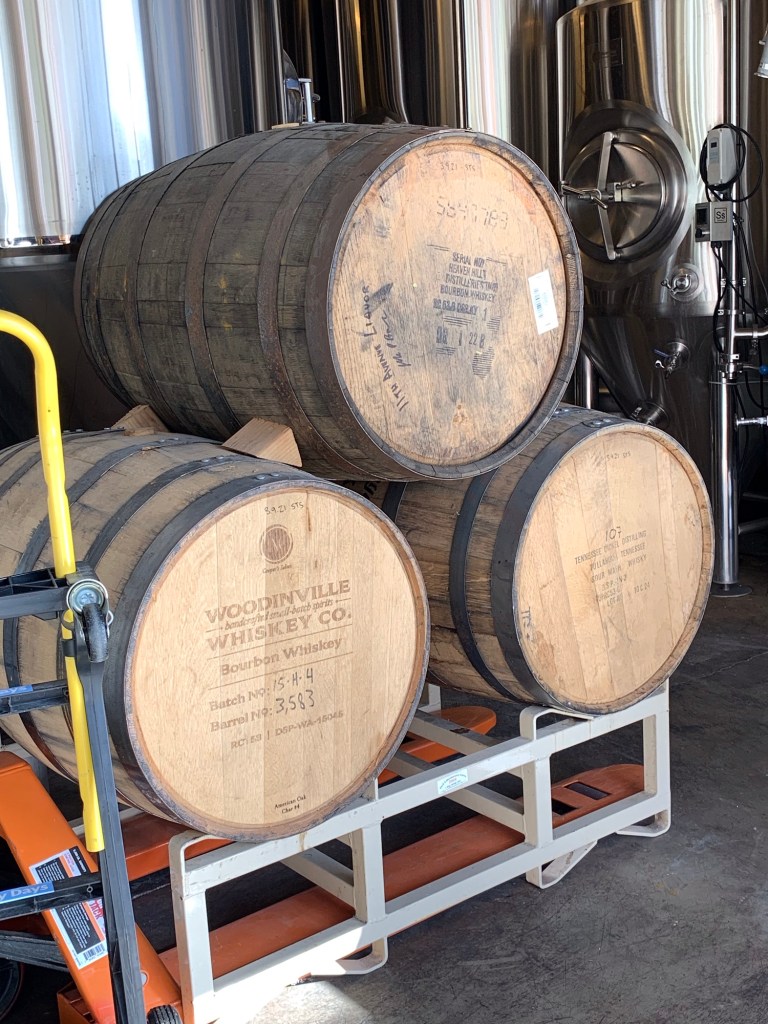
Personal taste, like whiskey, improves over time. The spirit is left to rest for years in barrels of varying woods and treatments, each combination imparting its own character and flavor. Every year, a little of the barrel is lost to evaporation- the “angel’s share.” What remains darkens and mellows, drawing in flavors of vanilla, tobacco, and leather from the wooden barrel.
By the time the barrel is deemed ready to be sold as proper whiskey, up to half of the contents may have been lost to the angels… but what’s left is liquid gold.
Where It Leads
No matter how sleek or hip a liquor store is designed to be, the whiskey selection always smells like those oaken barrels. It smells like the liquid- time and consideration. The age of the trees of the wood chosen. In some cases, the history of the barrel itself used and reused across multiple whiskeys or even other products like wine, coffee, beer, or maple syrup- eager to be imbued with a taste of that age.
What would you have today? What do you want to taste?
The sweet brightness of wheated whiskey? The classic mellow smoothness of bourbon?
Maybe something strange and sweetly flavored like Canadian whiskey? Boozy and sweet with flavors of peanut butter, apple, orange, fiery cinnamon, and any number of other adult candies to make Willy Wonka blush?
Leave those to the new kids figuring out their tastebuds. Maybe like me, you need the ancient and smoky one with stories at the bottom. The deeper worlds of Irish and Scotch- the oldest and first whiskey-making cultures continuously prove themselves masters at both casual tipples and drams of meditation and introspection. Their sub-selections- especially Scotch’s choice of Islay, Highlands, Lowlands, and Speyside malts- are their own mines of history and lore to delve. The kind best sampled slowly, deliberately, with rapturous joy and concentration.
This is uisgebatha, though. Water of Life. Contemplation is fine and dandy, but you want to feel a fire in your belly. The liquid courage that hurts so good. That’s what you’ll find in the harsh, fiery, peppery and young whiskeys found in the Mid-Atlantic United States. Rye whiskey from Pennsylvania and moonshine from Appalachia have their own younger histories of dearth, rebellion, and the dangers of asking too many questions of the wrong people. A slim smile and a password part you from stories of bootleggers, rum runners, and government agents blowing up secret stills in the deep woods.

Where It Ends
There’s a reason that whiskey and wine collections are also called “libraries.” Each bottle tells a story- a recipe, a history, and a place and time at the hands of careful people. It’s easy to dig too deep, overindulge and lose track of yourself of course. As with all things, moderation. Come up for air now and then and reassess how whiskey fits into your own story- foe or companion. There’s no small selection of cheaper whiskies out there either. They are little pulp-fiction paperbacks in comparison, but they too can be enjoyable in their own time and space.
Whatever it is we do, we should take the time to savor, learn, and thoroughly enjoy the experience. No one enjoys reading a novel through the Cliff Notes- so maybe stop your friend from “shooting” the good scotch.
THAT would be alcohol abuse, and definitely not a way to
Stay Classy,

 The Black Hat Baker