What Does Quentin Crisp Know About Cooking?- Fashion Vs. Style in the Food World

I am not now, nor would I have ever called myself at any point in my life, fashionable. Not even in college when I started wearing those enormous pants with all the unnecessary straps and half-heartedly dyed my hair blue.

I might have been trend-chasing, and I’m sure I thought I was cool at the time, but I was never fashionable- and likely never will be as I slouch gracefully toward early middle age.

Instead, when people see the effort I do put into looking put together, they say I’m “stylish.” That is a lesson I learned from Quentin Crisp, and I think we as an industry will be happier when we learn to apply it to our food.

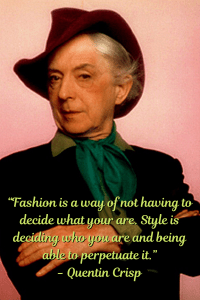
Color photo of Quentin Crisp with the text “Fashion is a way of not having to decide what you are. Style is deciding who you are and being able to perrpetuate it.”
Quentin Crisp pulled off a scarf and eyeliner way better than I pulled off those pants from Hot Topic.
Continue reading

The Right Hand Man- How To Be A Good Sous Chef

You would think that “servant leadership” would be immediately applicable to modern kitchen life, but as a leadership ethos it has yet to see the predominance it deserves. It is not at odds with the traditional brigade system as Auguste Escoffier envisioned it- though it is certainly at odds with the bullying and barbarism that has come to be associated with being “classically trained.” Hardly a terrible thing, since that “tradition” is itself at odds with little things like “health and safety of the worker” and “being a fucking human.”

“Servant leadership” is, at its core, an ethos that changes leadership from “Do what I tell you” to “This is what needs to get done- what can I do to help you do it better?” If you would like a masterclass in what that mentality can and should be like, look no farther than the sous chef– the second-in-command of a kitchen, and the chef’s “right hand man.”

Continue reading

Gimme More Than A Gimmick!

A few months ago, I had a great idea. I’d just recently found a great challah recipe from America’s Test Kitchen, and I had the thought, “You know, challah isn’t the same as brioche, but it’s close. Cinnamon rolls are made out of brioche… so what if I made challah out of 6 braided strands of cinnamon roll?

The bread came out interestingly layered and noticeably over-worked, but good. The next step was seeing how the bread would do as cinnamon French toast. When asked how I came up with it, I gave a joking answer of “I like cinnamon toast; if it’s worth doing, it’s worth overdoing.”

It’s a reductivist joke, and one that too many operations are taking literally. If you’re creating a dish, and you want it all to highlight and enhance a particular flavor, that requires fitness to do well.

If you’re going to go overboard, you’d better be able to swan dive.

Continue reading

Why I Don’t Write Negative Restaurant Reviews

It takes some serious cajones to open up a new restaurant in thee middle of a pandemic. Even more so doing it in a city positively lousy with ramen shops.

When I saw the new storefront open up and a couple faces returning time and time again, I figured it was time to take them for a spin. I hadn’t written about ramen on the blog yet, and it’s the perfect weather for a bowl of hot noodles.

After two visits, trying their most popular bowl and a bowl of what they specialize in, I walked away feeling like I had wasted my money. If I am spending money on ramen and “I could have had a better dinner with a pack of Top Ramen and fixings from my fridge” floats through my mind, that’s a bad sign.

Tossing out half of the second disappointing bowl, I decided that the place did not merit a review. Not a bad review, or a complaint on Yelp- that’s not my way.

I don’t give bad reviews, anywhere, ever- and I have good reasons why.

Continue reading

“Everyone Else Is Taken”- Finding Identity in the Kitchen

I absolutely cannot, under any circumstances, tell you who you are. You really shouldn’t want me to anyway. Brighter minds than mine have peeled apart the notions of “self” and “identity” for centuries (if not millenia) and even they tend to wind up shrugging and going “I dunno… it’s personal I guess.”

A portrait of Oscar Wilde in grayscale with the quote "Be yourself; everyone else is already taken."

And it is. I wrote a few weeks back about how to find your “culinary voice”– which ultimately came down to an elaborate rephrasing of “garbage in, garbage out.” That’s figuring out how to best tell your story though… finding out who you are takes people their entire lives, and is often subject to change.

So this post isn’t a “how-to”- it’s more of an exploration of the question, and especially what it means for us cooks- whether we are brand new and trying to find a place to fit in, or old hands getting flexed out of an industry that we can’t continue in and survive. Both groups- all of us, really- wind up looking at themselves in the mirror and asking, “Who are you?”

Continue reading