Some Thoughts While Loafing

If you ever start to wonder just how important having. a routine is,, just wait till something comes along and messes it up.

I’ve been out of work for only one and a half weeks, but it feels so much longer. As my energy/pain levels vary from day to day (but slowly doing better!) I find myself easily losing track of time.

I’m learning, though, that’s not always a terrible thing- and maybe I was due.

Continue reading

Taking a Break for Ambition

When it comes to ambition, goal setting, and planning- whenever someone says “there wasn’t room for doubt,” I don’t think that’s true. I think they didn’t MAKE room for doubt.

That sounds almost cynical and defeatist- and I suppose it could be taken that way. I won’t pretend to be some grand philosopher on that. I’m an anxious person. “Doubting” is as natural to me as lemonade on a hot day- as is planning, contingency, and fear-setting, for better or worse.

If Jesus can have a moment of doubt at Gethsemane, I’m pretty sure us poor mortals can wake up in the morning and wonder if we’re still going the way we want to in life. Those moments are important, because that’s when you make the turns that get you there. Don’t cheat yourself by removing room to doubt.

Continue reading

Life After the Line- When Chefs Change Careers

My friend Renee has- like most of our industry- had a rough couple of months.

Renee is a sommelier back east. She has enough skill that positions in her niche are scarce. She also has lifestyle demands that make the job pool even shallower- and enough contacts and familiarity with a particular scene on the East Coast that discretion is required. As we sip coffees and tea at a rainy cafe in Astoria, Renee spins a saga of staffing and management issues, attending the needs of VIPs, and protecting the restaurants reputation. It all culminates in a storm of uppity underlings, COVID protocols, and curiously nebulous budgets that lead to her (relieved but frustrated) resignation.

“I’m not even fond of wine,” she admits with a short snort. “I’m good at being a somme, but I honestly like cocktails more.” She didn’t even really enjoy the fine dining restaurant life. She was fine with the formality and artifice of high society. The social waters she navigates with ease gives me the willies just thinking about. Managing the wine at a restaurant, though, was “just a box that had to be checked on the way.”

“I think I’m going to pivot to distribution.” she muses as we finish our coffee. “That’ll keep my toes in the world. People keep suggesting I teach, so there’s that too.”

I recount my own experiences at the bakery (I’m almost afraid they’ll bore her- my own worries have been no less frustrating, but far less flashy) and we share a rueful laugh. The tragedy of it all is that none of this is new. “That’s the industry.” We’re both tired, both burned out- and wondering if we haven’t had enough.

It’s a question that a lot of chefs ask themselves. This foul year of Our Lord 2020, however, has stepped up a lot of professional timelines. With every successful night’s service, every broken freezer, every balancing of the books- chefs everywhere ask themselves “How much longer can I keep this up?

What will come next?”

Youtube https://youtu.be/pYLjHhSOE7s

Continue reading

Finding Your Culinary Voice

Food is a form of communication. If you learn the history of cuisine, a plate can tell you its origin story, how its cooking methods were devised and why. Fried rice can tell you about the need to feed a lot of hungry field workers quickly and making their bland starchy staple taste good. Corned Beef and Cabbage will remind you of the poverty of new Irish and Jewish immigrants, crammed cheek-by-jowl in the slums of American cities, sharing what they had and knew to get by.

Food is communication. It’s a history lesson. It’s storytelling.

So how, exactly, does one become a good storyteller with food? The answer takes a bit more effort than “learn to cook”- as if that wasn’t enough.

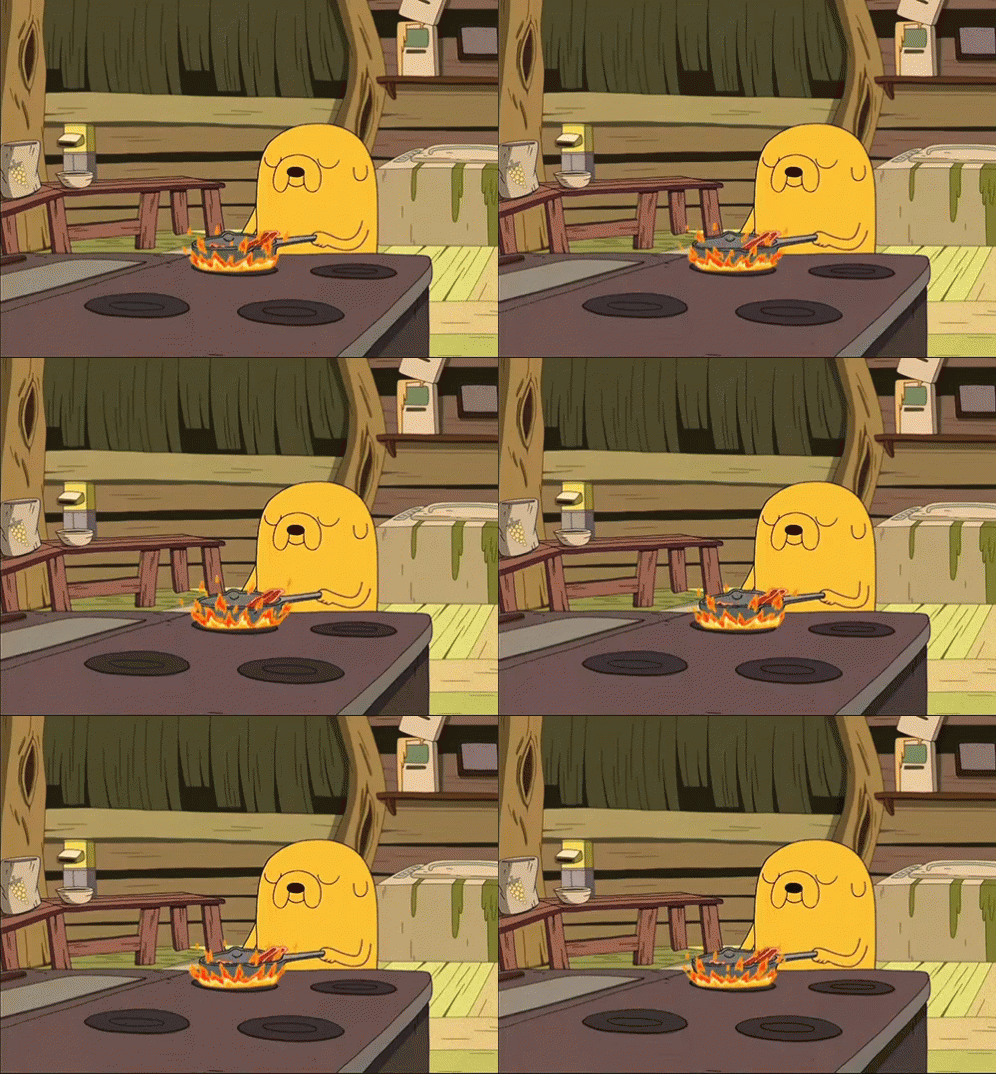
Animated GIF of Jake from Adventure Time serenely frying bacon pancakes
Continue reading

Making Headway- Advancement in the Kitchen

If you had told me a year and a half ago that I’d be second-in-command in my bakery, I would have asked what the hell went wrong.

Well, obviously COVID did, but that was only part of it.

So far, my current employment has been where I could say my most “traditional” career growth has taken place. I started as a morning baker, became a shift lead, and then Production Lead- the right hand of my manager who runs the kitchen under the auspices of the owner. My usual station is Pastry Prep (previously considered the position for newcomers and students)- but in addition to my actual production work, my other responsibilities include:

  • Fielding questions to take weight off my manager.
  • Training, advising, and assisting the other bakers as necessary.
  • Troubleshooting problems with production or facilities.
  • Responding to the higher-ups when the manager is indisposed.

Not to toot my own horn, but I handle all of it quite well, and I feel that the responsibilities I have are well-placed. In the meritocratic lore of the kitchen, this is as it should be- employees develop, rise to the level of their capability and talent, and acquire new power, responsibility, and recognition each time.

What is NOT part of that lore, or mentioned in my own ascendancy, is just how many good people I worked with deserved those roles and recognition more than me, but left for a variety of reasons. How much of advancement in the kitchen is actually meritocratic, and how much is “dead man’s boots?”

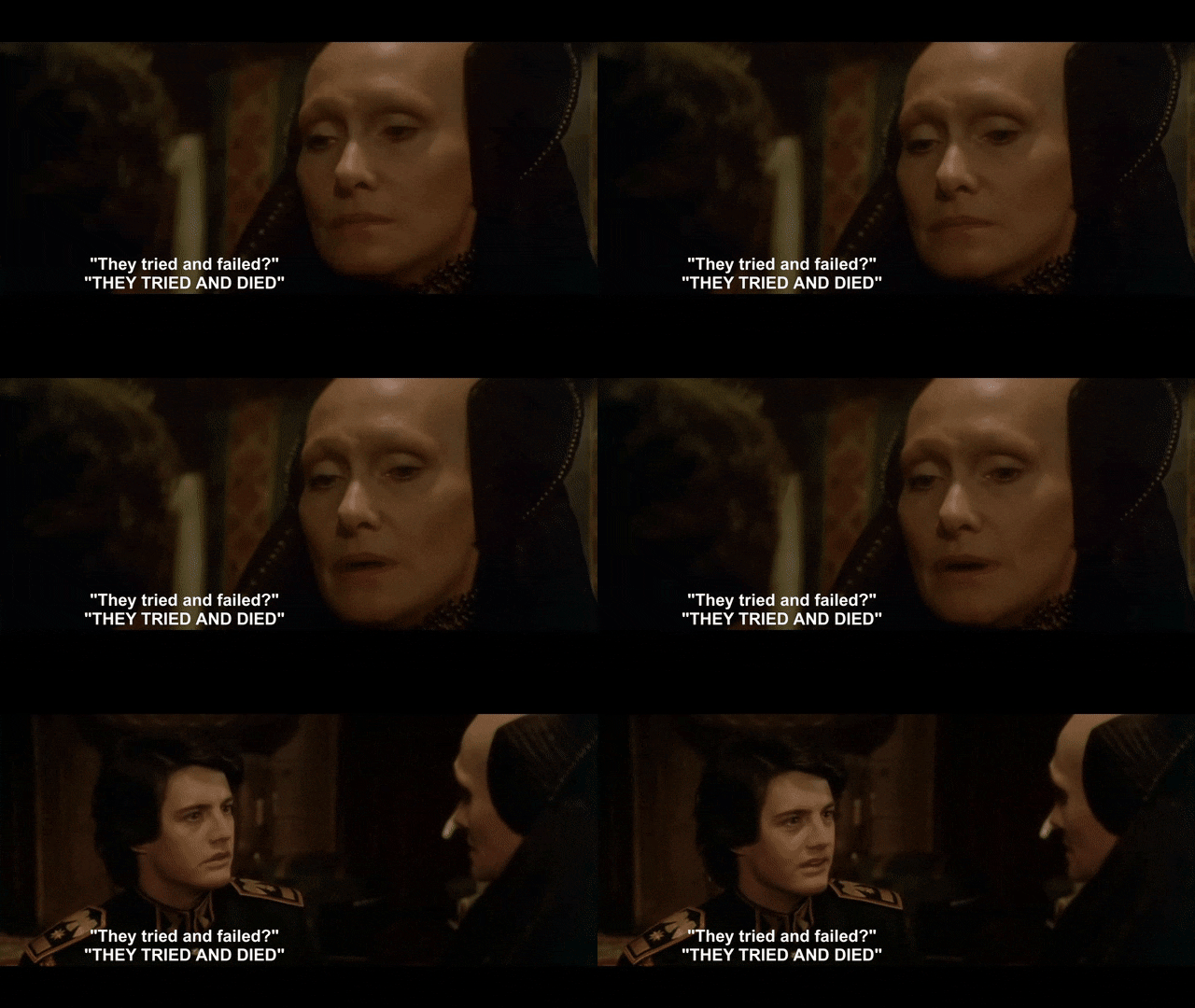
Animated GIF from David Lynch's "Dune" of Paul Atreides and the Reverend Mother talking. The quote is "They tried and failed? They tried and died."
“Many men have tried.” “They tried and failed?” “They tried and died.” (from Dune)
Continue reading