The Staff Of Life, Liquified

Beer was liquid bread. Bread was solid beer.”

– Tom Standage, “A History of the World in Six Glasses

Walking in is as different at every beer hall as it is the same. Different decor, different vibe to the place, different service… different menus to be sure. Behind it all is a shared sensory vocabulary, however, that make each reminiscent of the others.

The arrangement of tables in the hall, sometimes, so that there is a selection of intimate booths for those who want to drink alone or in very select company and long linked tables for boisterous get-togethers and ersatz parties among colleagues. The general geography- you can see the seats and you can see the bar (the style and texture of which again reflects the mood and vibe of the place.) There is a clear order of operations to be observed here. A ritual to be followed and walked as carefully and unconsciously (for the faithful) as the Stations of the Cross.

A selfie of the author wearing an olive green newsboy cap, green tweed vest, and white shirt raising a pint of dark beer.
Continue reading

How To Serve A Season: Winter

If you go through world folklore- from places where winter is a thing- you’ll find the connection of Winter and Death.

In Norse Mythology, Idunn, goddess of youth, falls from the branches of Yggdrasil while picking the apples she feeds to the gods to keep them strong. She plummets- like a falling leaf- all the way to Niflheim and Hel. Niflheim and Hel are at the very bottom of the tree, the realms of ice and the dead, respectively. When the gods find out and Hela (goddess of death) refuses to let her go immediately, Odin gives her husband Bragi (the god of poetry and song) a white wolf skin to keep her warm until Hela lets her go. Odin (the sky) sends a white blanket (snow,) song and poetry to keep Youth comfortable until she is freed.

We can see it again in the well-known story of Persephone and having to stay with Hades for part of the year, during which her mother Demeter won’t let anything grow.

The trees lose their leaves. The snows, rains, and winds come. Animals hibernate, and wait for the world to live again.

Fall slowed everything down. Winter is when we are meant to stop and rest. Humans aren’t so good at that though, so we adapted. When the Earth retains and nurtures its bounty, we have gotten VERY good at relying on when it didn’t.

Photo by Adriaan Greyling
Continue reading

How To Serve A Season: Autumn

It took growing up for fall to be something I looked forward to. Growing up on the Jersey Shore, itt meant the start of school, the tourists going home after leaving all their money and trash behind, the streets becoming cold and quiet, and the beaches being empty to enjoy any stray warm days after Labor Day.

In college, I got to see the legendary “Hartford in the Fall” and enjoyed the changing leaves, the coziness of hot beverages and fire pits at night, and the death of all the bloodsucking insects that swarmed in the summer.

Now, in the PNW, I get to experience and enjoy autumn on my own terms. I get to wear warmer, fuzzier clothing more. Evenings spent drinking whiskey in my cozy rocking chair are the constant rather than a treat, and IPAs finally start to vanish from taplists to make room for the darker, maltier beers I love.

AND the mosquitos drop dead. Wins all around.

It is Pie Time.
It is Stew Time.
It is Scarves and Hoodies and Shawls and Tweed and Not Making Excuses for Wanting to Stay Home and Be A Hobbit Time.

I’ve still gotta go to work though, so I’m working on sharing as many of those vibes as I can through food.

Basque-Style Pumpkin Cheesecake with Candied Squash, Pomegranate, and Corn Cranberry Florentine. Seasonal dessert I created for Amaterra Winery.
Continue reading

Sandwiches I Have Known and Loved

They can be basic. They can be opulent. They can be artisanal, antique, unwieldy, oysgeputz, offensive, unfathomable, and unconquerable. But they are always, unquestionably, themselves- and require no explanation.

Sandwiches are beautiful things- a convenience food par excelence– and here are some of my favorites.

John Montagu, the 4th Earl of Sandwich- aristocrat, gambling addict, and apparently a culinary genius.
Continue reading

“Whose Idea Was This?”- Looking At Vintage Recipes and Food History

Like most of the internet, I’ve gotten a real kick out of the Tik Tok videos of Dylan Hollis. The vintage style aficionado and self-described amateur food historian has carved a space for himself on the internet with his bombastic personality and humor while testing out recipes spanning the 1800s to early 2000s.

The recipes he tries vary wildly in quality, and the recurrence of typically timely ingredients (especially lard and gelatin) regularly turn into comedic gold. More than once, Dylan strikes oil in his search for tasty recipes (“magic” peanut butter cookies and an eggnog recipe from the 1800s spring quickly to mind) and I sometimes use his videos as inspiration for things I can make at the pie shop.

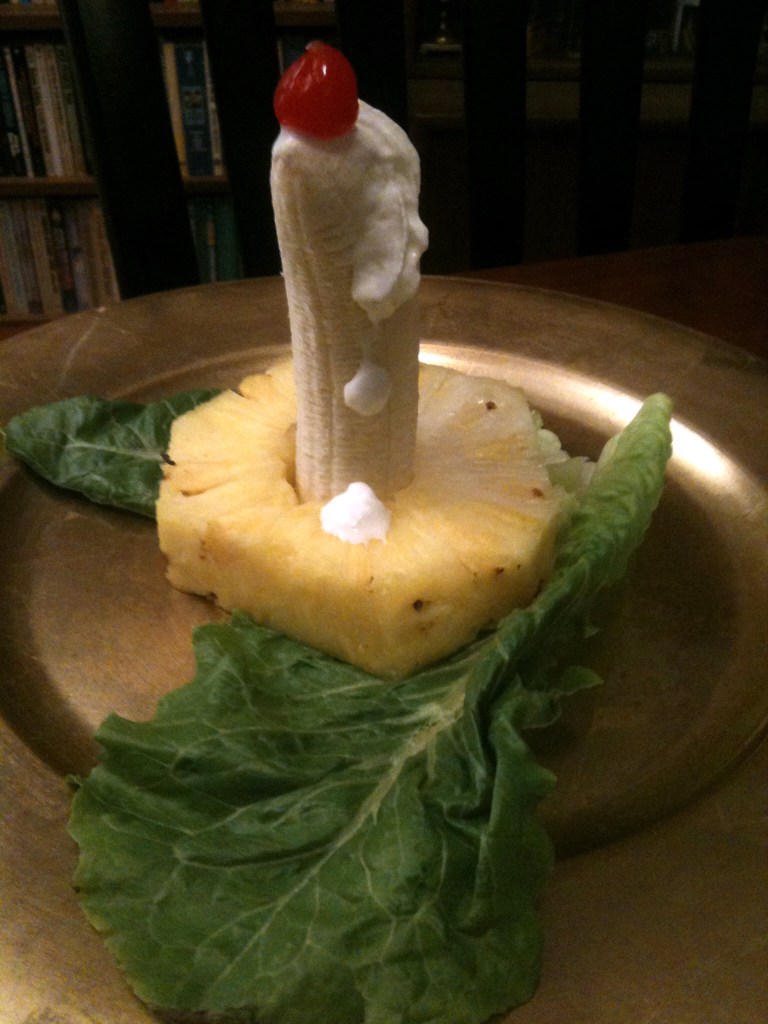
Most often, I find myself intrigued by the recipes he picks and the trends they exhibit. WHY so much lard in everything made before the 60s? Why so much gelatin in mid-century America? Just HOW freaking high, lonely, horny, or all three must someone have been to create the “Candlelight Salad?”

The answer is, simply, that these recipes- like the books, movies, and music that were enjoyed then- are products of their time. Foodways are a part of culture and one can track the history and trends of a period of time as easily in a cookbook as you could a textbook.

Someone back in the 1920s decided that this was a salad. James Beard described it as “culinary eroticism.”
Picture from Wikipedia.
Continue reading