Beauty in the Ordinary

I was working my day job not too long ago, and got into a conversation with one of the other bakers- a talented cake decorator of 20+ years who confesses that, after so many years in the culinary world, she has developed a love/hate relationship with baking. The conversation echoed ones I’ve had with students and professionals alike, with various amounts of scoffing. We were looking at a catalogue from a chocolate decor company, depicting fantastically designed cakes and desserts (using their chocolate elements, of course.)

My friend: “Look at that, how gorgeous is that!?”
Me: “Very pretty. Looks a bit too busy for me, though.”
My friend: “What do you mean, busy? This is art!”
Me: “I never said it wasn’t! Whoever did it clearly has skill, talent, and vision- I just wouldn’t want to eat it.”

I wasn’t lying at all. The picture was of an immaculately conceived wedding cake- pristine flowers of gum paste exploded from the corners. Delicate chocolate work clung to the velvet-smooth sides of the tiers seeming to defy gravity. Flashes of color seemed to dance over the cake, like wisps of flame against a snowy field in a full moon.

It was pristine.
It was exquisite.
It was positively breathtaking.
I didn’t want to eat it.
So, in my opinion, it failed as food.

As I’ve discussed before, very often I’ve been asked by friends and relatives if I didn’t want to have my own show someday, going into a business like Ace of Cakes or Cake Boss, and my lack of desire for such work has been met by various levels of incredulity. I recall one conversation with a relative who was positively exasperated and infuriated when I insisted that I didn’t want to grow my business to such a point that I would no longer have to bake- in his words, where I could “just show up on Monday, collect my check, make sure no one’s hurt themselves, and leave.”
He insisted I was being idealistic and naive. I insisted that he just didn’t “get it.”
In a way, we were both right.

To my mind, food shouldn’t just be beautiful- it should be appetizing. Any outward beauty or elegance should be in service to making the dish whet the appetite- to make that first bite “taken with the eye” utterly intoxicating and addictive. Food is a unique art form in that a vital part of its existence and reason for being is its destruction. Name a single book what was written with the INTENT it should be destroyed. How about a painting? A song written so that it should never be sung by anyone again? It doesn’t exist.
Only food finds its ultimate fulfillment in its moment of destruction.
Food, despite all the meaning and beauty and symbolism we attach to it, is what in the end? S*** in waiting.

What makes food beautiful to me? Three words- “Simplicity, with elegance.”
Put another way, ordinary things done extraordinarily well. 
I want my food to look like food, but I want it to look like EXQUISITE food. For example, can you think of something more plain and ordinary than a pie? They are everywhere- housewives make them. Definitely not something you’d find on the menu of a Michelin Star winning restaurant. 

A pie done with ELEGANCE, however, is something else.
A warm, soothing aroma from the oven that wraps its arms around you like a loving grandmother.
A soft, crackling sound from the crust as it cools and the layers shrink and separate.
The intricate, delicate crimping of the edges- reminiscent of a wreath of flowers, or a hand-sewn lace.
The engaging, golden color and shine, provided by a perfectly mixed eggwash, brushed on the crust at the RIGHT temperature, at the RIGHT time.
Vents, clean and sharp as the knife that created them, offering a peek at the goodness inside.
And finally, the filling- homemade, with the BEST and FRESHEST ingredients, in the PRECISE proportions to create a filling neither too stiff, nor too runny.

Just writing all that made me drool.

It is wonderful, necessary, and desirable to have artistry and skill. But elegance and finesse are something completely different. If you can execute your work with that, even the simplest things can be a work of art.
And they’ll be food.
Food that people want to eat.

Be tasteful,
be elegant,
and of course,

Stay classy,

-BHB
Commence Blog Dump: Pictures and Recipes

Good afternoon, my friends! Sorry about the month long silence- restarting my day job has unfortunately drawn much of my time and attention, as well as recipe experimentation and baking for a few weddings and parties upcoming. Please accept the following blog and picture dump as recompense:
All of these recipes came out pretty darn marvelously… so it would behoove me to share them with you!

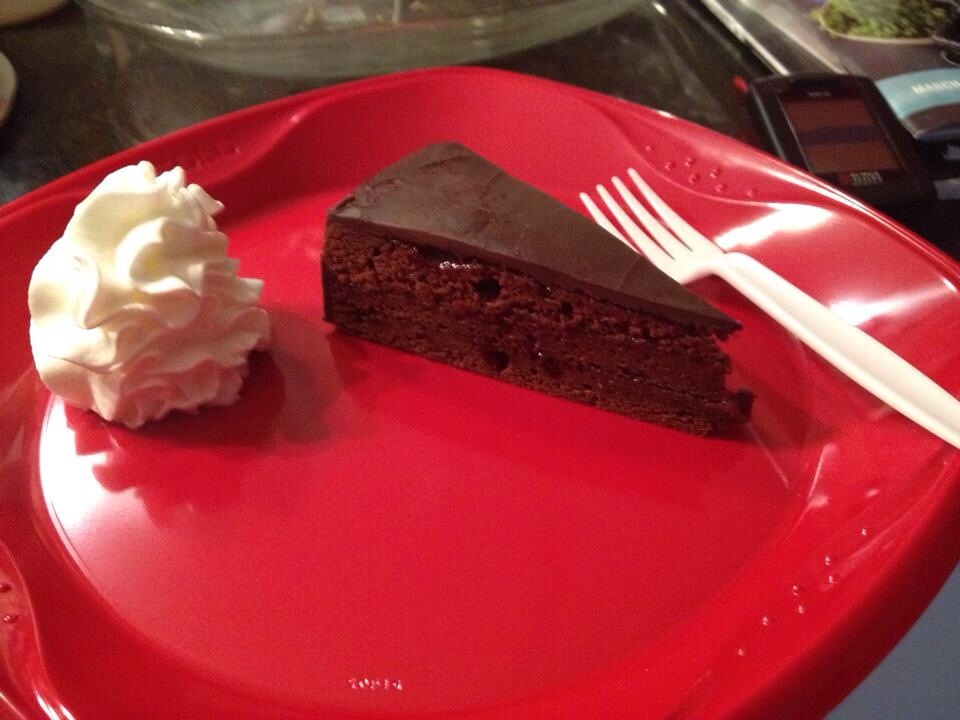
Viennese Sachertorte
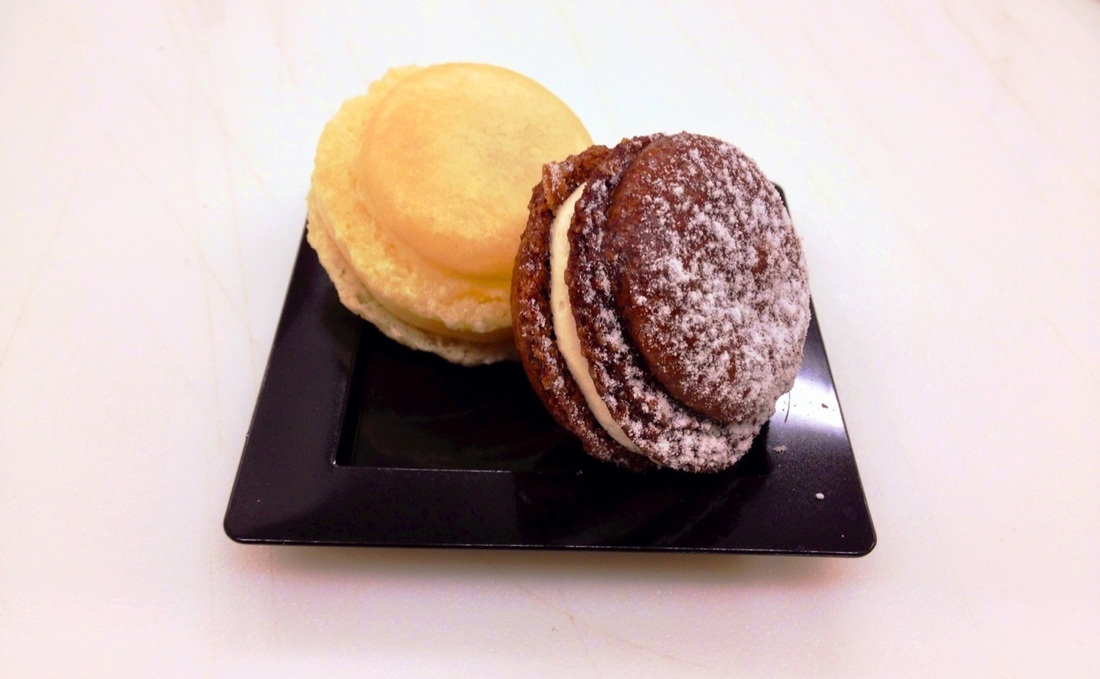
French Macarons (The Black Forest and La Vie en Rose flavors were my own devising- be logical, but creative!)
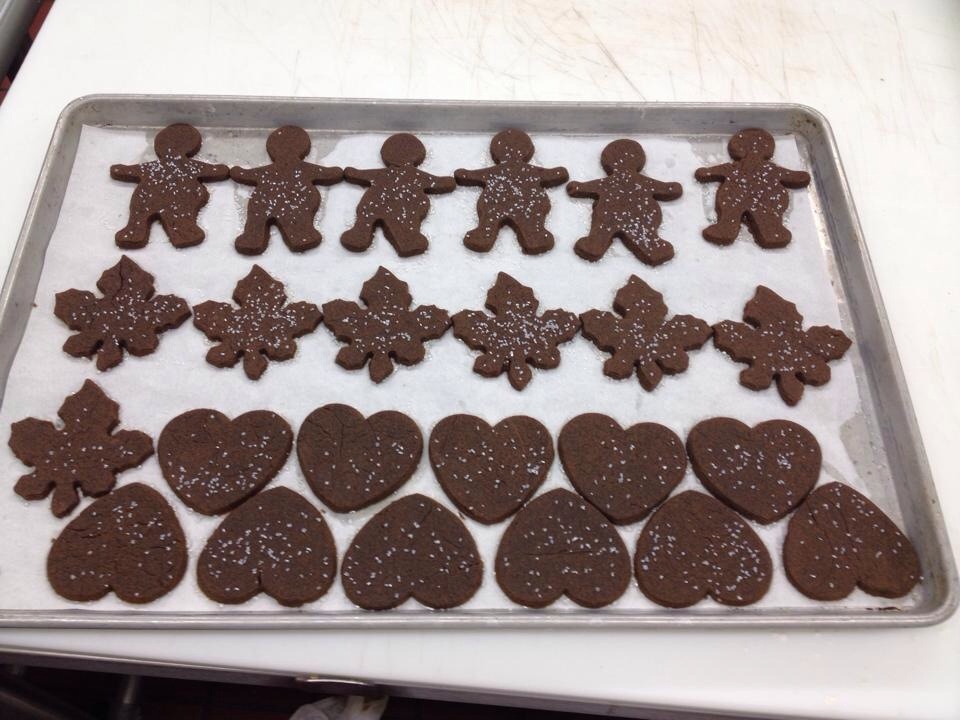
Gingerbread

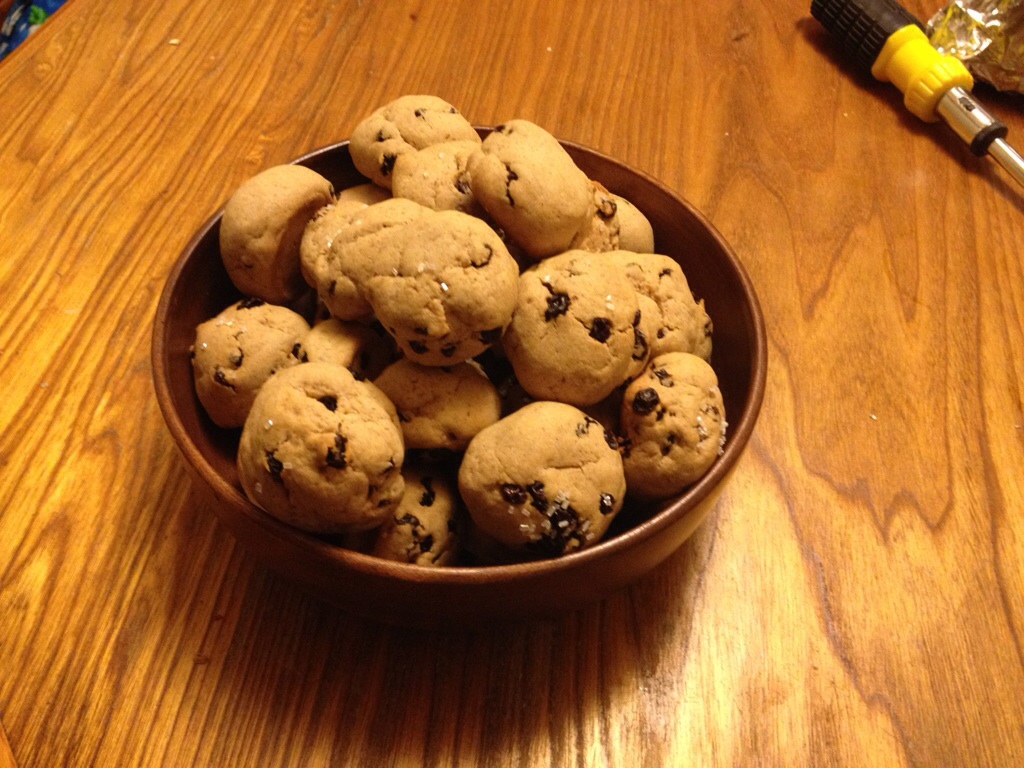
and Shrewsbury Cakes are as follows, courtesy of my friend Lauren-

Shrewsbury Cakes 

1/2 pound butter
1 cup sugar
3 large eggs
1 teaspoon nutmeg
2 teaspoons cinnamon
1 teaspoon mace
2 tablespoons brandy
1 tablespoon rosewater
4 cups flour

1. Cream together butter and sugar.
2. Beat in eggs, one at a time.
3. Beat in nutmeg, cinnamon, and mace.
4. Add brandy and rosewater.
5. Beat in flour, 1/2 cup at a time. The dough will be sticky; flour hands to form dough into balls.
6. Put balls of dough on parchment paper or on a greased baking sheet, and bake in 350 degree oven. After about 10 minutes, sprinkle the cakes with sugar and return to the oven for a total of 20 minutes, or until the cakes are lightly browned.
7. Remove from pan and cool on a rack. Yield: 60-80 cakes depending on the size of the balls.

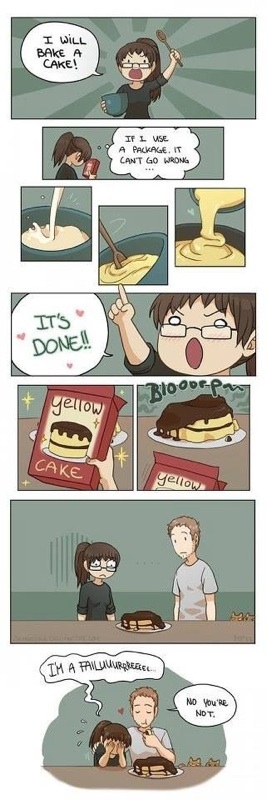
Happy baking, and remember- the only failure is not trying!

Have fun and

Stay Classy,

Why is No One Cooking?

     Good evening, friends and neighbors!

     The other day, one of my chefs posted this article from Esquire, titled “Nobody is Cooking Anymore.”

     The quick and dirty summary of the article is: the state of American cuisine is such that plates at restaurants feel “composed” or “assembled” rather than “cooked.” What I got from the article is that the author feels that dishes are presented as edible works of art: each piece wondrous and perfect on it’s own, but then simply arranged on the plate in a pleasing manner, and he wants to see a return to things being cooked as a union of flavors- mentioning specifically stews, dirty rice, bagna-cauda, and cassoulet.

     While I disagree with some points of his article, there is one point there that I wish he had discussed more. It’s something I have brought up on this blog before, and I daresay I will again, but here it is:

     You don’t need to go out to eat well, and the best food doesn’t necessarily go for $80 a plate.

     If you grew up in a cooking household, this is likely a “duh!” moment for you. The very best, most timeless recipes we have today are old recipes from the poorest and most desperate times in our culture- or else deviations of them. The formula went simply thus: 

What You Have or What’s Cheap and Plentiful + Preparation Permitted in your Situation = Tasty Something That Fills You Up

     Simple, huh? 
     From this formula though, we get matzah ball soup, sausages, Vietnamese pho, Scottish haggis, shrimp and grits, tarts, tripe soup, ratatouille, beef and Guinness stew, corned beef and cabbage, cassoulet, and many others. The best food in the world doesn’t need to come with a four figure bill- many travelers (including myself) have found the best meal of their trips standing on sidewalks, coming out of a cart, or slapped into their hands for pocket change. 

     Cooking and baking have many facets. Some of the best wisdom I’ve ever heard is that cooking is about “taking the very best ingredients, and not screwing them up.” The addendum to that is “and let them work together.” It takes phenomenal art, skill, and education to make one of the plates you’ll find in a three Michelin Star joint in Manhattan. It will likely be wonderful. Wonderfulness, however, can also be found in a simple bowl of something hot, made right.

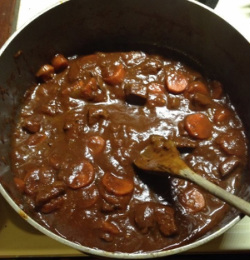
     In testament to this fact (and since I haven’t included a recipe on here in a while), below you’ll find my recipe for Beef and Guinness Stew. The most expensive thing you might find in this recipe is either the meat or the beer, but if you make it right (and enjoy it on a cold winter night, with a bottle of dark, heavy, malty porter or stout), it won’t matter at all- because sometimes a bowl of something good and hot, and bottle of something good and cold, puts you right where you belong.

     Stay classy,

Beef and Guinness Stew

Picture

Ingredients

—————

1lb. boneless chuck beef (some places label it for stew)

1 large onion, roughly chopped

3 large carrots, sliced into thick coins (about 1/3″-1/2″)

2 tbsp flour, seasoned how you like (I used a pinch of cocoa, chili, coriander, parsley, thyme, and paprika)

12 oz. Guinness (I used Extra Stout, but you can use any porter or stout you want)

3 oz.  tomato paste (plain, no spices – this is half of one of the tiny cans)

1 tbs. minced garlic (about 3 cloves or so)

Rosemary, salt, pepper to taste.

Method

———

1. Toss the beef in the season flour to coat and brown in pan with a bit of hot fat (Pam, veg oil, whatever.) When browned, remove the beef to a bowl and use the same pan to fry the onions until translucent. If they burn slightly, perfect. I used the same large pot for this step as I did for cooking the stew- any burned bits get deglazed by the beer and go into the stew.

2. When onions are ready, add beef back in, along with the carrots and Guinness. Bring JUST to a boil, and then add the paste, garlic, and rosemary. Bring JUST to boil again, and immediately cover tightly and reduce heat down to a gentle simmer (medium low to low).

3. Let it simmer for 1 1/2- 2 hours. Check regularly (every 30 min. or so) to make sure it doesn’t dry out. If needed, after 45 minutes, add 6 oz.water and stir.

After 2 hours, if the carrots and beef are tender, serve with boiled potatoes on the side, or a dollop of mashed potatoes right on top with each bowl.

NOTES: Spices were used without measurement and were to my taste. If it tastes good on beef, it’ll work here

Also, 2 hours is a ballpark figure. As with most stews, this is low and slow cooking- if you can get this going 4 or more hours ahead of time and keep an eye on it, it will only get better, and everything more tender.


Magic On A Plate

Good evening, friends and neighbors!

     I was straining pretty hard trying to find something to talk about tonight. I like to think that I throw interesting idea up here, and I certainly wanted something thought-provoking.

   Nothing came up immediately, so I flicked over to YouTube and said, “Eh, I’ll think of something.”

    As I was rolling through YouTube, I noticed that one of my favorite channels, Extra Credits, had put up a new video. For those of you who don’t know, the Extra Credits puts out weekly videos based around various aspects of video games- design, writing, storytelling, mechanics, marketing, the industry, etc. As a bit of a gamer and literature/history nerd, their videos frequently get me rather intrigued in aspects of art I hadn’t truly devoted much time (or thought) to. For example, they have done videos on Horror characters and monsters, character development using the Myers- Briggs Type Indicator, a crash course in symbolism, and even a quick and dirty (but interesting and informative) overview of the “hero’s journey” narrative. I highly recommend looking them up if any of that appealed to you- or indeed, if you like games, writing, or business at all.

     Their most recent video discussed something that, as a writer and wanna-be storyteller, I never realized had a name- the magic circle. The magic circle, in brief, is an atmosphere created that “draws people in”- that lets the audience divorce themselves from the real world and enter the world of the story. This can be generated by a number of things- the presence of music, stirring and startling visuals, the hint of the mysterious, even the physical location and conditions the audience is in. It’s whatever qualities in a story or it’s performance that let the audience lose themselves in the world and invest in the story.

     As I was watching the video and listened to the Extra Credits crew discuss examples of how it works and where it can be found, I got to thinking about something else I had read recently that made mention of very similar notions- a book I had picked up on Judaism.

    Rabbi Niles Goldstein’s excellent book Gonzo Judaism was suggested to me by my older sister. Having grown up in a pretty secular Jewish family, and part of a religious congregation we had roughly ZERO interest in, we had both spent quite a lot of time in recent years debating and evaluating our identities as Jews- if that’s what we would even call ourselves, what it would mean if we did, what it would mean if we DIDN’T, and so on, back and forth. In the book, Rabbi Goldstein calls for a change in what seems to be the dominant atmosphere of American Judaism and calls for younger, questing, vibrant souls to confront Judaism in the same spirit that Hunter S. Thompson confronted journalism (creating what he called “gonzo journalism”- hence the book title.) One chapter in the book discussed how a “new” Judaism didn’t need to (and, in fact, couldn’t) completely divorce itself from the old, and how some congregations have been looking backward- digging up old, forgotten, esoteric prayers and rituals from Judaisms past and breathing new life into them. 

   Regardless of which religion you come from, or even no religion, the impact and effect of ritual cannot be denied. Rituals, performed properly, and with full faith and knowledge of their meaning, are not just superstitions and chores, but SYMBOLS. Even if you are not religious, you have certain habits in your life that MEAN something. When you come home from work and take off your tie or put on comfy clothes, that is a ritual- one of making the transition from your work self to your home self. Inversely, when I was working at a hospital, it didn’t matter if I had arrived early for my shift and was in the building for 30 minutes already, clipping on my ID badge felt like I was “officially” on the clock, and at work. Even the simplest images and actions can have power if we give it to them- then they become rituals.

When several rituals are used together, they create an atmosphere- something that draws us out of ordinary life and into the holy moment we are experiencing. Lighting candles, lighting incense, singing certain songs, wearing particular clothes- all work in concert to draw us into something different.

In other words, they create a magic circle.

Anyone I haven’t lost by now is probably nodding and going, “Ok, great- rituals are important. I thought this was a food and dining blog.”

     Well… what else is food? What else is sitting together at a dinner table? The smell of dinner coming in from the kitchen… the taste of THAT roast chicken your family ONLY makes on Friday night. How are these anything BUT rituals? How is that anything BUT a magic circle, dividing Friday night dinner from all the other dinners you had that week? 
Restaurants spend an incredible amount of money on creating ambience- decor, music, lighting, furniture, uniforms for the staff- all of it based around a certain theme and meant to convey a feeling- creating a magic circle in which you are physically and emotionally enveloped in a single story- the story of you having dinner. As Warner LeRoy said, “A restaurant is a fantasy — a kind of living fantasy in which diners are the most important members of the cast.”

     In Gonzo Judaism, Rabbi Goldstein gives suggestions on how to approach rituals- creating ones for yourself that will create a separation for you: a division between the sacred space and moment in time you want, and the rest of the mundane world. Lighting incense, putting on certain music, fixing particular foods- all serve to bring you mentally and emotionally to somewhere far, far away from where you are. 

    Meals do not need to be, and perhaps were not meant to be, just necessary pauses in the day to shove nutritious material into your body.

     Nothing NEEDS to be “ordinary”. Every day doesn’t NEED to be “same shit, different day.” All it takes is the desire to make it different, the awareness of how, the attentiveness to make it happen- and just a bit of the magic we place into anything that matters.

Stay classy,

Bake What You Know

    Hello, my friends! I hope 2014 has been going well for you all, and that everything is moving along deliciously.

I am currently sitting in my girlfriend’s living room while she plays piano.

Me: “Hun, I’m three days late on a blog entry. What should I write about?”

Em: “Weren’t you talking earlier about eating and dining culture? Write something about that?”

Me: “That’s ALL I write about though- I need something else!”

Em: “How about you? Write about your roots and whatever.”

I knew I was dating her for a reason, ladies and gents.

     There is wisdom and warning in the classic saying, “Write what you know.” It reminds the writer that there are always ideas, and that one should always be able to write about their chosen topic knowledgeably and responsibly. The caveat, however, is that only writing about what you know discourages you from researching and learning more.

How does this connect to food?
Simply, and I will illustrate with a thought exercise.

Sit back and think a moment about some of your favorite memories. Moments that made you feel warm and loved- or maybe ones that made you feel invigorated and alive.
Recall every detail of those moments that you can. Every single sensation- touch, taste, smell, sound, vision.
The two that will come to you most readily and rapidly will be taste and smell. 

    When I do this, I can almost immediately recall the taste of my grandmother’s matzah ball soup and her corn pudding. I can quickly recall the smell of the whiskey and beer my friends and I had on a wild pub crawl through Manchester, New Hampshire late one night. (I also recall the aftermath, less fondly.)
     These moments stay with us, and we carry them our entire lives. Writers carry the inspirations and lessons of every book they ever read. Painters and photographers carry the same from every picture and all their favorite painters. In a way, we all have a sort of gallery in our minds, where the exhibits are memories and the library is full of ideas and inspirations.

 A chef’s gallery is full of food. Every table they ever sat at, every dish they were ever served, every restaurant, cafe, diner, and bar they’ve sat in- they can pull from that gallery quickly and vividly. They can pull from it and create.

The food writer Molly Witzenberg put it very well when she wrote:

  “When I walk into my kitchen today, I am not alone. Whether we know it or not, none of us is. We bring fathers and mothers and kitchen tables, and every meal we have ever eaten. Food is never just food. It’s also a way of getting at something else: who we are, who we have been, and who we want to be.”

In my personal gallery, I have my mother’s kitchen, and the smells of family dinners with my grandmother. I have every fine dining experience that was ever afforded to me. Whenever I am called upon to make a new dessert, I immediately fall back on those memories, so I might modify the saying to be “Bake what you know, and bake what you love.”

Just like the original saying though, there is a caveat.

If you want to cook well, you must first learn to eat well. Seek out and sample strange new things whenever you can- a culinarian has no place being a picky eater. If anything, get picky about quality. Life is too short to eat at McDonalds and the local diner every day. 

If you want to make amazing new things, do your homework, and expand your gallery.

Stay curious all and, of course,

Stay Classy,