Eye of the Storm

Picture

Good evening, friends and neighbors!

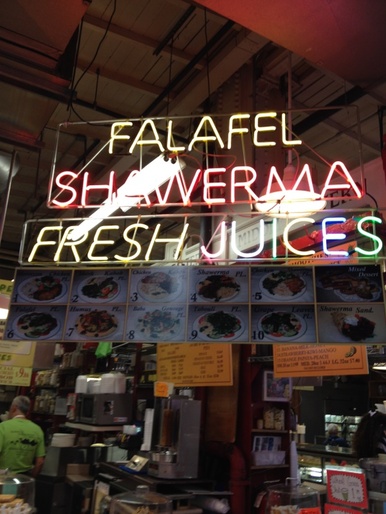
 As I write this, I’m sitting in the central court of Reading Terminal Market in Philadelphia, PA. I dearly love coming here. It feels like a microcosm of the wild, manic city it’s nestled in. All around me are people from all walks of life- youth groups on tour, oohing and ahhing at every little thing,

 professionals taking late lunch breaks before hustling back to the office, 

husbands and wives doing their grocery shopping,

 and, of course, in the background, the men and women who call this place their office- the ones who spend between 8 and 12 hours everyday making sure this place is just as remarkable, wild, and exciting as it is. 


 Writing is sometimes an awkward thing. I sat down three times this weekend, determined to write SOMETHING for this blog. Three times I sat down in placid surroundings- quiet, calm, and nothing to distract. It was only here, however, amidst the noise and manic choreography of a marketplace that I felt I had something to write about.  

From where I’m sitting, I can see stalls offering foods and cuisines from around the world. There’s a stall that specializes ONLY in honey, bee, and beeswax products. There’s a small bookstall on the other side of it that only sells cookbooks, but far to the back corner of this cavernous space is another bookseller peddling the odd, unusual, and rare. For some reason, “Portabello Road” from “Bedknobs and Broomsticks” runs through my head when I walk past there. 

I’ve just picked up some delicious fruit from one of the produce stalls in the market- a red plum and a tiny Seckels pear. I’ve pulled out my Swiss Army knife here before (an unwise move in ANY city these days), and casually carved slices of juicy pear and apple with my girlfriend, feeding us directly from the blade. No one bats an eye. 

This is starting to sound like something I could sell to the Philadelphia tourism board, I know, but there is a point. No matter where you go, where you travel or when, markets and marketplaces are a fast track to the heart and soul of a community. You can see what people like, what they don’t like, and what they are eating all at a glance. A glance hardly does justice, of course. As Hunter S. Thompson said, “Buy the ticket- take the ride.”

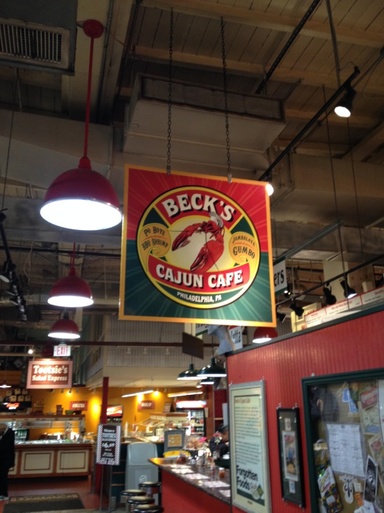
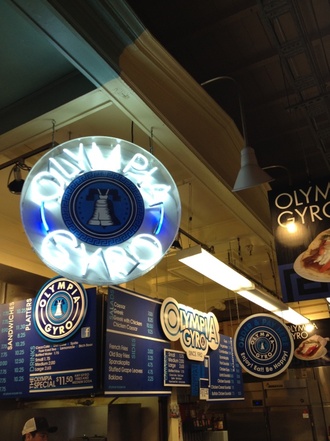
When you can come to one place and try Greek, Mediterranean, Halal, kosher deli, Cajun Creole, fine salumi and cheeses, Chinese, and German cuisines, how can anyone NOT take advantage of this? I can’t decide whether I envy or weep for anyone who takes a place like this for granted. The world is an amazing place- full of life and light and flavors that many in America many never know or experience. When you have a place like this, where you can try ALL of it, a mere train ride away, you truly have no excuses. 

Stay open, my friends. 
Stay hungry. 
Stay adventurous. 
And, as always- 

Stay Classy,

Garbage In, Garbage Out

Good evening, friends and neighbors! 

I’m willing to bet everyone has heard the aphorism I picked for the title of this entry in one way or another. “You get out what you put in.” “You get what you give.” “If you want the best, use the best.” 
Obviously it applies to your work, your relationships, your hobbies, your lifestyle- virtually everything (food and baking in particular!)

It applies to your mind too. I’ve mentioned in a previous post about how artists build up a mental gallery, comprised of everything in a given medium they’ve ever experienced. Painters recall their favorite works, poets their favorite poems, cooks and bakers their favorite dishes. From these elements, they draw inspiration to create what’s new.

It follows then: if your gallery is filled with asinine crap, what can you possibly put out? The only thing you can get out of bad examples is dire warnings. Good musicians seek out the work of other good musicians. Good writers read good books, and culinarians should eat good food.

As I was thinking of what to write for this entry, my eyes wandered around my bedroom and fell on my bookshelves. I read quite a lot, and very varied subjects- religion and philosophy (comparative theology was an interest for much of my life), psychology (my BA degree), poetry, fiction, biographies, epics, and- of course- my cookbooks and food texts.

Much of what I know and do is not just due to personal experience and education- formal, tangential, and otherwise,- but also to the sheer amount of information and quality of work I had chosen to surround and bombard myself with.
Here are some of my favorites. The list nowhere near definitive, but for anyone out there that wants to build a mental gallery of their own- or just have some interesting material to hang in it, I highly recommend these as a starting point.

The BHB’s Book List

  • Kitchen Confidential, Medium Raw, and The Nasty Bits by Anthony Bourdain
  • So, you want to be a professional cook? Dream of getting paid to make magic in the kitchen of some big city bistro? Here’s real talk- Bourdain spent 25 years in the culinary world, and has no problem telling you what it’s really like. When your done with that, he tells you what it’s like to travel the world- talking to people and eating food you’ve only ever seen on TV. If you STILL want to be a cook after all that, you’re just crazy enough to do it.

  • The Joy of Cooking by Marion Rombauer Becker, et al

There is a reason a copy of this book was in your mother’s kitchen. And your grandmothers. And probably her mother’s too. It is a timeless and indispensable guide to the basics of all manner of preparations. It is your encyclopedia.

  • The Elements of Cooking by Michael Ruhlman

If Joy of Cooking is your encyclopedia, meet the index. Ruhlman breaks down the little tips and secrets professional chefs use to make the ordinary into the extraordinary. If you are a student, buy a copy and keep it on you at all times. No recipes here- just know-how.

  • Professional Baking by Wayne Gisslen

This was the first baking textbook I ever got. It still sits on my shelf- an A to Z for everything to do with bread, pastry, or almost anything else to do with putting flour and liquid in an oven. It’s a little bit pricy, but if you’re a baker, it’s a perfect resource.

  • Advanced Bread and Pastry by Michel Suas

Another school textbook, this one focused almost exclusively on the precise science and exquisite art of breadmaking. If you are aware that there is better bread out there than Wonder Bread, that it comes from places beside the supermarket, or if you just want to wail on some dough at the end of the day and eat it later, this is the book you need.

  • How Baking Works: Exploring the Fundamentals of Baking Science by Paula I. Figoni

If you’re like me, it wasn’t just the warm fuzzies of feeding friends and loved ones that drew you to baking, or the pride and accomplishment dervied from working with your hands either. It was the chance to play mad scientist in the kitchen and eat your experiments. This book is the beginner’s science textbook of culinary school- want to know why we use wheat flour over others? Or why apples turn brown so quickly? Or what happens in sourdough that makes it sour? Here’s where you start.

  • Consider the Fork: A History of How We Cook and Eat by Bee Wilson

Here is the history text. Want to know why we use a wok for stir-fry? Or why you can find wooden spoons or something like in almost every kitchen? Feed your inner history nerd and find how how technology changed the food we eat and how we eat it.


In addition to these, I highly suggest the following as well-

  • Your favorite holy book (if religious)

You can’t know where you are going if you don’t know where you’ve been. Study your favorite ancient texts. If you aren’t religious, learn where your family came from and learn everything you can about the culture. You are born with a heritage- the acme of the experience and lives of all your ancestors.  If none of these apply, just pick a culture that fascinates you. Culture is a VAST pool of knowledge and inspiration to draw from, and it’s all yours. Jump in.

  • Your favorite fiction

There is no shame in escaping the real world now and again. Find your favorite fiction, and read it over again. Follow Frodo across Middle Earth. Stand beside Allan Quatermain as he traverses Africa, or stand between two worlds with Harry Potter and his friends. Go on voyages- make sure to bring back everything you’ve learned. When you finish all the books of your favorite author, find out who THEIR favorite authors were, and read their books too. The inspiration for your inspiration… think about it.

  • Your favorite poetry

Yes, I know not everyone likes poetry. Or not everyone gets it. Folks who don’t think they “get” poetry tend to imagine prancing ninnies in tights holding skulls, or turtleneck-laden beatniks wailing on bongos. Real facts? Music is poetry. Song is poetry. Poetry is rhythm, meter, cadence, word choice, intonation, and emotion. It’s speech. Start with whatever you know, and branch from there. My personal favorites include Allen Ginsberg, Jack Kerouac, Shel Silverstein, Robert Service, Robert Frost, Walt Whitman, and Langston Hughes. Start with any of them.

Once again, this list was nowhere near exhaustive- but hopefully these will be good resources for you- knowledge, idea fodder, or just something interesting to talk about with friends.
And who doesn’t need more of that?

Stay literate, stay awake, and of course-

Stay Classy,

The BHB

Beauty in the Ordinary

I was working my day job not too long ago, and got into a conversation with one of the other bakers- a talented cake decorator of 20+ years who confesses that, after so many years in the culinary world, she has developed a love/hate relationship with baking. The conversation echoed ones I’ve had with students and professionals alike, with various amounts of scoffing. We were looking at a catalogue from a chocolate decor company, depicting fantastically designed cakes and desserts (using their chocolate elements, of course.)

My friend: “Look at that, how gorgeous is that!?”
Me: “Very pretty. Looks a bit too busy for me, though.”
My friend: “What do you mean, busy? This is art!”
Me: “I never said it wasn’t! Whoever did it clearly has skill, talent, and vision- I just wouldn’t want to eat it.”

I wasn’t lying at all. The picture was of an immaculately conceived wedding cake- pristine flowers of gum paste exploded from the corners. Delicate chocolate work clung to the velvet-smooth sides of the tiers seeming to defy gravity. Flashes of color seemed to dance over the cake, like wisps of flame against a snowy field in a full moon.

It was pristine.
It was exquisite.
It was positively breathtaking.
I didn’t want to eat it.
So, in my opinion, it failed as food.

As I’ve discussed before, very often I’ve been asked by friends and relatives if I didn’t want to have my own show someday, going into a business like Ace of Cakes or Cake Boss, and my lack of desire for such work has been met by various levels of incredulity. I recall one conversation with a relative who was positively exasperated and infuriated when I insisted that I didn’t want to grow my business to such a point that I would no longer have to bake- in his words, where I could “just show up on Monday, collect my check, make sure no one’s hurt themselves, and leave.”
He insisted I was being idealistic and naive. I insisted that he just didn’t “get it.”
In a way, we were both right.

To my mind, food shouldn’t just be beautiful- it should be appetizing. Any outward beauty or elegance should be in service to making the dish whet the appetite- to make that first bite “taken with the eye” utterly intoxicating and addictive. Food is a unique art form in that a vital part of its existence and reason for being is its destruction. Name a single book what was written with the INTENT it should be destroyed. How about a painting? A song written so that it should never be sung by anyone again? It doesn’t exist.
Only food finds its ultimate fulfillment in its moment of destruction.
Food, despite all the meaning and beauty and symbolism we attach to it, is what in the end? S*** in waiting.

What makes food beautiful to me? Three words- “Simplicity, with elegance.”
Put another way, ordinary things done extraordinarily well. 
I want my food to look like food, but I want it to look like EXQUISITE food. For example, can you think of something more plain and ordinary than a pie? They are everywhere- housewives make them. Definitely not something you’d find on the menu of a Michelin Star winning restaurant. 

A pie done with ELEGANCE, however, is something else.
A warm, soothing aroma from the oven that wraps its arms around you like a loving grandmother.
A soft, crackling sound from the crust as it cools and the layers shrink and separate.
The intricate, delicate crimping of the edges- reminiscent of a wreath of flowers, or a hand-sewn lace.
The engaging, golden color and shine, provided by a perfectly mixed eggwash, brushed on the crust at the RIGHT temperature, at the RIGHT time.
Vents, clean and sharp as the knife that created them, offering a peek at the goodness inside.
And finally, the filling- homemade, with the BEST and FRESHEST ingredients, in the PRECISE proportions to create a filling neither too stiff, nor too runny.

Just writing all that made me drool.

It is wonderful, necessary, and desirable to have artistry and skill. But elegance and finesse are something completely different. If you can execute your work with that, even the simplest things can be a work of art.
And they’ll be food.
Food that people want to eat.

Be tasteful,
be elegant,
and of course,

Stay classy,

-BHB

Commence Blog Dump: Pictures and Recipes

Good afternoon, my friends! Sorry about the month long silence- restarting my day job has unfortunately drawn much of my time and attention, as well as recipe experimentation and baking for a few weddings and parties upcoming. Please accept the following blog and picture dump as recompense:
All of these recipes came out pretty darn marvelously… so it would behoove me to share them with you!

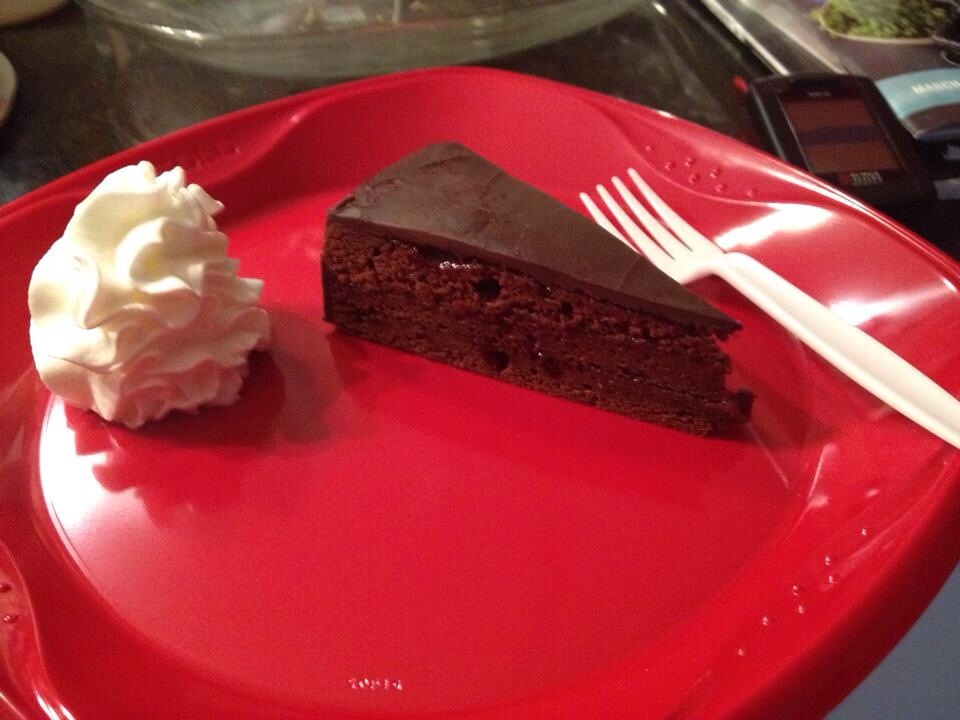
Viennese Sachertorte
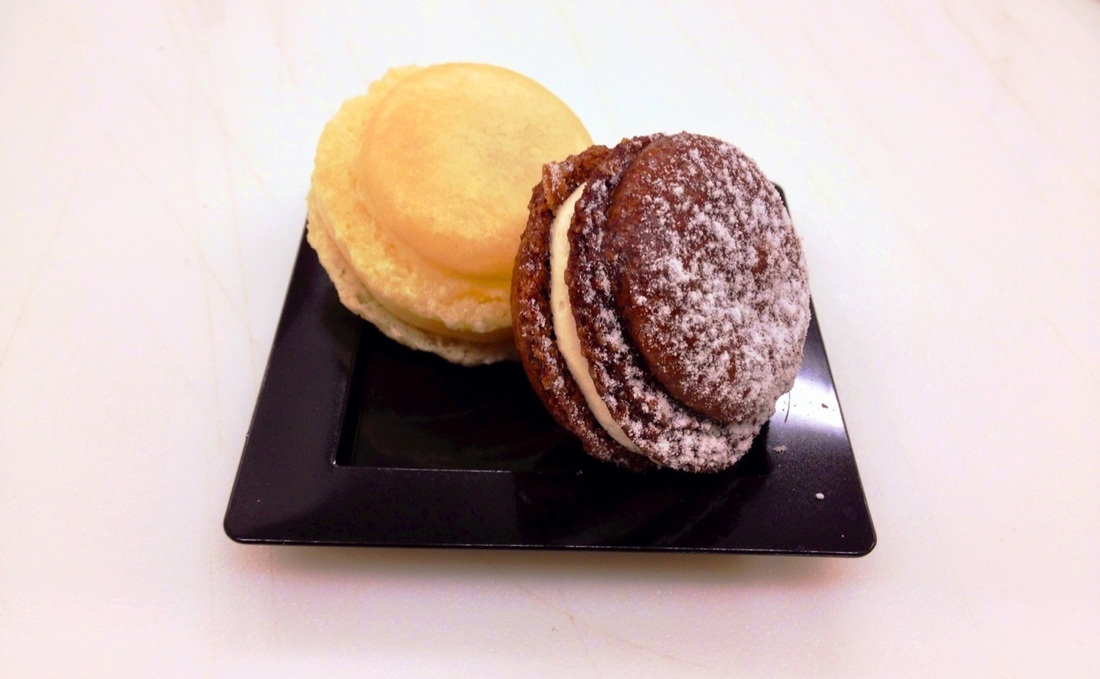
French Macarons (The Black Forest and La Vie en Rose flavors were my own devising- be logical, but creative!)
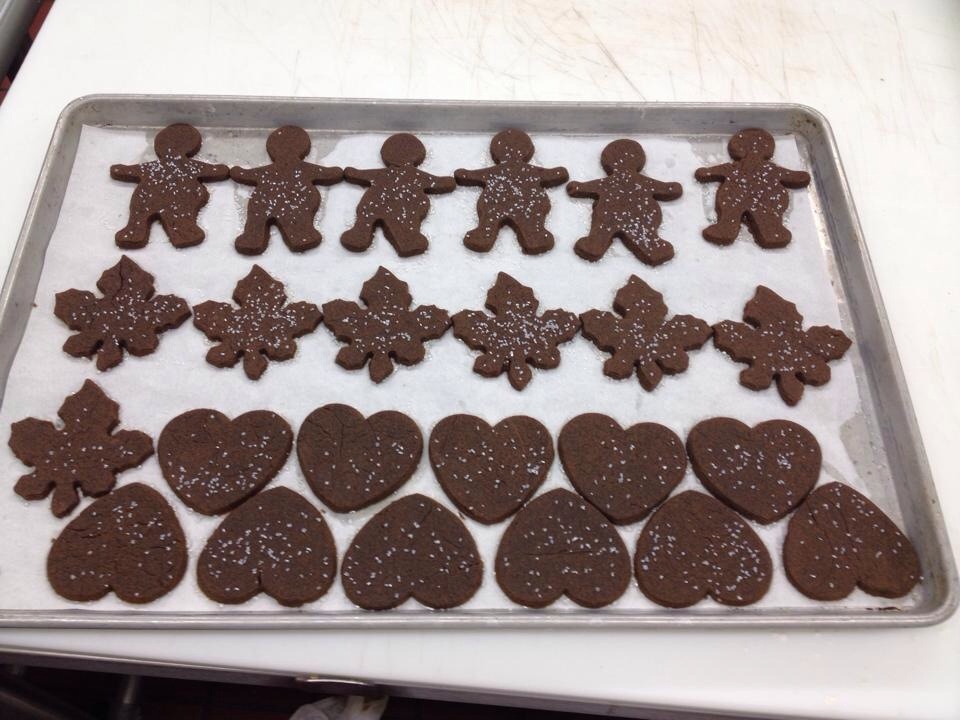
Gingerbread

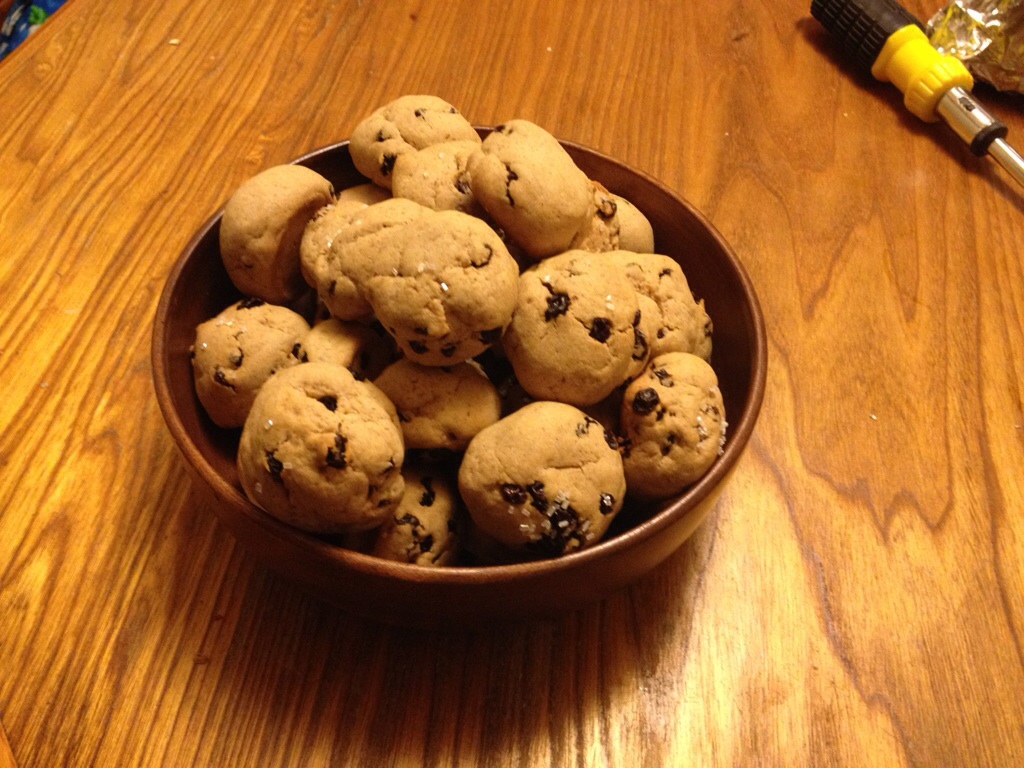
and Shrewsbury Cakes are as follows, courtesy of my friend Lauren-

Shrewsbury Cakes 

1/2 pound butter
1 cup sugar
3 large eggs
1 teaspoon nutmeg
2 teaspoons cinnamon
1 teaspoon mace
2 tablespoons brandy
1 tablespoon rosewater
4 cups flour

1. Cream together butter and sugar.
2. Beat in eggs, one at a time.
3. Beat in nutmeg, cinnamon, and mace.
4. Add brandy and rosewater.
5. Beat in flour, 1/2 cup at a time. The dough will be sticky; flour hands to form dough into balls.
6. Put balls of dough on parchment paper or on a greased baking sheet, and bake in 350 degree oven. After about 10 minutes, sprinkle the cakes with sugar and return to the oven for a total of 20 minutes, or until the cakes are lightly browned.
7. Remove from pan and cool on a rack. Yield: 60-80 cakes depending on the size of the balls.

Happy baking, and remember- the only failure is not trying!

Have fun and

Stay Classy,

Why is No One Cooking?

     Good evening, friends and neighbors!

     The other day, one of my chefs posted this article from Esquire, titled “Nobody is Cooking Anymore.”

     The quick and dirty summary of the article is: the state of American cuisine is such that plates at restaurants feel “composed” or “assembled” rather than “cooked.” What I got from the article is that the author feels that dishes are presented as edible works of art: each piece wondrous and perfect on it’s own, but then simply arranged on the plate in a pleasing manner, and he wants to see a return to things being cooked as a union of flavors- mentioning specifically stews, dirty rice, bagna-cauda, and cassoulet.

     While I disagree with some points of his article, there is one point there that I wish he had discussed more. It’s something I have brought up on this blog before, and I daresay I will again, but here it is:

     You don’t need to go out to eat well, and the best food doesn’t necessarily go for $80 a plate.

     If you grew up in a cooking household, this is likely a “duh!” moment for you. The very best, most timeless recipes we have today are old recipes from the poorest and most desperate times in our culture- or else deviations of them. The formula went simply thus: 

What You Have or What’s Cheap and Plentiful + Preparation Permitted in your Situation = Tasty Something That Fills You Up

     Simple, huh? 
     From this formula though, we get matzah ball soup, sausages, Vietnamese pho, Scottish haggis, shrimp and grits, tarts, tripe soup, ratatouille, beef and Guinness stew, corned beef and cabbage, cassoulet, and many others. The best food in the world doesn’t need to come with a four figure bill- many travelers (including myself) have found the best meal of their trips standing on sidewalks, coming out of a cart, or slapped into their hands for pocket change. 

     Cooking and baking have many facets. Some of the best wisdom I’ve ever heard is that cooking is about “taking the very best ingredients, and not screwing them up.” The addendum to that is “and let them work together.” It takes phenomenal art, skill, and education to make one of the plates you’ll find in a three Michelin Star joint in Manhattan. It will likely be wonderful. Wonderfulness, however, can also be found in a simple bowl of something hot, made right.

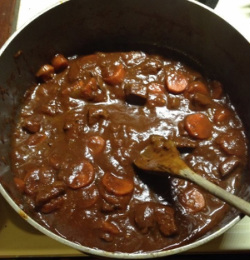
     In testament to this fact (and since I haven’t included a recipe on here in a while), below you’ll find my recipe for Beef and Guinness Stew. The most expensive thing you might find in this recipe is either the meat or the beer, but if you make it right (and enjoy it on a cold winter night, with a bottle of dark, heavy, malty porter or stout), it won’t matter at all- because sometimes a bowl of something good and hot, and bottle of something good and cold, puts you right where you belong.

     Stay classy,

Beef and Guinness Stew

Picture

Ingredients

—————

1lb. boneless chuck beef (some places label it for stew)

1 large onion, roughly chopped

3 large carrots, sliced into thick coins (about 1/3″-1/2″)

2 tbsp flour, seasoned how you like (I used a pinch of cocoa, chili, coriander, parsley, thyme, and paprika)

12 oz. Guinness (I used Extra Stout, but you can use any porter or stout you want)

3 oz.  tomato paste (plain, no spices – this is half of one of the tiny cans)

1 tbs. minced garlic (about 3 cloves or so)

Rosemary, salt, pepper to taste.

Method

———

1. Toss the beef in the season flour to coat and brown in pan with a bit of hot fat (Pam, veg oil, whatever.) When browned, remove the beef to a bowl and use the same pan to fry the onions until translucent. If they burn slightly, perfect. I used the same large pot for this step as I did for cooking the stew- any burned bits get deglazed by the beer and go into the stew.

2. When onions are ready, add beef back in, along with the carrots and Guinness. Bring JUST to a boil, and then add the paste, garlic, and rosemary. Bring JUST to boil again, and immediately cover tightly and reduce heat down to a gentle simmer (medium low to low).

3. Let it simmer for 1 1/2- 2 hours. Check regularly (every 30 min. or so) to make sure it doesn’t dry out. If needed, after 45 minutes, add 6 oz.water and stir.

After 2 hours, if the carrots and beef are tender, serve with boiled potatoes on the side, or a dollop of mashed potatoes right on top with each bowl.

NOTES: Spices were used without measurement and were to my taste. If it tastes good on beef, it’ll work here

Also, 2 hours is a ballpark figure. As with most stews, this is low and slow cooking- if you can get this going 4 or more hours ahead of time and keep an eye on it, it will only get better, and everything more tender.