Morning, friends and neighbors.
Sorry if I’ve been quiet as of late. Sadly, there are prices to pay for being a bundle of energy that pilots a robot made of meat and untanned leather…
Getting sick kinda sucks.
Morning, friends and neighbors.
Sorry if I’ve been quiet as of late. Sadly, there are prices to pay for being a bundle of energy that pilots a robot made of meat and untanned leather…
Getting sick kinda sucks.
Good morning, friends and neighbors.
Not long ago, I decided I was going to go on a bit of an Eastern Philosophy bender and read all the texts I could get my hands on.
It may have been my state of mind at the time, or just a desire to spend more time reading interesting stuff and less time trawling social media.
In the past, I’d read and re-read several Buddhist texts- a couple sutras, the Dhammapada, and the Buddhacarita. I’ve also previously read (and love referring back to) the Tao Te Ching and Dogen’s “Tenzo Kyokun.”
In this latest push, however, I decided I was going to tackle some of the more well-known works: Sun Tzu’s “The Art of War”, and Yamamoto Tsunetomo’s “Hagakure.”
It was… a lot, and it got me thinking-
“Why do we look to books on war for lessons on life?”

Good morning, friends and neighbors!
We get bombarded by stereotypes these days, and whether we buy into them or not is our own call. Age groups, races, political affiliations, and so on.
The trouble with stereotypes is that, to some degree, they all have a seed of truth.
“Jews become doctors/accountants/lawyers”, for example, because studying, analysis, debate, and intellectualism are a big part of Jewish life and faith.
Obviously, stereotypes are by definition generalizations, which are always foolish. I don’t think anyone in their right mind would want me to represent them in court, or balance their books.
It’s an interesting thing, though, to be conscious of a stereotype of one’s own group and actively seek to embody it. The stereotypes can act as identifiers for the group- a way for the members to set themselves apart from others, and even revel in it.
Yes, I love lox and cream cheese bagels and matzo ball soup- #jewishastevye.
When joining a new group, though, those very actions can be interpreted negatively as being misinformed or “being a try-hard.”
Here’s a story from the kitchen of someone I know. It’s about how actively pursuing the stereotypes you think will ingratiate can actually alienate, the (hopefully) changing face of kitchen life, and how old souls spend their evenings.

Good morning, friends and neighbors.
I am only 32 years old, and I feel exhausted.
In the never-ending, headlong rush for security, safety, and making everything “okay,” I have a tendency to take on a lot.
Why not, right? I’m technically young. I have a strong body with no apparent disabilities, I’m intelligent and I’m able to plan.
I even have something of a way with words, apparently.
When it comes to saving the world and making it better, why SHOULDN’T I take on a bit more than others?
Good evening, friends and neighbors.
I’ve been described a lot of ways since I was a kid.
There are probably a few others- especially from folks that don’t like me, but that’s their problem.
These are the ones that seem to drive recent revelations home for me right now.

While perhaps it wasn’t as obvious back when I was heavier, I’ve always been a pretty outgoing and busy person. I always had some new interest to study, a new hobby, a new fascination. if I was interested in something, I’d bite into it down to the bone.
Poetry. Cooking. Baking. Writing. Comparative Theology. Psychology. Model-building. Collections. Storytelling.
I may have been heavier and slower, with maybe a bit less physical energy- but I was always GOING.
Now that I’m physically healthier and have more energy, it’s even more obvious:
Even as I’m writing all that down, and knowing I’m describing myself, it sounds pretty great. That’s the kind of person you THINK about when you imagine successful, driven, hardworking people. That’s the kind of person that winds up on book lists and talk shows, or doing lecture circuits.
From personal experience, it’s also the kind of person who knows how to be a neurotic wreck quietly.

With my work life starting to stabilize, and my attempts at self-care starting to slowly bear fruit (yeah, next step is decluttering my desk), I’m finally trying to turn my attention toward my “side work.”
Finding a therapist, or really any good professional, isn’t as easy as a Google search. You tend to want someone nearby, with hours you can manage, who’s handled issues like yours before- and is either covered by your insurance or has rates your budget can accommodate. My friend Rachel- herself something of a compulsive researcher/listmaker- helped me out by shooting me a bunch of resources. I’ll include some of them down below.
Before you show up in someone’s office, though, it can be a good idea to do a little homework yourself. It takes some mindfulness and honesty- occasionally painfully.
if you’re going to a therapist though- if you want to get better- then you want to dig up those hard truths.
This doesn’t mean you should diagnose yourself. Between being the son of a doctor and getting a B.A. in Psychology, that was drilled into my head well enough:
“You’re getting a copy of the DSM IV. Read it through if you want, but DO NOT try to diagnose your friends with anything, and DEFINITELY not yourself. By the end of the semester, you will think you have every disorder in the book and be demanding commitment to an asylum.” – one of my professors

I was energetic… but could never really relax.
I was detail-oriented… but with an all-or-nothing mentality. If it wasn’t perfect, it was garbage.
If I wasn’t perfect, I was lazy.
When I was looking for a job, I had to remind myself that I WASN’T a bum or a slouch… and I needed Emily to remind me of that too.
That’s an anxiety disorder talking.
 Based on what I’ve learned, “high-functioning anxiety” is not a clinical term. It’s more of a self-descriptor for a subset of behavior- people in whom their anxiety propels them, rather than shuts them down. The outward behaviors are extended, lifelong coping mechanisms that- to observers- seem like ordinary and desirable traits.
Imagine having noisy neighbors. To drown out their constant noise, you blast your favorite music as often as you can… and for some reason, everyone else then assumes you’re some kind of metalhead or a roadie for Slayer.
Throughout the day, a mind with anxiety doesn’t stop making noise:
The “high functioning” anxious mind then decides to try to drown out these thoughts:
Repeat forever.
Let’s be real here. Doesn’t that sound like someone BORN for the kitchen?
A devoted, loyal, driven hard worker. They’re passionate, curious, made of 100% raw, uncut Hustle. New dishes? “Yes chef!” Need this crate of potatoes diced? “On it, Chef!”
Eager to do their best, eager to show off their skills, always laughing and joking. Eager to please.
They seem like they were born for this work. They love it. They’re emotionally invested in doing a good job.
Be honest… that’s the kind of person we ALL want working for us.
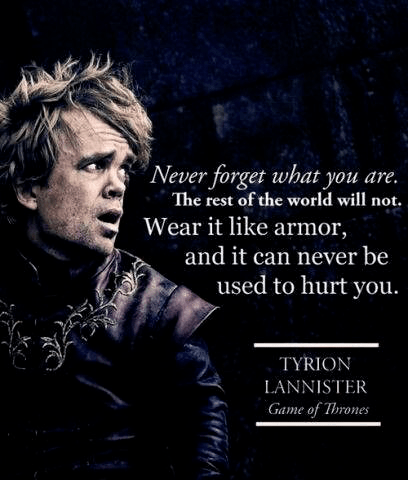
After a lifetime of quietly living with negative voices in their mind, these people have become VERY good at putting on a brave face and stomping out those voices with achievement and accolades. They are the Zen Masters of “fake it till you make it.” Without even being aware, they take Tyrion Lannister’s advice. They take their weaknesses and flaws and wear them like armor so nothing can hurt them.

|
|
Nothing except themselves, that is. The brain and body are not meant to have that kind of tireless, explosive energy forever… and these people burn energy at an incredible rate. Mentally, they are trying to marshal their thoughts to do what they want, and physically they exhaust themselves so the demons will fall asleep.
It doesn’t last, though.
Eventually, they run out of energy. They are physically and mentally burned out.
Maybe it takes a moment of intense external stress that causes a “snap,” or it’s a slow degradation, but the smiling and joking stops.
They lash out in anger and frustration, at others and themselves.
The work they love feels more like a burden, and they can’t help but express a lack of excitement for their tasks.
They make simple, silly mistakes… which frustrates them even more.
The demons wake up.
The stereo blows out, and they can hear the neighbors again, but now they’re screaming:
“You want to help others, but you can’t even help yourself.”
It’s a lie… but they are too tired to fight it anymore. The perfect worker becomes a perfect mess.

The worst thing about this scenario is the fact that, well… it seems like so much good comes out of it. The person points to their demonstrated functionality and achievement and goes “Oh come on… yeah, I’m a little high strung, but a mental disorder?! I’m not a loonie, look at all I’ve done!”
Alternatively, if they ARE aware of it and they know something’s wrong, they might say, “Okay, I have some issues, but I don’t need help. I’m not THAT bad. Therapy and meds are for people who can’t function.” Worse, they might avoid getting help because they think it’s the SOURCE of their talent, like an addicted artist afraid to get clean. “Look at everything I’ve done… does this make me a fraud? What if I DO get better… people like me because I’m a hard worker! They keep me AROUND because of it.”
“I’m all about my work ethic… what am I WITHOUT it?”
I’d like to say that I have a perfect answer for this. A nice bright bow to tie up the entry with… but the fact is, I don’t. This is the point I find MYSELF at now.
The research I’ve done has made suggestions that, beyond therapy and possible medication, other answers include things like meditation, progressive muscle relaxation, mindfulness training, improving sleep habits and decreasing caffeine intake.
I’ll let you know how I manage to work those into kitchen life, and what happens next.
In the meantime, though, at least I know my demons have a face and a name- and that’s the first step to handling them.
Despite the macho-posturing and auteur myths we were all raised with, success does not require suffering.
There are more options than “lose the work you love” and “live in fear of yourself.”
Stay Classy,

Self-Care:
Peer-to-peer Help:
“It probably goes without saying, but just a note of caution when you dip your toes into the peer-to-peer arena: it’s easy to devote entirely too much of yourself to trying to help people who are not doing a great job of helping themselves. Put on your own life jacket before assisting others, and if you need to step back from the shared experiences in order to continue on your own path, then do so. Related to that, and something I’ve learned over time: everyone’s stories are equally valid and deserve space. There is no Mental Health Olympics, and I’m pretty sure you wouldn’t want to win any medal it’d offer. Even if imposter syndrome is telling you that there’s no way your story is as important as that one person’s story who’s spent months in their local psych hospital. Your story is allowed to take up the space it takes up. “
Media:
If you have some room in your day to listen to podcasts, Rachel recommends “The Hilarious World of Depression” and “Terrible, Thanks for Asking.” I can’t speak for these myself, since my own podcast choices are generally fictional/relaxing/escapist, but they are worth a listen at the very least.