Grounding vs. Grievance

“[…]and I have filled him with the spirit of God, in wisdom, and in understanding, and in knowledge, and in all manner of workmanship […]”

– Exodus 31:3

Despite all my writing about The Way of the Floured Hand, the happy moments in the bakeshop, and how fulfilling it is to work with my hands (I’m pretty sure I would self-mummify at a full-time desk job), the fact is this shit is WORK.

As much as I may like the work, and as good as I am at it, at a certain point in especially busy weeks I find myself saying “I wanted to be a pastry chef… and for my sins, they let me become one.” Whether it’s persnickety chefs, crowded kitchens, or cooks that regularly seem too dazed and bewildered to understand what “hustle” means and manage to be underfoot even while I’m standing still, this calling of mine is good at reminding me that I’m doing it for pay, and they’re gonna make me earn that pay.

Picture of an old tree with large, sprawling above-ground roots.
“Deep roots are not touched by the frost.” – J. R. R. Tolkein.
Photo by Daniel Watson on Pexels.com
Continue reading

The Sabbath Day

What smells do you associate with holiness?

If not “holiness,” then let’s call it “sanctity.” “Austerity” could also work, I think. Whatever word you want to use, it’s the idea of being in a very large place where a lot of people do a lot of generally serious things in the name of something arguably intangible, and it has a unique smell. The government buildings I have been in don’t have that kind of smell (“why” is something others can argue), but synagogues, the right kind of churches, and museums definitely do.

Somewhere a while back, I read that the reason people love the smell of “old books” is because lignen- the fibrous matter in plants and trees that paper is made of- has compounds that decompose over time into a yellowish color and is related to vanillin, the compound that (you may have guessed) gives vanilla its smell and flavor. Synagogues and churches inevitably have a LOT of old books in them unless they are brand new. Hymnals, prayer books, and holy texts to service a whole congregation don’t come cheap, and there aren’t “new editions” of ancient vows and praise that require refreshing the stock. The same prayer books (ideally) serve generations. The next time you walk into a place of worship, it might be interesting to wonder who held your hymnal before you. What were they going through? What were they thinking, if anything? What did they pray for if they could? Were they praying for you?

Photo by cottonbro studio on Pexels.com
Continue reading

The Cult of Pastry


“Lovers and madmen have such seething brains,
Such shaping fantasies, that apprehend
More than cool reason ever comprehends.
The lunatic, the lover and the poet
Are of imagination all compact:
One sees more devils than vast hell can hold,
That is, the madman: the lover, all as frantic,
Sees Helen’s beauty in a brow of Egypt:
The poet’s eye, in fine frenzy rolling,
Doth glance from heaven to earth, from earth to heaven;
And as imagination bodies forth
The forms of things unknown, the poet’s pen
Turns them to shapes and gives to airy nothing
A local habitation and a name.”

– A Midsummer Night’s Dream, Act V Scene I

At the end of his own weird and raunchy comedy A Midsummer Night’s Dream, Shakespeare lets us in on his own thoughts regarding passion and madness. Passion, Creativity, and Insanity are the coin of the realm in culinary arts. The work of food writers, celebrity cooks, and media like The Bear parade our damage for the public and make us heroes, horror stories, characters, and even martyrs when we die.

I don’t think for a second it’s somehow undeserved. That’s the part of our lives that kitchen veterans miss and swap stories about. What some people think needs to be done about- or with- that passion, however, has me wondering. How to do you temper, train, guide, and coordinate that kind of raw passion and madness? History would tell us we need to be like the military. Owners and executives who spend more time owning and eating in restaurants than actually making them work tell us we need to lead and manage like a business or a factory- possibly one that turns Dirt into Diabetes.

Personally, I think that the answer to leading and managing cooks is to stop seeking “employees” as much as finding acolytes.

Long shot of a stone hallway in a medieval cathedral
Photo by Pixabay on Pexels.com
Continue reading

End of Year Retrospective- Reappraise, Restart, Rejuvenate

I don’t get out to Loyal Legion a lot, but I almost always like it here.

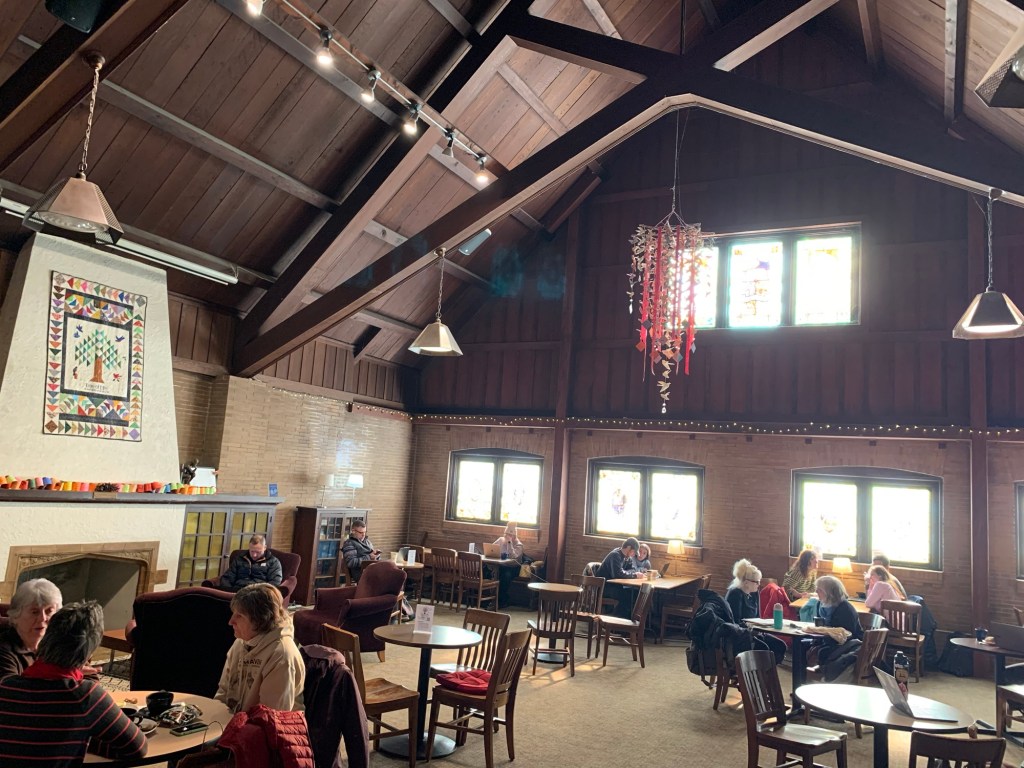
They’ve organized their tap list so it isn’t positively crippling to grok, even if they don’t go off the beaten path as Belmont Station or some of my other favorite taprooms in Southeast Portland can, and their menu is Generally Good. The old building with its cavernous room, three-sided bar stretching the length of it, and plush conversation booths with low tables are blessedly quiet on this last Saturday afternoon of the year.

I have a locally-made stout in my hand, words in my head, and a screen and keyboard in front of me. In some comforting ways, the world doesn’t change nearly as quickly as we think.

The author at his desk
Behind the Magic
Continue reading

End of Season Reflections: Crossing the Finish Line

Towards the end of my days in the winery, it gets to a point where I realize I’m taking up space more than helping out. The other two members of my team are there- one usually plugging away at whatever events are going out soon, and one getting their station ready to handle restaurant business for the night and getting up to speed- events, reservations for the night, VIPs and the like they’ll need to see coming.

A sign of good training and good people is when they leap into work on their own without the need for supervision- and the sign of a good manager is when they know their job is done for the time being. A leader’s job is to train, support, and provide for their team so that they can do their jobs well. That means providing materials, guidance, information, time, manpower, whatever is required. I believe the first and last question a leader of any group needs to ask is “How can I help you succeed?” Frequently, in my case, the answer to that question becomes “Go do something else and step aside. We’ve got it from here, we’ll call if there’s an issue.”

A young black woman in an apron leans against a door frame looking tired.
Photo by Andrea Piacquadio on Pexels.com
Continue reading