“A man would know the end he goes to, but he cannot know it if he does not turn, and return to his beginning, and hold that beginning in his being. If he would not be a stick whirled and whelmed in the stream, he must be the stream itself, all of it, from its spring to its sinking in the sea.”
I knew that a lot had changed at my old culinary school before I turned off the Black Horse Pike in Mays Landing into the campus. There were better and brighter signs on the road to the parking lots, for starters. I peeked down drives slowly, trying to remember which lots were for students and faculty and which ones a visitor would go unnoticed in.
The larger one in the back of the campus- now shaded by sun covers that doubled as solar energy panels- fit the bill and it was right near the main entrance that I rarely used as a student. Students always went in a side door near a smaller lot, closer to the majority of the classrooms and kitchens. Not that too many young culinarians still used it. Class sizes apparently plummeted due to COVID and the Culinary Industry Brain Drain. Even coming from a community college, culinary school wasn’t a winning proposition for young people tight on money and prospects. It was a place now for two kinds of students- the passionate, and the lost.
Fortunately, those are exactly the kinds of folks that have kept the industry moving for years. I walked up the wide, low concrete steps and pushed open the door. Rather than noise from busy kitchens and clamoring students in pressed white uniforms, I’m greeted by silence- and the mingled smells of butter, hot fat, flour, bread ovens, and cold vegetables. I can never forget that smell. Some things haven’t changed at all.
Yesterday I was hurting for something to write about this week. It had been an exhausting week and there are always stand-by topics when it comes to food writing- exhaustion, mental health, how to not be a jerk when dining- the usual list. I’d covered most of these pretty well, though, so I wasn’t ready to cover old ground quite that churned up. I was about to head out for a walk when the following quote came across my social media: “You inherited more than generational trauma. Your ancestors also left you their wisdom and their strength.”‘
Given that I’m feeling very very Jewish at a moment when two entire cultures people have very recently had their generational traumas triggered at the same time by bad actors and pointed at each other (with a whole Western world primed to lay their own politics on the conflict no less,) the word “generational” leaves a strange feeling in the mouth. Whether regarding trauma or strength and wisdom, it comes packed with a lot of emotions that are best understood, managed, and then utilized- or dispensed with.
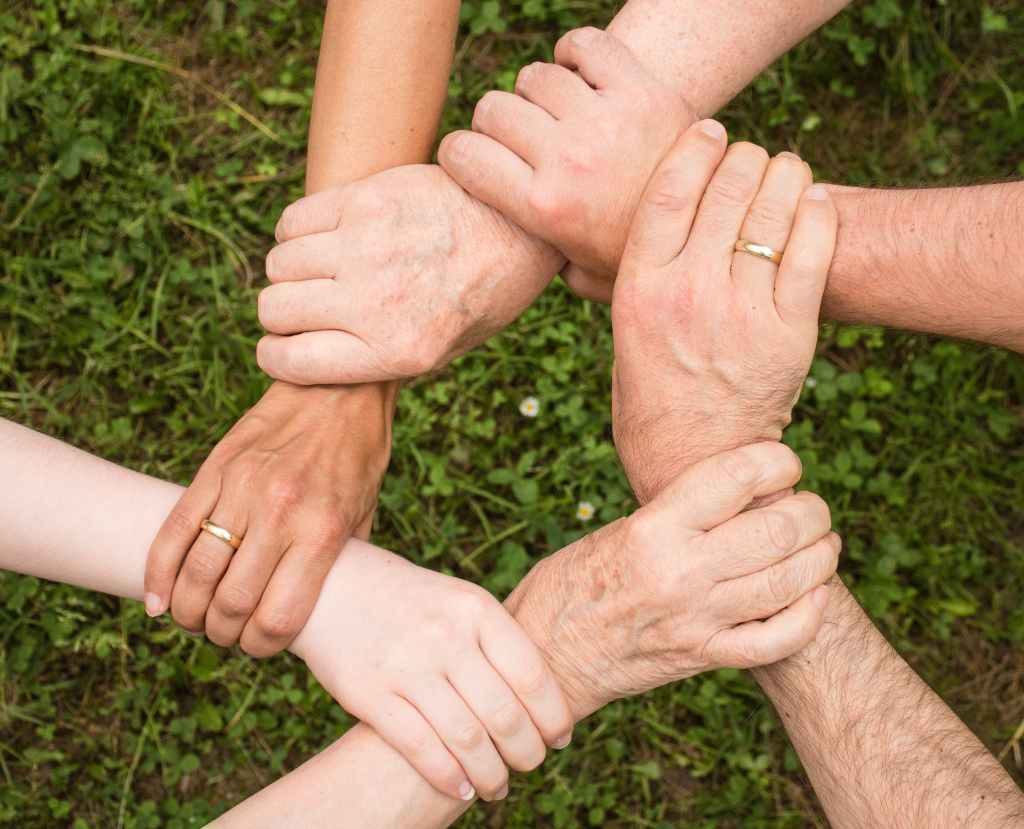
“L’dor v’Dor-” in Hebrew, “From generation to generation.” We keep living, we keep passing on what we are and what we learned, for good or ill.
I’ve written something about the specific nature of my Jewish upbringing in a fewblogposts. I don’t know that I always went into particulars, but “generational trauma” is something that Jews know a lot about and the lessons from it are some of the hardest, most spiteful lessons that we’ve had handed down. The kind that we describe to our Gentile friends with jokes like “Every Jewish holiday is based somehow on ‘They tried to kill us, we survived, let’s eat!” or “Why are Jews neurotic? It’s because we owe our survival to some of our ancestors waking up one morning and going, “the vibes are off- let’s get on a boat elsewhere right the fuck now.”
That’s dark humor right there. Combine that with some of the wisdom my grand-family handed down to me:
“Learn everything you can, Matt. Knowledge is something that can’t be taken away from you.”
“You‘ll always find bookstores in Jewish communities. Booksellers love Jews because we always have to remember the past.”
“Learn to be able to do a little of everything- you never know when it’ll come in handy.“
“You know your grandfather almost couldn’t practice medicine in this town because they wanted the town ‘Jew-Free,’ but they let him in because he was also a Freemason.”
Good advice for anyone, right? Then you read it again and you see the unspoken lesson- “Everything that we have can be taken away from us. We must never forget who we are and be ready to live wherever we go next.”
This all got ramped up to 11 after World War II when maintaining and rebuilding the community and Jewish identity became not just a necessity but (albeit understandably) a spite-driven burden to be explicitly handed down. I had female friends who were directly told that failing to find a Jewish husband and having lots of Jewish children would be “giving the Nazis a posthumous victory.” My previous blog post looked at this from a religious standpoint as spite is nothing to build a spiritual practice on, but from a cultural perspective this specific version of “never forget” became an obsession.
In my Jewish secondary schooling (which we called “Hebrew High,”) every year we’d be taught aspects of the culture and religion that were only touched on in the Jewish version of “Sunday school.” It almost became a joke that, every year, there’d be a class called “___ and the Holocaust.” “Art and the Holocaust.” “Music and the Holocaust.” “Film and the Holocaust.” “Holocaust Literature.”
A highly polished version of Israeli and Zionist history was included, of course. The timeline of those courses largely went “Dreyfus Affair, Herzl had a big brain idea, Britain was cool with it then wasn’t, America was okay about it, all the Arabs and Muslims hate us, but we fought them and won, still there now, so send money so we can plant more trees.” The division of the Middle East by the Entant after World War I was barely mentioned, nor was even the word “nakba.” The fact that Herzl was a bit of a classist with internalized antisemitism of his own, that Zionist philosophy has fractured 15 different ways since then, and that The Balfour Declaration was a (largely unsuccessful) ploy to get American Jews to pressure their government into joing the war were never mentioned at all.
As an aside, I’ve seriously had to unlearn more about Israel and Zionism than “activists” have picked up in hashtags and slogans since 10/7. If you don’t have skin in the game, your job is to listen- not lecture.
What does education like this create? What is being passed down “from generation to generation? The answer is a community held together by the holes poked in it. A religious and cultural community that keeps itself “strong,” but hypervigilant, spiteful, and scared. To quote Rabbi Zalman Schachter-Shalomi, when challenged by another rabbi in their discussions with the Dalai Lama that our insularity has made us strong- “There are terrible ways to be strong.”
“May Their Memory Be A Blessing”
When you are on the run, you learn to survive and pack light. You teach your children how to do the same. You teach them to do what you can with what you have, value knowledge and stories, and never forgetting who you are (because no matter what they say, the rest of the world will always remember.)
Persecution creates paranoia, and it creates ingenuity and resolve. Besides prizing knowledge and history, my parents and grandparents had more to say– about remembering that we had little, so when we have more we should give to those who don’t. Ashkenazic Jewish cooking itself is a story of Jews moving from place to place, making themselves a part of communities and learning how to enjoy the food as best they could.
We also learned that while the rest of the world marks Holocaust Rememberance Day from when the Allies liberated Aushwicz, in Judaism we mark it from the start of the Warsaw Uprising– when the Allies left us to our own devices and we as Jews fought back ourselves.
In Judaism, when we speak of someone who died, we don’t say “may they rest in peace.” We say “may their memory be for a blessing”- meaning that we should remember them when blessing the living. “You should be as strong as your Grandpa Larry.” “You should be the kind of woman your Bubba Mitzi was.” It’s one small way we pass more than pain l’dor v’dor- from generation to generation. We pass on gifts as well.
When and if I have children, though, I hope I live to have the presence of mind to pass the lessons on without the pain and spite, so they can enjoy the blessings more.
Would you have wanted you (as you are now) in your life when you were a kid?
I know it’s not always wise to start off blogs with a question like this, especially not one that “buries the lead.” Normally I try to start off a bit more gently- a good anecdote that puts the topic in context, or generally coming at a deep topic sideways. In this case, though, I feel like any attempt to answer a loaded question like this can only be given in story form. Ultimately, it makes us check in on our own stories. Has time actually conferred wisdom and maturity? Did we become the mentors and guides we would have wanted?
I don’t know, but I hope so and I’m always trying. That’s where stories help- we use them to understand character and how we write our own every day.
“Fairy tales are more than true: not because they tell us that dragons exists, but because they tell us dragons can be beaten.” – Neil Gaiman
Vixere fortes ante Agamemnona Multi: sed omnes illacrimabiles Urgentur, ignotique longa Nocte, carent quia vate sacro. (“Many heroes lived before Agamemnon, but they are all unmourned, and consigned to oblivion, because they had not their sacred bard.”)
– Horace
I first read that quote on a webpage of Latin mottos where it was offered as just the first statement- “Vixere fortes ante agamemnona”- to mean that heroism exists even if no one notices it. Ironically, or perhaps appropriately, this is a perfect demonstration of the power of the pen. The quote itself extols the role of writers and poets in giving heroes immortality.
The metacontext of the quote is that when Horace wrote the passage in his Odes, he was simping for the original “sacred bard” Homer, author of the Iliad where Agamemnon’s story is recounted. Some translators have taken a little poetic license on this and interpret the passage (the way I first heard it) as “Brave men lived before Agamemon, but they died forgotten, for there were no poets before Homer.”
The meta-metacontext is that, if you read the Iliad at all, Agamemnon is pretty much an absolute knob, a coward, a monster, and absolutely responsible for all of his own failures including and especially his own death. So millennia of writers and poets have been needed to burnish his story into anything remotely resembling a hero.
That’s what we in the creative business call “serious workshopping.”
If you are looking to go somewhere new or better, ideally you find yourself in a different place, put down your stuff, and start about the task of living a new life in your new location. Joseph Campbell’s famous “hero’s journey” structure includes The Return- our brave hero, having crossed the border of the known into the unknown on their grand quest, returns across that border to the world they knew significantly changed.
Maybe they brought the “Magic Medicine,” as Campbell calls it, to solve a problem and the quest of seeking and finding the Medicine was only the first (albeit largest) part. Tripitaka, having successfully reached India and received the sutras from the Buddha along with his assistants Monkey, Pigsy, and Sandy, must now complete the quest by returning to China with them. Frodo, having seen the One Ring destroyed and the quest complete, returns home to free and rebuild the Shire.
For Tripitaka and Frodo, though, that still wasn’t the end of their stories. Tripitaka and his friends are magically whisked back to India after finishing their delivery and receive their ultimate rewards: Buddhahood for Tripitaka and Monkey, and sainthood for Pigsy and Sandy as their undertakings on the journey expunged the sins that set them on the road in the first place. Frodo, forever wounded and traumatized by his quest and prolonged exposure to the evil of the One Ring, realizes that he “can’t go home again” and leaves Middle Earth to seek peace and healing in the uttermost West.
Returning home but returning differently is just as much a journey as finding yourself in a new place- you set down old ways and start the process of living again as someone new.





 The Black Hat Baker