Here it is, everyone! The Amazon Kindle version of “Blood, Sweat, and Butter” is available NOW! Thank you so much to everyone who pre-ordered!
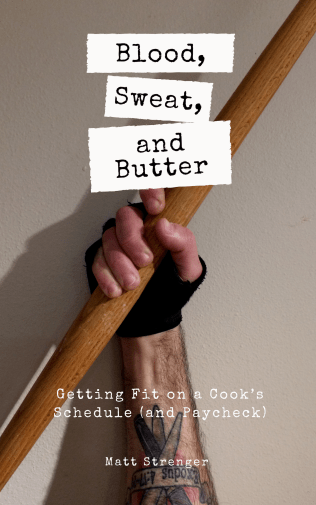
Click to check it out on Amazon Kindle!
Here it is, everyone! The Amazon Kindle version of “Blood, Sweat, and Butter” is available NOW! Thank you so much to everyone who pre-ordered!
Click to check it out on Amazon Kindle!
Good afternoon, friends and neighbors!
Even as affairs in American kitchens are slowly changing from the bad old days, one aspect of the Kitchen Life still holds up:
The professional kitchen is a meritocracy.
You either can do the job, or you can be TAUGHT to do the job, or you can’t. Doesn’t matter where you went to school, who you know, how many cookbooks you have.
You can either show up, on time, in the right state of mind, and do the job like you said you could… or you can’t.
That said, the space between arrival and the last two week of a position can be… colorful, to say the least.

Good morning, friends and neighbors!
Mentoring has become a bit of a catchphrase recently, hasn’t it?
A buzzword, thrown around by people in suits at “networking” events where attendance and business cards are expensive and the beer is cheap.
What do you think of when you hear that word? Most people probably think of someone they met who’s a bit farther along in their field and gives them their number for when they get in a tight spot.
In the kitchen, “mentor” means something fundamentally different. It’s the difference between learning a business and learning a craft.
It’s one huge reason the culinary industry is still around- and it’s not straightforward or easy.

Hello, friends and neighbors.
There’s a lot to be said for (and against) going to culinary school if you want to become a cook or chef.
Most of the arguments in favor of it include a basis of skills, the amount of knowledge acquired in a short amount of time, dedicated teachers, and the connections that come with being part of a community.
The arguments against include going into debt, that school won’t teach the life skills that come with the kitchen (some of which are as necessary as technical skills), and wasted time and money for a piece of paper that, while impressive, doesn’t match up to hands-on experience in the eyes of employers.
To get a loan from a bank to start your own business, that’s arguable.
Both of these camps come from a point of emotionality and pride, and I can see the honest merit in both. I went to a local, excellent, less-expensive culinary school before I had my first cooking job, and I can tell you right now the first thing I learned there:
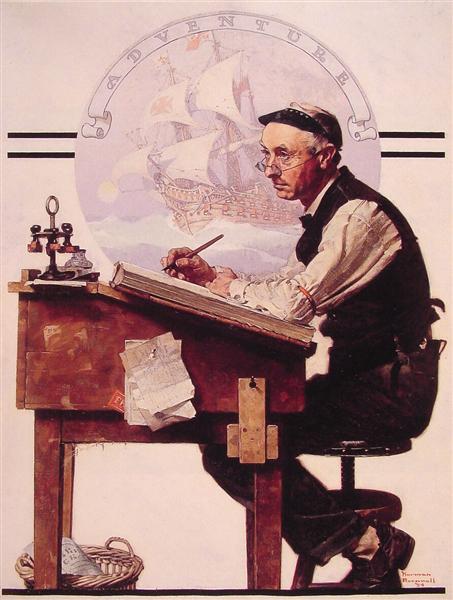
Norman Rockwell had to die.

Don’t get excited. I love Norman Rockwell’s work, and I’m certain it will live forever. The man depicted the America we wish we could see out our window. The unofficial-official artist of the Boy Scouts of America, I grew up looking at his work with honest love and respect. His depictions of small-town America- the Mayberrys and Main Street, USA’s we all imagined of a “happier,” “simpler” time- are part of the national consciousness.
Even his darker, more evocative paintings had an idyllic serenity to them:
“Yes, THIS is what life should be like. THIS is how things need to be.”
My first visions of being a baker- handing over pies and cookies to mothers and their kids in my own little shop, swept clean and full of clean glass and wood shining brown like a pie crust- had that dream like quality. Like someone who wants to own a restaurant, and dreams of tasting the food, wandering through the dining room and greeting patrons- it’s the end product.
The “good bits.” Getting to that point is rarely pretty.
We got dragged into reality after the first year.
“You are in for it now. You’re not going to be Emeril. You’re not going to be Nigella. You’re not even gonna be Jamie Oliver. When you graduate, you will be someone’s b****. You will be someone’s b**** for years, and if you’re good at being their b**** you might have some little b****es of your own one day.
You may even become the biggest, best, and baddest b**** that the world ever saw- and you’ll still be someone’s b****.”
Understand, no teacher ever said ALL these words verbatim… but it was understood.
“When and IF you graduate… you are at the BOTTOM. You will STAY there until you demonstrate the ability to crawl up.”
We were taught to cook and bake, of course. That was the job. Some teachers were easier than others- to varying degrees of success. We were also told some of the horror stories of the job.
We were taught to write our own.
We were given the “jail, hospital, or the morgue” mantra.
“You want to own your own bakery one day? Strap in, kid- here comes recipe costing, labor costing, suppliers, food safety, OSHA, tax law, local and state certifications…
What, you thought you’d just be baking pies all day? Hah, maybe if you’re working for someone else, and never want to do anything more.”
We got fed the reality. Convenience products. Suppliers. Cost management.
We read Down and Out in Paris and London, Kitchen Confidential, and The Apprentice. We mucked out trash cans,. We scrubbed dishes and cookware. The stronger guys had to carry out the stockpots heaped with 100 lbs of bones.
Because of my school’s proximity to the casinos and resorts of Atlantic City, the majority of us figured one of them would be our first gig out of school. For the most part, they didn’t need creative thinkers and dreamers. They needed warm bodies that could crank the recipes out and not mess it up.
Years later, I’d lament to a friend of mine here in Oregon that I did as well as I had at that- that I had pushed to get into some other creativity-based courses, and maybe not simply tried to gather “all the skills I could.”
My friend, who didn’t go to culinary school, disagreed. “Too many kids who graduate from schools leave trying to be artists first in everything, and craftsmen second. They wind up having issues with the menial stuff, and getting repetition and replication down. It’s AWESOME you got used to that first.”
We didn’t work ALL the time though. And some of us still dreamt. Maybe not the Norman Rockwell ideals we had… but something similar. Something NOT what we were led to accept.

Most of us did go to the casinos, and some stayed for a while. Others built our names working for small restaurants and cafes.
Some of us started our own businesses, repainting Rockwell in our own image.
Some of us packed up our knives and began a wandering career, chasing the tides and where life might lead. We had skills, after all. Give us a kitchen and an oven, we could find work.
As I write this, I’m crashed on my couch with an absurdly snuggly black kitten. My wife is sleeping in the next room. We’re two thousand miles from anywhere we FIGURED we’d wind up. I found work in a restaurant, and when I’m not baking, I’m telling stories.
There isn’t any Rockwell hanging on my walls. Instead, I have my awards from culinary school.
A Ralph Steadman print of a man on a bicycle with baguette, wine, and a cold.
A poster from the podcast Emily and I binged on the drive from New Jersey.
Drawings by my friend Lillian, inspired by kimchi.
and an old tourism poster of Atlantic City.
I don’t think Norman Rockwell ever put any of his paintings IN his paintings either.
He painted a reality he wanted. WE made them dreams.
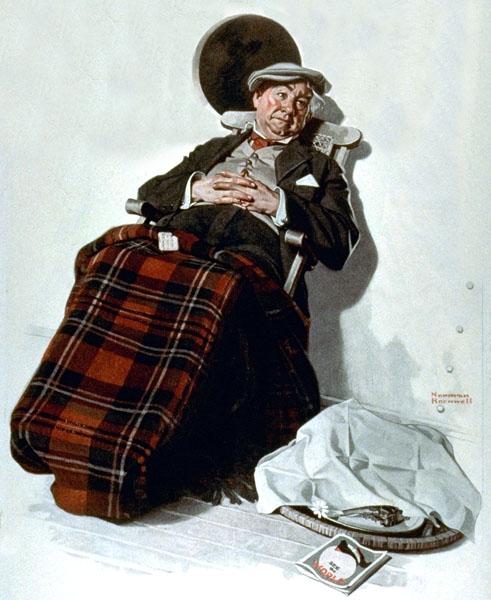
How close to reality we can get them… that’s on us too.
That’s the tough bit.
Stay Classy,

“I really think that reading is just as important as writing when you’re trying to be a writer because it’s the only apprenticeship we have, it’s the only way of learning how to write a story.” – John Green
Back when I was in high school, one of my English teachers used a similar quote that I can’t remember the source of- “I’ve known many readers who don’t write, but I don’t know a single writer that doesn’t read.”
The logic then follows:
If you want to write stories, read a LOT of stories…
and if you want to write books that will help people, read a LOT of good personal development books.

Growing up, my mother had a veritable library of these- mostly about dieting, exercise, keeping calm, and personal empowerment.
I mean, she WAS a stay-at-home mom with three kids and a busy spouse for most of my childhood. So it kinda makes sense.
For a long time, I didn’t really give a hoot about “self-help” books. They had, and to a degree still do, have a stigma about getting them-
Well I can say that, since growing up a bit, paying bills, and working in blue-collar field where you’d swear common sense was a friggin’ superpower sometimes:
In the last few months, my sister Stephanie Cansian has been on a bit of a personal development book-bender. Between trying to get her own business as a wellness coach going, being a barista, and keeping house, Steph tries to get in at least one hour of quality reading each day. Her husband Kevin, another side-hustler in progress, does the same. Personal development reading in the morning, and leisure reading at night before bed.
With me trying desperately to be a writer, the bug didn’t take long to jump over to me, so here’s a little list of my favorites so far!

|

|


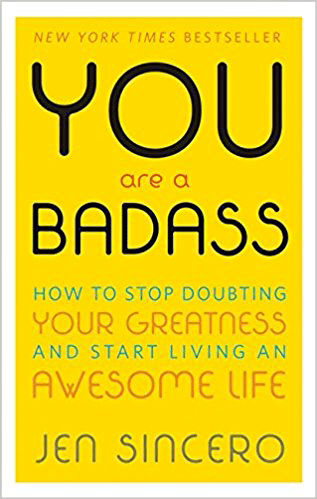
Stephanie SWEARS by this book, and this author. Sincere makes no bones about her personal journey, and doesn’t shy away from the real, weird, and looney moments along the way- going into debt doing self-help programs, jobhunting, impostor syndrome, the works.
With an acerbic wit, engaging voice, and enough of an understanding for the negatives of life that it’s hard to lump in with “positivity culture,” Sincero’s advice- if it doesn’t immediately inspire you- will at least encourage you to look at your stressors in a different way.
Also, Loincloth Man.
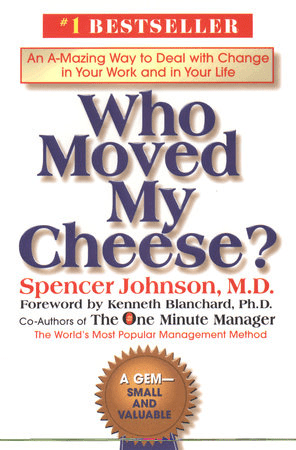
Remember 20 years ago or so when EVERY businessman and CEO was reading this book, and “well, SOMEONE doesn’t like their cheese being moved” was a decent burn?
Well, there’s a reason for that. The book is THAT simple, and THAT good
A simple fable about mice, tiny humans and track suits, a big maze, and dealing with change- personal, professional, economic, etc.
The power of this book comes from the ease of its parable- and the starkness of the lessons. A reminder to keep on top of things, not to get too comfy with anything, and prepare to move on rather than wishing change wouldn’t happen.
That’s what I’ve got for you right now- what books do you all turn to? Think you’ll read some of these?

 The Black Hat Baker