Finding Your Culinary Voice

Food is a form of communication. If you learn the history of cuisine, a plate can tell you its origin story, how its cooking methods were devised and why. Fried rice can tell you about the need to feed a lot of hungry field workers quickly and making their bland starchy staple taste good. Corned Beef and Cabbage will remind you of the poverty of new Irish and Jewish immigrants, crammed cheek-by-jowl in the slums of American cities, sharing what they had and knew to get by.

Food is communication. It’s a history lesson. It’s storytelling.

So how, exactly, does one become a good storyteller with food? The answer takes a bit more effort than “learn to cook”- as if that wasn’t enough.

Animated GIF of Jake from Adventure Time serenely frying bacon pancakes
Continue reading →

5 Tips For Teaching Kitchen Skills

We’ve been hiring lately in the bakery, and getting skilled workers is surprisingly difficult- but that’s not exactly what we’re looking for. There is a not-so-surprising need for unskilled workers in search of training– but the ability to train is rare.

We just hired a brand new “baking assistant” the other day- she has worked front of house for years, but had zero experience professionally cooking. That was fine though- we weren’t looking for another baker per se. We were looking for someone who could handle small tasks competently and was eager enough to learn that we could rely on them being done right.

Yesterday, our morning baker was teaching her to pipe choquettes with pate au choux. Piping itself is a skill set that takes training, and pate au choux can be a frustrating substance to work with- it crusts up quickly, is gloppy when warm, and needs to be piped neatly to make things like eclair or paris brest shells. The morning baker was trying to explain her method of piping, but the assistant’s hands kept shaking- making what should have been smooth little mounds of paste come out like yellow poop emojis. The owner of the bakery stepped in and tried to advise her, gently taking the bag from her hands and demonstrating a row. The assistant managed for a minute, but then got frustrated again. That’s when I stepped in:

“Ok, are you right or left handed? Good, so am I. It looks like you’re gripping the bag too high- don’t fill it so much and put your right hand lower. That’ll make you steadier. Don’t be afraid to mess up- give the bag a firm squeeze each time, stop, and flick your wrist to cut off the flow.”

Two rows later, she looked at me and said “Ok, who are you, and how did you teach me this?!”

An AZ Quote from Jacques Pepin saying "You have no choice as a professional chef: you have to repeat, repeat, repeat, repeat until it becomes part of yourself. I certainly don't cook the same way I did 40 years ago, but the technique remains. And that's what the student needs to learn: technique."
Continue reading →

Making Headway- Advancement in the Kitchen

If you had told me a year and a half ago that I’d be second-in-command in my bakery, I would have asked what the hell went wrong.

Well, obviously COVID did, but that was only part of it.

So far, my current employment has been where I could say my most “traditional” career growth has taken place. I started as a morning baker, became a shift lead, and then Production Lead- the right hand of my manager who runs the kitchen under the auspices of the owner. My usual station is Pastry Prep (previously considered the position for newcomers and students)- but in addition to my actual production work, my other responsibilities include:

  • Fielding questions to take weight off my manager.
  • Training, advising, and assisting the other bakers as necessary.
  • Troubleshooting problems with production or facilities.
  • Responding to the higher-ups when the manager is indisposed.

Not to toot my own horn, but I handle all of it quite well, and I feel that the responsibilities I have are well-placed. In the meritocratic lore of the kitchen, this is as it should be- employees develop, rise to the level of their capability and talent, and acquire new power, responsibility, and recognition each time.

What is NOT part of that lore, or mentioned in my own ascendancy, is just how many good people I worked with deserved those roles and recognition more than me, but left for a variety of reasons. How much of advancement in the kitchen is actually meritocratic, and how much is “dead man’s boots?”

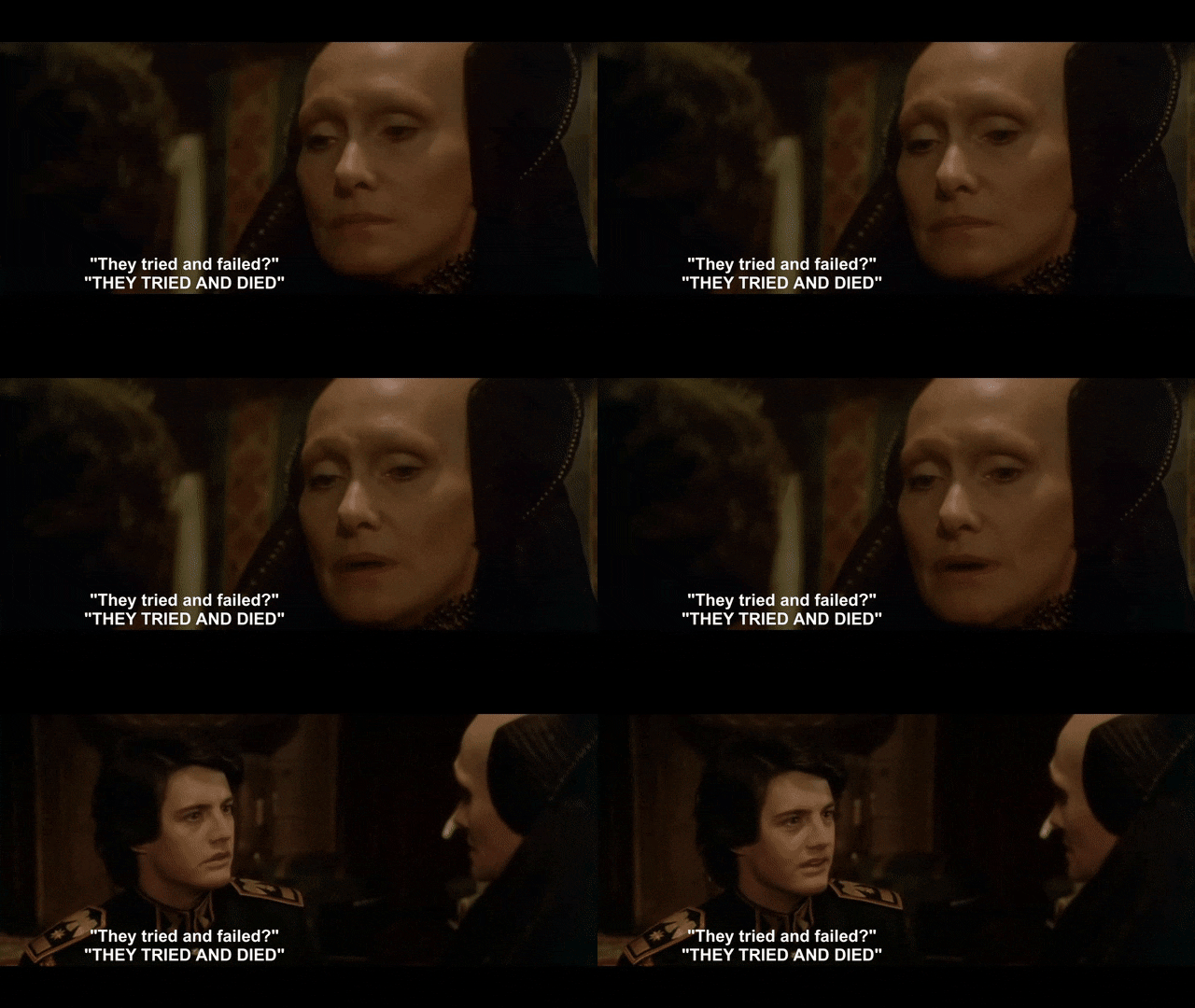
Animated GIF from David Lynch's "Dune" of Paul Atreides and the Reverend Mother talking. The quote is "They tried and failed? They tried and died."
“Many men have tried.” “They tried and failed?” “They tried and died.” (from Dune)
Continue reading →

Big Brother- Mentoring in the Kitchen

Good morning, friends and neighbors!

In the space of a year and change, I have trained ten people in some way at my bakery. Some just to pick up a couple tasks left hanging while I’m gone, others to be assistants and stand-ins so that I can take a day off now and again. They were professionals, students, coworkers, wanna-be lifers. A few were just honestly curious- like the dishwashers that wanted to learn to pipe pate au choux, or the barista with some time to kill who wanted to try a couple recipes for themselves.

A bunch stuck around for a while- some got let go. Every one of them learned something though- and I learned that I’m really good at being a big brother.

Animated GIF of Uncle Iroh from “Avatar: The Last Airbender” sitting in front of a fire drinking tea.
Somewhere along the way, I was called the “Uncle Iroh” of the bakery.
Not gonna lie, that’s some high praise.
Continue reading →

Some Thoughts on Anthony Bourdain

Anthony Bourdain wasn’t my culinary hero. The closest I have to culinary heroes are Masaharu Morimoto (for my memories of him as an Iron Chef), Albert Adria for raw artisanship, and Jacques Pepin for his ability to teach.

Anthony Bourdain was a literary hero for me, and a role model for how he approached food and life. He is still an inspiration for me as a storyteller because of his ability to remove himself from the center of it. He could write himself almost as a narrator, bearing witness to the food, the people, and the stories of their lives that THEY had to tell.

That was his greatest gift to me, I think. Not just inspiration to BECOME a cook (he certainly provided that as well), but an object lesson in how to connect with others, and help them tell their stories.

Continue reading →