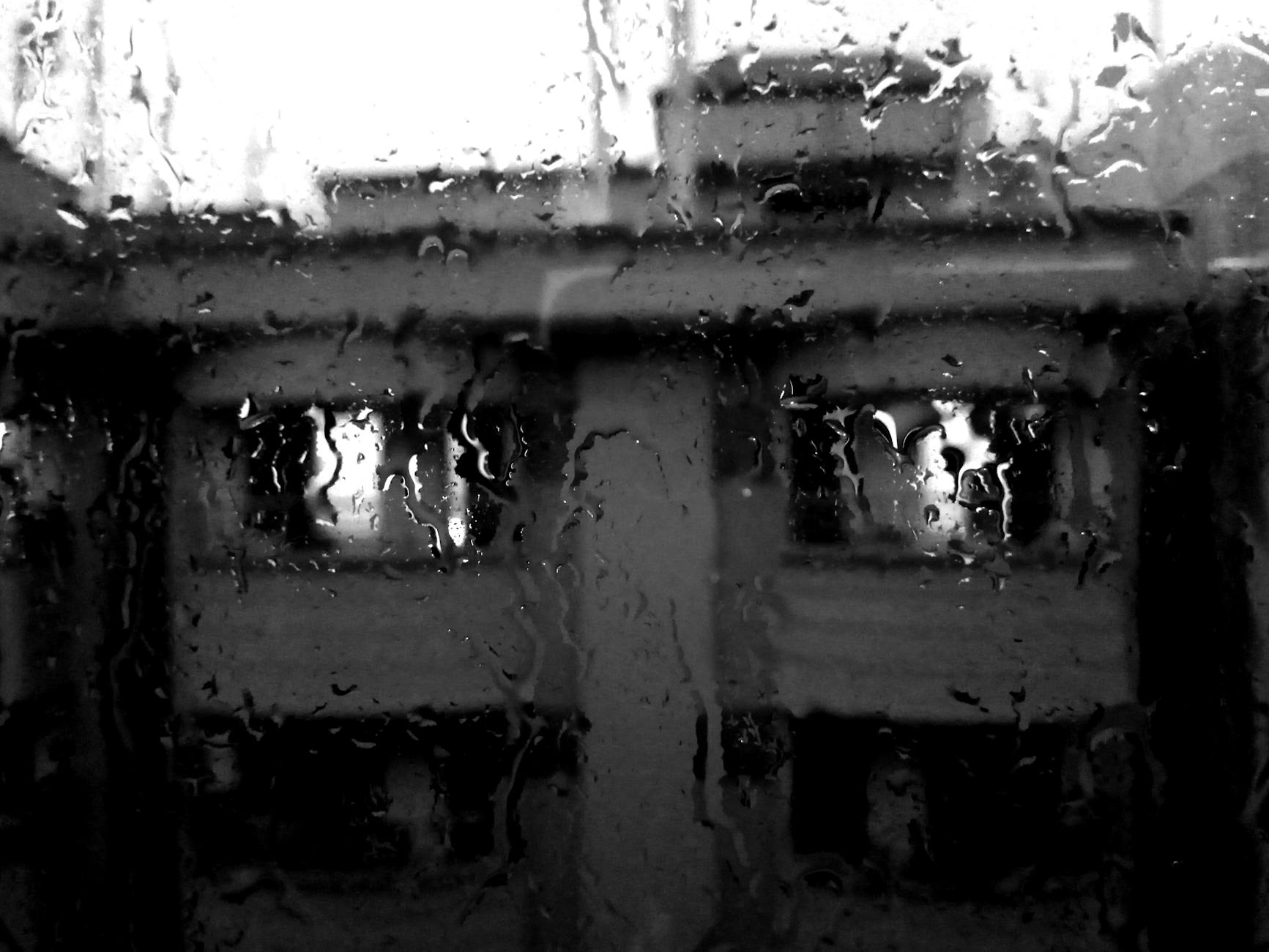
The rain is coming down in fits and starts outside. I’ve had to break out my Irish sweater and cloak for the first time this year, but the sky pivots between sunshine and downpour. As it is, I’ve settled for the moment with shedding my cloak, rolling up the sleeves of the sweater, and watching the weather through the window of Holmans. The young bartender calls me “hun” as she fixes up a martini (dirty, extra dry, Beefeater Gin because I’m not trying to be spendy. She tips some extra “Dirty Sue” in there, but I’m alright with it.)
Sitting where I am, when I am, the confluence of an election in the US, the change of the seasons, the change of weather, and the (Jewish) first anniversary of October 7th isn’t lost on me.
“The creation of the world did not occur at the beginning of time, it occurs every day.” –Marcel Proust
All you can do some days is keep going.
I come into the kitchen and assess the production list for the day, keenly aware of my struggles to lose weight again.
Next comes reviewing the banquets for the day and make sure I block out time to individually decorate and tray the desserts people paid for, knowing that people I called friends are agitating for my death (intentionally or not) because I’m a Jew.
I build out the list, grab ingredients, and start mixing the day’s breads, fully conscious that my government is a joke and that folks like me are continually convinced to focus their ire on each other than the higher-ups with every reason to keeps us all angry and hateful all the time.
I make my silly little pastries, bake my silly little breads, and carry on like none of it is disappointing and hurtful and frustrating and sad. I do it because I know someone out there IS disappointed, hurt, frustrated, and sad, and what I make can be the One Good Thing that they get to enjoy today.
I can grieve. I can rage and piss and moan and cry… but not when I’m baking. There’s someone else’s day at stake then, and it’s not mine to ruin.
Someone told me long ago There’s a calm before the storm I know, it’s been comin’ for some time When it’s over, so they say It’ll rain a sunny day I know, shinin’ down like water I wanna know, have you ever seen the rain? I wanna know, have you ever seen the rain? Comin’ down on a sunny day
– Creedence Clearwater Revival, “Have You Ever Seen The Rain”
The back deck of Belmont Station on Stark is almost uncomfortably warm. They have the heaters on, and it’s nearly empty except for a young man flipping through his phone, an older man talking to the Lord, and me. I’d probably be more comfortable without my sweater on, but I don’t want to look after something else or give my neuroses one more thing to check the seat for when I eventually leave.
It’s the light, on-and-off rain that Portland knows so well tapping on the windows and skylights, and I wonder if their sealing heat was part of the calculus that called for the (not cheap to run) electric heaters. Any notion of “spring” out here is only confirmed or denied by plant life and we all know that they just go on instinct. A sweater and a denim cloak in May? That’s about right. “Putting away heavy clothes” is something other places do.
The beers are dark and good, short 4-ounce pours so I can try a few without breaking the bank. Belmont always has an interesting selection, and it’s rare I do the same beer over and over again in a sitting.
Let it pour. The beer, the rain, the words, the times- let it all pour.
Where are you Matt? What are you feeling? Check in- what’s happening now?
This is the litany of questions that has gone through my head on repeat for the last few weeks. It’s one of the tools I use to ground and re-center myself when I catch my thoughts ruminating or spiraling.
You don’t “hate everything,” Matt. You are tired and sad. Hate and anger are easier to feel and parse than pain.
This is the other mantra I’ve found myself repeating over and over when I find myself slipping into depression. That’s been increasing over the last few months. The usual anxieties and tribulations of life seem to magnify themselves when you constantly poach yourself in a broth of bad news. It feels like everything hurts, and the world is too hard and painful to keep being kind in.
Yesterday I was hurting for something to write about this week. It had been an exhausting week and there are always stand-by topics when it comes to food writing- exhaustion, mental health, how to not be a jerk when dining- the usual list. I’d covered most of these pretty well, though, so I wasn’t ready to cover old ground quite that churned up. I was about to head out for a walk when the following quote came across my social media: “You inherited more than generational trauma. Your ancestors also left you their wisdom and their strength.”‘
Given that I’m feeling very very Jewish at a moment when two entire cultures people have very recently had their generational traumas triggered at the same time by bad actors and pointed at each other (with a whole Western world primed to lay their own politics on the conflict no less,) the word “generational” leaves a strange feeling in the mouth. Whether regarding trauma or strength and wisdom, it comes packed with a lot of emotions that are best understood, managed, and then utilized- or dispensed with.
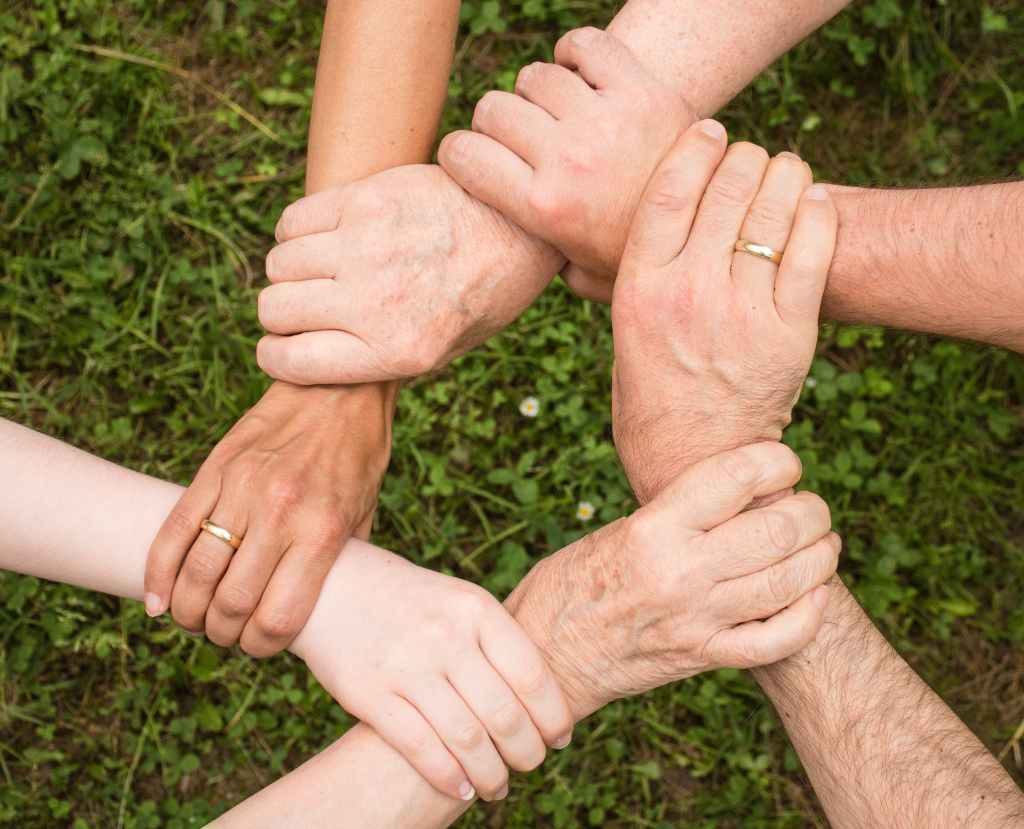
“L’dor v’Dor-” in Hebrew, “From generation to generation.” We keep living, we keep passing on what we are and what we learned, for good or ill.
I’ve written something about the specific nature of my Jewish upbringing in a fewblogposts. I don’t know that I always went into particulars, but “generational trauma” is something that Jews know a lot about and the lessons from it are some of the hardest, most spiteful lessons that we’ve had handed down. The kind that we describe to our Gentile friends with jokes like “Every Jewish holiday is based somehow on ‘They tried to kill us, we survived, let’s eat!” or “Why are Jews neurotic? It’s because we owe our survival to some of our ancestors waking up one morning and going, “the vibes are off- let’s get on a boat elsewhere right the fuck now.”
That’s dark humor right there. Combine that with some of the wisdom my grand-family handed down to me:
“Learn everything you can, Matt. Knowledge is something that can’t be taken away from you.”
“You‘ll always find bookstores in Jewish communities. Booksellers love Jews because we always have to remember the past.”
“Learn to be able to do a little of everything- you never know when it’ll come in handy.“
“You know your grandfather almost couldn’t practice medicine in this town because they wanted the town ‘Jew-Free,’ but they let him in because he was also a Freemason.”
Good advice for anyone, right? Then you read it again and you see the unspoken lesson- “Everything that we have can be taken away from us. We must never forget who we are and be ready to live wherever we go next.”
This all got ramped up to 11 after World War II when maintaining and rebuilding the community and Jewish identity became not just a necessity but (albeit understandably) a spite-driven burden to be explicitly handed down. I had female friends who were directly told that failing to find a Jewish husband and having lots of Jewish children would be “giving the Nazis a posthumous victory.” My previous blog post looked at this from a religious standpoint as spite is nothing to build a spiritual practice on, but from a cultural perspective this specific version of “never forget” became an obsession.
In my Jewish secondary schooling (which we called “Hebrew High,”) every year we’d be taught aspects of the culture and religion that were only touched on in the Jewish version of “Sunday school.” It almost became a joke that, every year, there’d be a class called “___ and the Holocaust.” “Art and the Holocaust.” “Music and the Holocaust.” “Film and the Holocaust.” “Holocaust Literature.”
A highly polished version of Israeli and Zionist history was included, of course. The timeline of those courses largely went “Dreyfus Affair, Herzl had a big brain idea, Britain was cool with it then wasn’t, America was okay about it, all the Arabs and Muslims hate us, but we fought them and won, still there now, so send money so we can plant more trees.” The division of the Middle East by the Entant after World War I was barely mentioned, nor was even the word “nakba.” The fact that Herzl was a bit of a classist with internalized antisemitism of his own, that Zionist philosophy has fractured 15 different ways since then, and that The Balfour Declaration was a (largely unsuccessful) ploy to get American Jews to pressure their government into joing the war were never mentioned at all.
As an aside, I’ve seriously had to unlearn more about Israel and Zionism than “activists” have picked up in hashtags and slogans since 10/7. If you don’t have skin in the game, your job is to listen- not lecture.
What does education like this create? What is being passed down “from generation to generation? The answer is a community held together by the holes poked in it. A religious and cultural community that keeps itself “strong,” but hypervigilant, spiteful, and scared. To quote Rabbi Zalman Schachter-Shalomi, when challenged by another rabbi in their discussions with the Dalai Lama that our insularity has made us strong- “There are terrible ways to be strong.”
“May Their Memory Be A Blessing”
When you are on the run, you learn to survive and pack light. You teach your children how to do the same. You teach them to do what you can with what you have, value knowledge and stories, and never forgetting who you are (because no matter what they say, the rest of the world will always remember.)
Persecution creates paranoia, and it creates ingenuity and resolve. Besides prizing knowledge and history, my parents and grandparents had more to say– about remembering that we had little, so when we have more we should give to those who don’t. Ashkenazic Jewish cooking itself is a story of Jews moving from place to place, making themselves a part of communities and learning how to enjoy the food as best they could.
We also learned that while the rest of the world marks Holocaust Rememberance Day from when the Allies liberated Aushwicz, in Judaism we mark it from the start of the Warsaw Uprising– when the Allies left us to our own devices and we as Jews fought back ourselves.
In Judaism, when we speak of someone who died, we don’t say “may they rest in peace.” We say “may their memory be for a blessing”- meaning that we should remember them when blessing the living. “You should be as strong as your Grandpa Larry.” “You should be the kind of woman your Bubba Mitzi was.” It’s one small way we pass more than pain l’dor v’dor- from generation to generation. We pass on gifts as well.
When and if I have children, though, I hope I live to have the presence of mind to pass the lessons on without the pain and spite, so they can enjoy the blessings more.



 The Black Hat Baker