“A Legend In Your Own Lunchbox”

I’ve gotten back into watching the classic “Twilight Zone” episodes lately. They are the right mixture of length and creep factor that I like to unwind with after work. I’ll usually crash out in my rocking chair, pour a little whiskey, put on an episode, and try to make Cleo share my legs with a knitting project.

Yes, I’ve got a thing for being cozy.

My favorite episodes are the ones that feature Ed Wynn (“One for the Angels”) or Jack Klugman (“A Passage for Trumpet” and “A Game of Pool,”) in addition to “The Changing of the Guard.” It’s pretty easy to see why, beyond Rod Serling’s work being patently incredible. I’m still thinking about legacies and impacts, and those episodes are about people coming to grips with theirs.

Everything we do impacts those around us in some way, so even when we act to create a legacy, we don’t (and can’t) always know what shape that legacy may take.

Close up of a drop of water falling and creating ripples in blue water
Photo by Pixabay on Pexels.com

That Fresh Ink Feeling

One of the banquet cooks at my winery has been learning to be a tattoo artist and not long ago got the go-ahead to find some clients to train on. After working with pen and paper and then fake skin, he’s got to do 50 pieces on other people under the supervision of his teachers. Offering yourself to be trained on can seem jarring, but it’s a wonderful way to get new work done for cheap- and if you know the artist (and where they work), it makes it more comfortable.

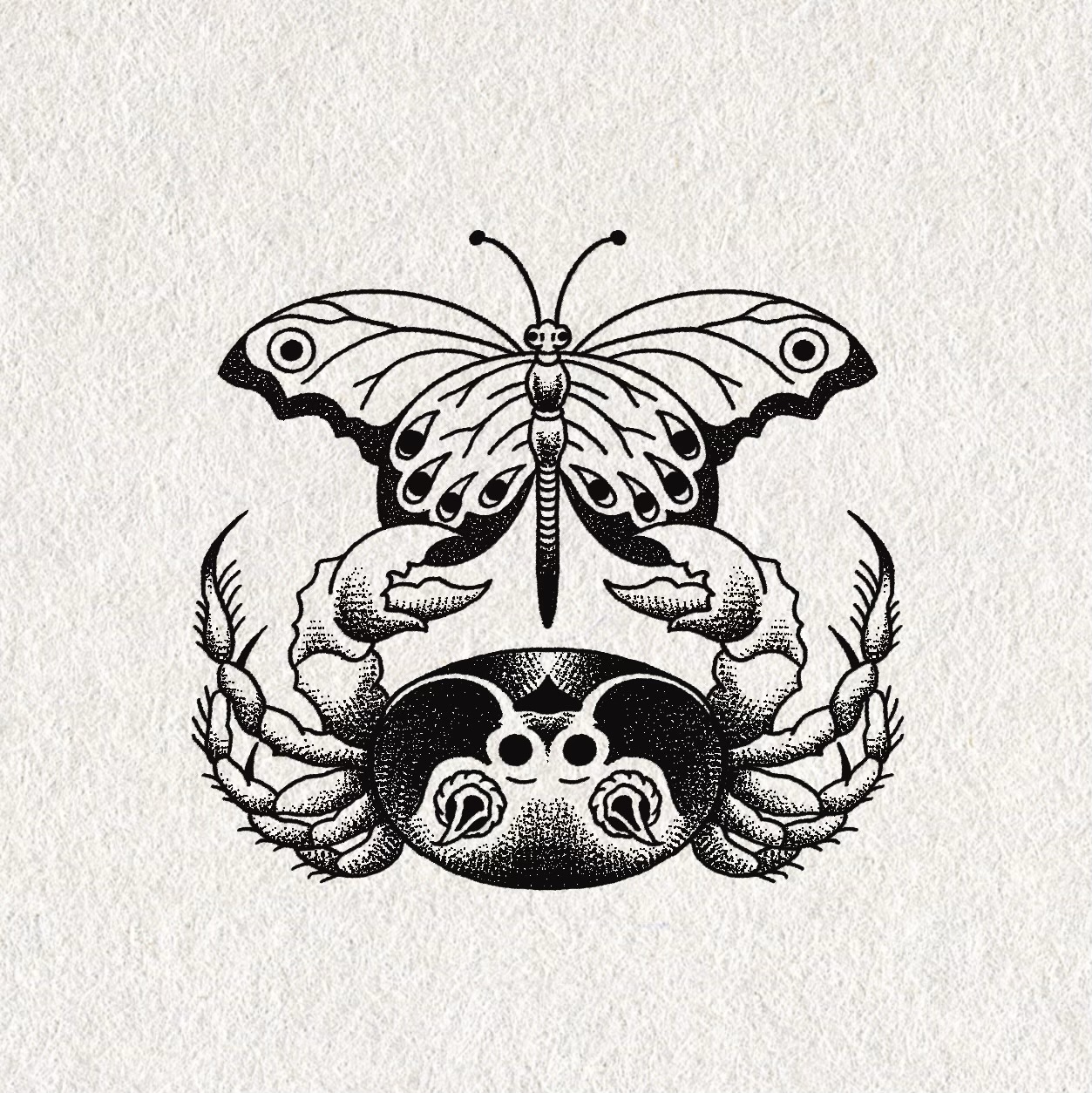
Tyler greeted me at the school, I signed the usual paperwork, and he showed me the design I was to get- a crab clinging to a butterfly, one of the symbols of “festina lente,” my personal motto in the kitchen.

Untitled Artwork
The reference picture and Tyler’s treatment for the tattoo

As I leaned back in the chair and Tyler put the stencil on me, his teacher walked up and said “Aw fer… you’re killing me, Tyler.” That’s kinda like hearing your surgeon go “Oops” just before you go under… but he followed it up by looking at me and saying “Friggin’ overachiever, this guy… made progress faster than anyone else, leans hard into everything, and now this. Tyler, how many does this make for you?”

Tyler chuckles and grins slightly under his beard at the praise and says “Well, uh… this is actually my first on someone else.”

Tyler and I are work acquaintances. We get along fine in the kitchen but don’t chat much. My head is always down in my pastry work and he buzzes about prepping for banquets. We both share in the community that kitchens everywhere create. This was the first time I saw him come alive, leaning into what he was passionate about and fully engaged.

Throughout the session, his teachers came over with praise and sent other students to watch him work. It was clearly his calling. I leaned back and couldn’t help but remember my squadmates eating my first pastries from home and saying “Why are you on an ambulance, Matt? You should be doing this!” I remember my therapist warning me not to walk away from the culinary life so lightly- “Matt, this is your calling. You come alive when you talk about it. Your eyes light up.”

Healed crab and butterfly tattoo

The tattoo came out perfectly, and I get to be part of Tyler’s story about finding his calling, just like his work gets to be a part of me.

A Simple Dice Game

I think it’s got to be the feeling that makes dice games so enjoyable. I’ve always been a bit of a fidgeter, and the feel, look, and sound of rolling dice signals a particularly fun kind of gameplay. It “feels” more aggressively random and chancey watching dice skitter across a surface before coming to rest than pulling cards out of a deck or watching a marble whirl around a roulette wheel.

After my tattoo, I wandered into Montavilla Brew Works for a pint and they had a few of my favorites on tap. Montavilla Brew Works and its neighbor Threshold Brewing are where I got a make a small mark on the Portland beer scene. Montavilla in particular has several beers inspired by The Lord of the Rings, such as their “Palantir” Dark Ale, “Old Fellowship” Barleywine, “Peregrin” Palo Santo Wood-Aged Porter, and “Extra Special Baggins” Bitter.

Some time ago, I reached out to them with a suggestion- either an imperial stout as dark, strong, and evil as Morgoth, or a beer as bright, light, and cheery as Tom Bombadil. A few weeks later, they released their “Bombadil” Bright IPA. I might have liked the stout better, but I was thrilled to have played a part however small.

Today, as I walked in, Morgan the bartender came straight up to me with a grin and said “YOU sir, have caused an UPROAR.” She then turned around and shouted to the room “Hey all! It’s him, DICE GAME GUY!” and at least five people yelled in response “DICE GAME GUY!”

The “dice game” in question is part game, part logic/deduction puzzle called “Petals Around the Rose” when I learned it in college. It’s a simple but frustrating little challenge where one person who already knows the game rolls dice repeatedly and another person guesses the “answer” for a given roll. The object of the game is to figure out what rule is being followed to get each answer. When I first played it, my friend Jessica drove me nuts for three days trying to figure it out.

Some weeks ago, after Morgan and another patron were playing Yahtzee during a slow point in the day, I borrowed the dice and showed them the game just for a bit of fun. Apparently, Morgan then took the game and played it with other staff, who played it with other customers, and so on- each seeing how long it took the others to figure out the rule. When asked where it came from, Morgan just said “There’s this pastry chef named Matt who comes in and is a HUGE nerd, he showed it to me.”

So on a cloudy cold Sunday, I walked in to get a beer, and was greeted by a room of people all telling me how long it took them to figure out Petals Around the Rose (the fastest was & minutes, apparently) and Morgan gently scolded me saying “See, now you need to be more of a regular here. Everyone knows you.”
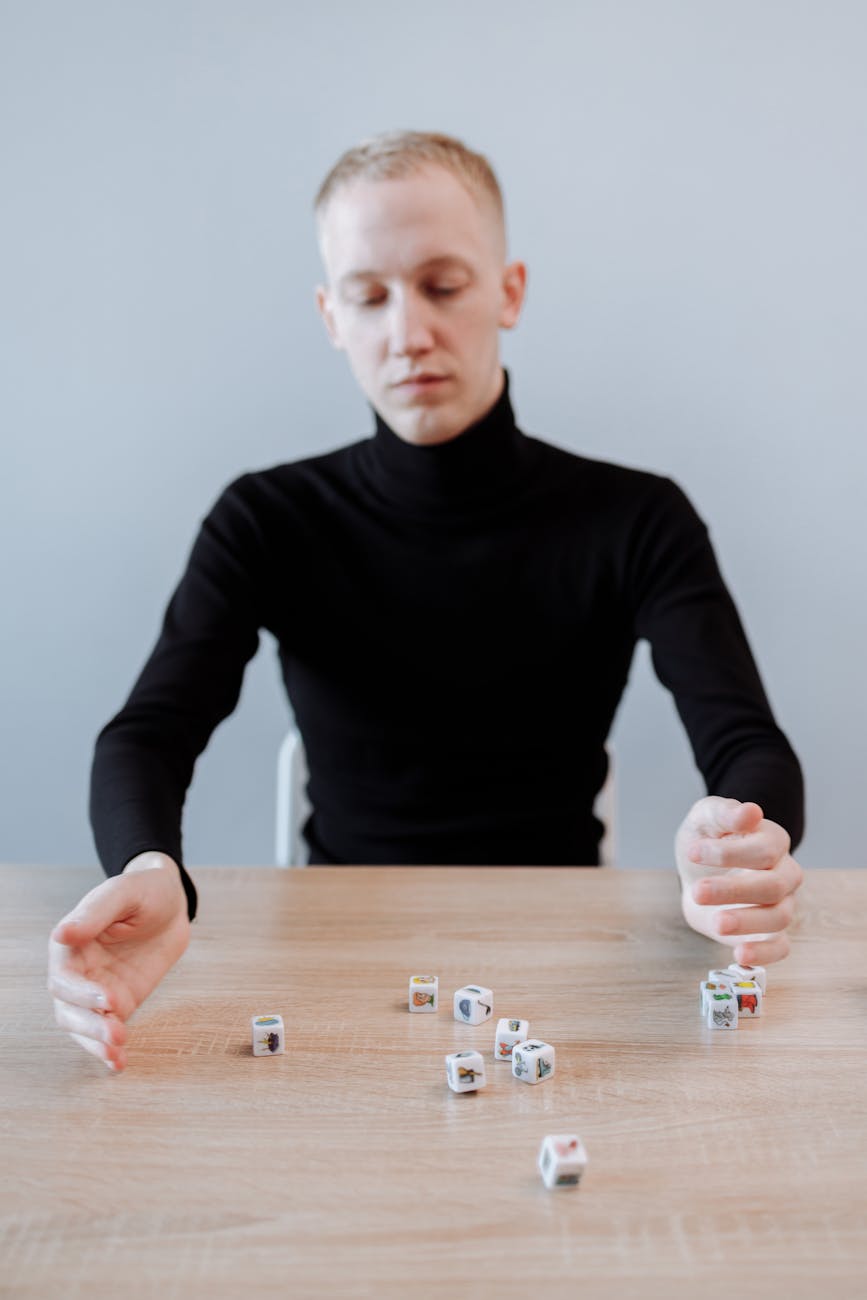
A skinny man in a black turtleneck shirt looks down at a dice he just threw on a wooden table.
Photo by Thirdman on Pexels.com

We can never tell just what it is about us that people will remember, and that’s a good thing. If we had to extrapolate every action of ours out Butterfly Effect-style, we’d go mad and paralyze ourselves into stagnation. We can’t walk around all day debating what every little thing we do will mean in a hundred years. All the same, to a lawyer in California, I’m the guy he used to drink with in Portland who came up with his favorite toast. To a cook, I was his first tattoo commission. To a brewery in Portland, I helped name one of their beers and introduced them to a new bar game. To an extent, our legacies and memories are in the hands of other people.

When you realize you never know what you’ll be remembered for, it makes you choose your activities wisely, treat others kindly, and live a more engaged and joyous life.

What do you hope to be remembered for?

Stay Classy,

The BHB's Top Hat Logo Signature

“L’Dor v’Dor”- Heirlooms of Pride and Pain

Yesterday I was hurting for something to write about this week. It had been an exhausting week and there are always stand-by topics when it comes to food writing- exhaustion, mental health, how to not be a jerk when dining- the usual list. I’d covered most of these pretty well, though, so I wasn’t ready to cover old ground quite that churned up. I was about to head out for a walk when the following quote came across my social media: “You inherited more than generational trauma. Your ancestors also left you their wisdom and their strength.”

Given that I’m feeling very very Jewish at a moment when two entire cultures people have very recently had their generational traumas triggered at the same time by bad actors and pointed at each other (with a whole Western world primed to lay their own politics on the conflict no less,) the word “generational” leaves a strange feeling in the mouth. Whether regarding trauma or strength and wisdom, it comes packed with a lot of emotions that are best understood, managed, and then utilized- or dispensed with.

L’dor v’Dor-” in Hebrew, “From generation to generation.” We keep living, we keep passing on what we are and what we learned, for good or ill.

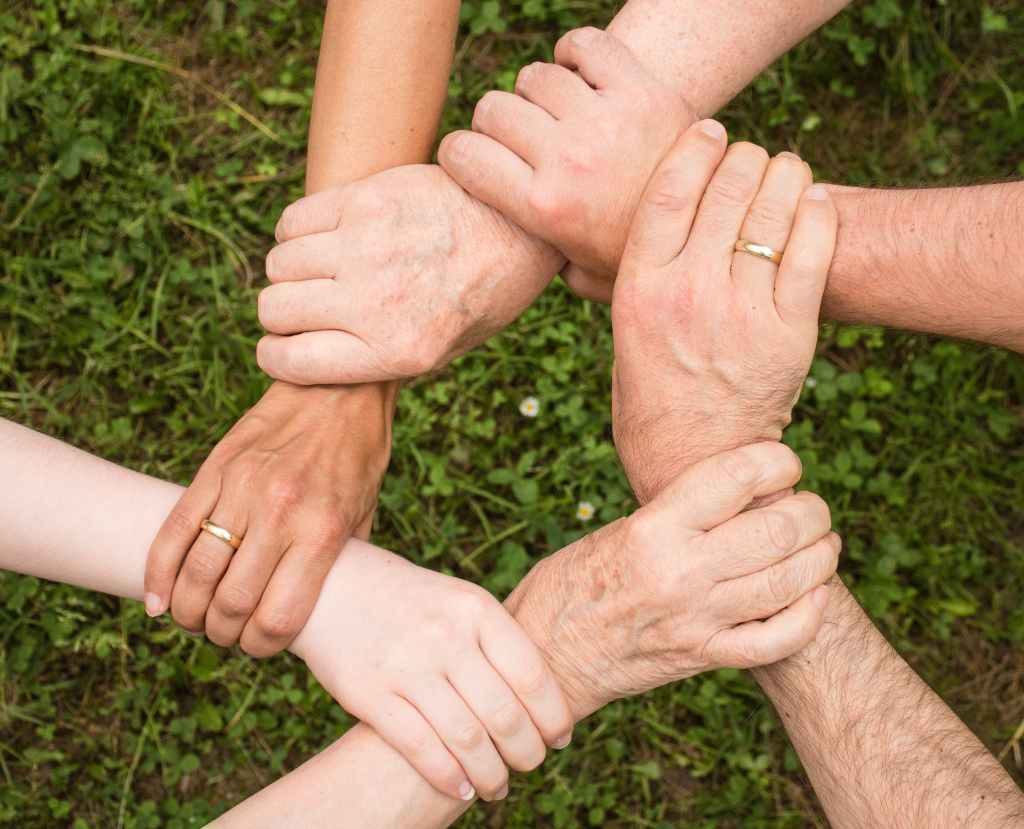
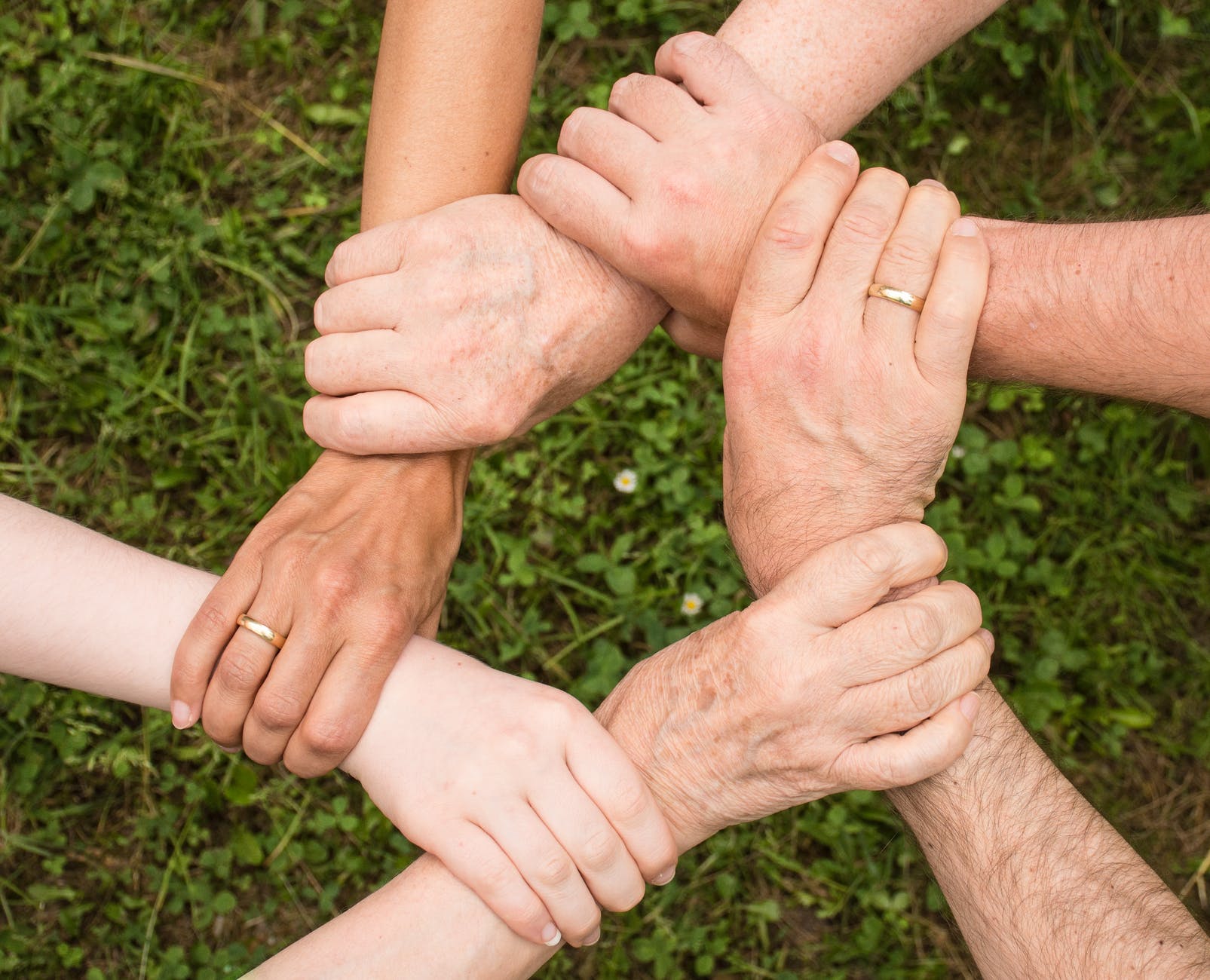
Six hands of multiple genders and generations grasping each others wrists over a grassy background.
Photo by Pixabay

“There are terrible ways to be strong.”

I’ve written something about the specific nature of my Jewish upbringing in a few blog posts. I don’t know that I always went into particulars, but “generational trauma” is something that Jews know a lot about and the lessons from it are some of the hardest, most spiteful lessons that we’ve had handed down. The kind that we describe to our Gentile friends with jokes like “Every Jewish holiday is based somehow on ‘They tried to kill us, we survived, let’s eat!” or “Why are Jews neurotic? It’s because we owe our survival to some of our ancestors waking up one morning and going, “the vibes are off- let’s get on a boat elsewhere right the fuck now.”

That’s dark humor right there. Combine that with some of the wisdom my grand-family handed down to me:

  • Learn everything you can, Matt. Knowledge is something that can’t be taken away from you.”
  • Youll always find bookstores in Jewish communities. Booksellers love Jews because we always have to remember the past.”
  • Learn to be able to do a little of everything- you never know when it’ll come in handy.
  • “You know your grandfather almost couldn’t practice medicine in this town because they wanted the town ‘Jew-Free,’ but they let him in because he was also a Freemason.”

Good advice for anyone, right? Then you read it again and you see the unspoken lesson- “Everything that we have can be taken away from us. We must never forget who we are and be ready to live wherever we go next.”

This all got ramped up to 11 after World War II when maintaining and rebuilding the community and Jewish identity became not just a necessity but (albeit understandably) a spite-driven burden to be explicitly handed down. I had female friends who were directly told that failing to find a Jewish husband and having lots of Jewish children would be “giving the Nazis a posthumous victory.” My previous blog post looked at this from a religious standpoint as spite is nothing to build a spiritual practice on, but from a cultural perspective this specific version of “never forget” became an obsession.

In my Jewish secondary schooling (which we called “Hebrew High,”) every year we’d be taught aspects of the culture and religion that were only touched on in the Jewish version of “Sunday school.” It almost became a joke that, every year, there’d be a class called “___ and the Holocaust.” “Art and the Holocaust.” “Music and the Holocaust.” “Film and the Holocaust.” “Holocaust Literature.”

A highly polished version of Israeli and Zionist history was included, of course. The timeline of those courses largely went “Dreyfus Affair, Herzl had a big brain idea, Britain was cool with it then wasn’t, America was okay about it, all the Arabs and Muslims hate us, but we fought them and won, still there now, so send money so we can plant more trees.” The division of the Middle East by the Entant after World War I was barely mentioned, nor was even the word “nakba.” The fact that Herzl was a bit of a classist with internalized antisemitism of his own, that Zionist philosophy has fractured 15 different ways since then, and that The Balfour Declaration was a (largely unsuccessful) ploy to get American Jews to pressure their government into joing the war were never mentioned at all.

As an aside, I’ve seriously had to unlearn more about Israel and Zionism than “activists” have picked up in hashtags and slogans since 10/7. If you don’t have skin in the game, your job is to listen- not lecture.

What does education like this create? What is being passed down “from generation to generation? The answer is a community held together by the holes poked in it. A religious and cultural community that keeps itself “strong,” but hypervigilant, spiteful, and scared. To quote Rabbi Zalman Schachter-Shalomi, when challenged by another rabbi in their discussions with the Dalai Lama that our insularity has made us strong- “There are terrible ways to be strong.”

“May Their Memory Be A Blessing”

When you are on the run, you learn to survive and pack light. You teach your children how to do the same. You teach them to do what you can with what you have, value knowledge and stories, and never forgetting who you are (because no matter what they say, the rest of the world will always remember.)

Persecution creates paranoia, and it creates ingenuity and resolve. Besides prizing knowledge and history, my parents and grandparents had more to say– about remembering that we had little, so when we have more we should give to those who don’t. Ashkenazic Jewish cooking itself is a story of Jews moving from place to place, making themselves a part of communities and learning how to enjoy the food as best they could.

We also learned that while the rest of the world marks Holocaust Rememberance Day from when the Allies liberated Aushwicz, in Judaism we mark it from the start of the Warsaw Uprising– when the Allies left us to our own devices and we as Jews fought back ourselves.

In Judaism, when we speak of someone who died, we don’t say “may they rest in peace.” We say “may their memory be for a blessing”- meaning that we should remember them when blessing the living. “You should be as strong as your Grandpa Larry.” “You should be the kind of woman your Bubba Mitzi was.” It’s one small way we pass more than pain l’dor v’dor- from generation to generation. We pass on gifts as well.

When and if I have children, though, I hope I live to have the presence of mind to pass the lessons on without the pain and spite, so they can enjoy the blessings more.

Stay Classy,

The BHB's Top Hat Signature Logo

Nothing Dies For No Reason- #SupportSmallBusiness

Emily is about to go back to work as schools reopen for the fall semester. Yesterday we hit our favorite food pod for what Emily realized would be the last time she could meet me for a post-shift beer for the semester, and today we hit up a street fair.

Sitting in Belmont Station afterward for beer and writing, flush with the book, pins, stickers, and such we bought from local artists and businesses, I can’t help but think of some of the conversations we’ve had with and about the business owners we know.

One woman is at a farmers market and she makes Haitian marinades and sauces we love. The other day, Emily went by herself and Elsy handed her a new product. “Your husband is going to love this one.”

The owner of one of my favorite taprooms, when I asked for take-home recommendations, would look at the menu and go “I know you go for darker and sour beers, but your wife is gonna love this amber…”

Corporations are not people. Small Businesses are. Small business who have regulars, who know your name and who you build relationships with.

When they vanish, it’s not enough to just write a pseudo-political screed on social media or go “Awww but they’ve been there for so long and they were so good!”

If they were so good… why didn’t you buy from them?

Stickers (and a Monk Class pin) from Hundred Lily
Continue reading

On The Side of the Angels

It’s a day off, and I’m out walking. An early morning stroll up and down Mount Tabor wasn’t enough when it was nice and cool. Instead, I convinced myself that the best way to get around on an 81 degree day would be to walk down Belmont and Hawthorne, stop for lunch somewhere, and then camp out in a comfortable (ideally air-conditioned) bar to write in while I wait for an appointment.

The Kara-age Don from the new Japanese place was very good- strips of lightly fried but heavily spiced chicken thigh atop a bowl of pillowy and acidic sushi rice was at once refreshing and cripplingly filling, even with an ice-cold Sapporo beer to wash it down. Stepping back out into the sun, my legs felt like sacks of lead. I didn’t want to walk anymore as much as a nap… but that wouldn’t do.

An ice-pop and a shady conversion with an old friend got me more-or-less to my destination- the taproom of a brewery near my appointment with good beer, giant fans (and giant windows. No air-conditioning a space THIS big), and a chilly marble-veneered bar to rest my arms on as I type.

Today is good. I’m walking in the sun, drinking beer, thinking about food, and seeing God. What more could you ask for?

Continue reading

Envy- Slaying the Green-Eyed Monster

When I am in a sour mood- cranky, frustrated, exhausted, irritated by life- that’s often when I am most likely to do something charitable. I’ll help out a friend with a problem, give some extra cash to a panhandler, or buy something I don’t really need to support a good cause.

Why? There’s a lot of psychology behind the action. We can discuss the differences between empathy and sympathy, that being frustrated puts me in a more empathetic place to others and I’m more likely to try and help. We can discuss how doing good things releases endorphins, making me feel good, and whether or not that makes the action actually “altruistic.” It could even be as simple as “I feel like this world sucks, so I’m gonna do SOMETHING to make it better.

Those would be excellent blog posts… but they are not this one. This post is about the fact that that same principle applies to when good things happen to other people, and to help your negative feelings about it. This post is about Impostor Syndrome, envy, and diffusing both by supporting your friends.

Five peoples hand grabbing each others wrists in support
Photo by Pixabay on Pexels.com
Continue reading