15 Minutes May Be Too Long…

Good evening, friends and neighbors!

“So what do you do?”
“I’m a baker.”
“Really?”
“Yep. Cakes, pies, cookies, that kind of thing.”
“So you want to be like Cake Boss / Ace of Cakes or something?”
                                         -conversation I have on a weekly basis

     More than once, I’ve spoken about the mixed blessing of food television. It enlightens people to the vast and wonderful landscape of cultures through the medium of food and expands their dietary horizons. Chefs can play more and let their customers in on more of the good stuff because they are seeing it on TV and ASKING for it.

    On the other hand, notoriety in the culinary world is a double edged sword. Television is entertainment, which means the public wants to be entertained- and not always by good stuff. Take it from Chris Cosentino.

Chris Cosentino is a California-based chef, deeply devoted to introducing people to the joy of offal- the organs and seemingly less desirable bits of a given animal rather than just its muscles, which is what we usually eat. In a recent speech, Chris (occasionally tearfully) documents his rise to chef stardom- and the spiky place he found himself in when he got there.

In a recent newspaper article, I was asked what culinary school does for its students to prepare them to work in the culinary world (“the Industry” as it was ominously called) and I said, “It gets the Norman Rockwell vision out of your head.”

It’s true. The picturesque, smiling baker handing over a fresh-baked pie to a smiling woman and her cheerful children out doing their shopping rarely, if ever, happens. More often, the baker is long since asleep when the customer comes by- he started at 3 in the morning. When he is awake, he may not be smiling either- it’s very stressful, lonely, exacting work he does.

After the above conversation, I’ve been asked “What DO you want then?”
Here’s the answer:

I want to travel the world, and eventually find a small town to settle in.
I want to open my bakery, and run it myself.
I want to make everything from scratch, to the best of my ability, and as best I can.
I want to put down roots in the community and be Matt the Baker, at the Black Hat Bakery.
Eventually, if they are so inclined, I’d like to leave the business to my kids.

Norman Rockwell-ish, yeah. It’s good to have a goal in mind, though.

Stay on top of it.
Stay clear.
And of course-

Stay Classy,

Picture

Beer Today, Bread Also Today

Good evening, friends and neighbors!

     Anyone who knows me (or has read at least half the entries in this blog) knows that one of my favorite things to work with in the bake shop is alcohol- beer, wine, liquor, liqueurs, and so on.

Why? Simple- Alcohol (liquor and beer in particular) have so many deviations, flavor profiles, and attributes to choose from- all based upon the fermentation of sugars, and how it’s done with what materials. Sugars, fermentation, and flavor? Sounds like baking to me!

While I have no problem dropping some rum into a vanilla sponge cake, or whiskey into devil’s food, far and away my favorite type of alcohol to bake with is beer. The flavors of the grain, the bitterness of the hops, and signature aroma of the fermentation from the brewers yeast are- for obvious reasons- delightfully similar to the flavors and smells of baked goods, especially breads and quickbreads (muffins, scones and the like.)

With the astounding variations in beer itself- from the bright and bitter India Pale Ale to the dark, heavy depths of porters and stouts- and the variations of flavor possible within those, one can devote a lifetime to finding all the wonderful ways beer and baking combine. 

One of my favorite recipes is for a simple beerbread. This is a quickbread- meaning that it is leavened (raised) with baking powder, and therefore tends to go stale much more quickly than yeast-leavened breads. This simple recipe allows you an extremely forgiving blank canvas where you can experiment with different kinds of beers and their various flavors.
———————
Beerbread
Yield- 1 loaf

3 c. all purpose flour
1 tbs. salt
1 tbs. baking powder
1/2 c. sugar
12 oz. bottle beer
2 tbs melted butter
Herbs/spices/ additions you like (as long as they do not weigh down the bread)

Preheat oven to 375 F. Grease an ordinary 9 x 5 loaf pan.
Mix dry ingredients together in a large bowl, and pour in bottle of beer. Herbs and spices should go into the dry ingredients, additions (berries, nuts, etc) get mixed in here. Mix well until no dry ingredients remain. The dough should be sticky.

Pour dough in the loaf pan, garnish top as desired (seeds, berries, sanding sugar, etc) and bake for 55 minutes. At the last three minutes of baking, brush the top of the loaf with the melted butter, and then continue baking for the remaining three minutes.

Remove from oven and allow to cool completely before removing the loaf from the pan.

—————-

 I have found that darker, heartier beers (porters and stouts) tend to make the bread rich and molasses-flavored, while pale ales and more bitter beers will impart a sourness similar to sourdough. 

One of my favorite things to do is get two bottles of a given beer. One will go to making the bread, the other I’ll drink and try to describe the flavors present. From that, one can pair flavors together and make additions to the bread that will bring those flavors out. For example, Blue Moon is an excellent unfiltered wheat beer that pairs well with citrus, so the addition of candied orange peel might be a good idea in the bread.

Be creative, and have fun!

Stay classy,

Off (and On) The Rails

Good afternoon, friends and neighbors! Sorry about missing last Thursday- my Halloween baking sort of pre-occupied my mind. Hope everyone had a fun, safe, delightful, and spooky Halloween!

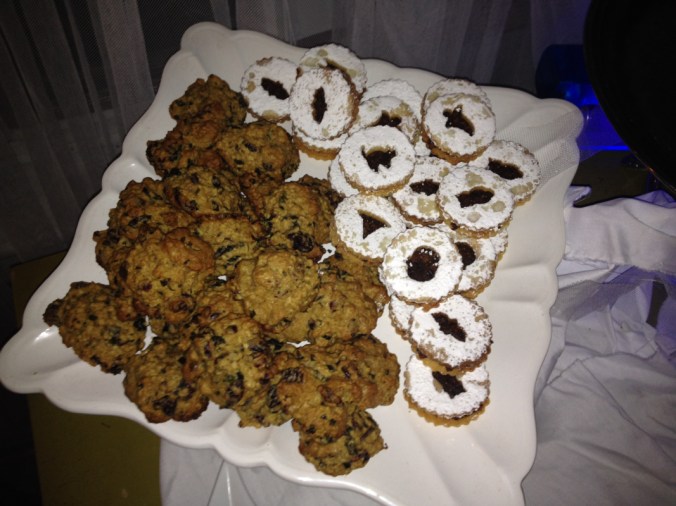
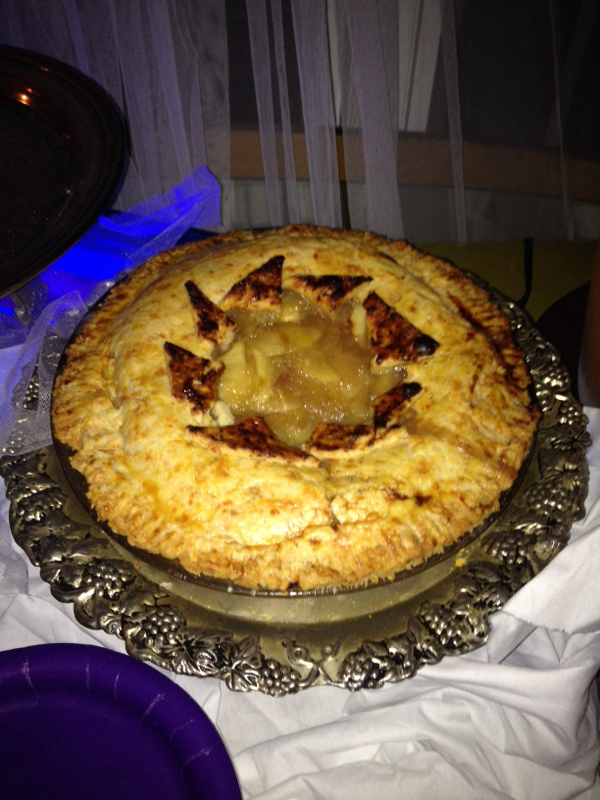
Usually for Halloween, I try to make my spookier-themed pastries for parties, such as my Jack the Ripper and Elizabeth Bathory cupcakes. This year, I decided to try a couple new recipes- Fig and Bacon Linzer cookies, and a Chedder Cheese and Cider Apple Pie I had had my eye on for a while.

The pie crust was a little difficult to work with, and this is an excellent demonstration of the importance of having the proper tools for a recipe. The crust involved shredded cheddar cheese, and was meant to be made in a food processor. Since I don’t have one of adequate size, I went at it as I told you two weeks ago- with a handheld pastry blender.
Unfortunately, my little hand blender could cut up the cheese nearly as  small as a food processor could, making the dough very crumbly and difficult to work with. Fortunately, the pie came out splendidly all the same.

The second little adventure came in trying to make the filling for the linzers. The cookies themselves were no problem (and I was thrilled for the excuse to finally use my little Linzer cutters!), but the filling was problematic. This year was abysmal for figs, and there were no fresh figs to be found- leaving me with just dried figs to mess around with. I rehydrated some in water for a few hours, and put them through my mini-chopper for with four fried-up strips of thick cut bacon, some dark chocolate balsamic vinegar, a little salt and pepper, and some of the bacon fat to add a creamy texture. The texture was sublime, but the fig was very prevalent- I had wanted the bacon to be a bit more forward. Fortunately, I achieved some success by chilling the mixture and allowing a day for the flavors to meld. I think next time I might use a bit more bacon.

There- all caught up on my doings.

Right now, I’m cutting across New Jersey on a train bound for New York City. It is rather telling when you arrange travel (and particularly layovers) so you can get to a favorite spot that you ordinarily might not have a reason to visit. This spot, for me, is the Bridgewater Pub at 30th St.Station in Philadelphia. I got tickets for certain trains so that A. I would be at that station around lunchtime, and B. I would have a solid hour to eat. The food is usually fantastic, and the beer menu equally so.
My meal today was a fantastic beef brisket sandwich on brioche roll with a herby and peppery chimichurri, and a pint of Flying Dog’s Mint Chocolate Stout. I highly recommend both the place AND beer if you find yourself in the vicinity of either.

The notion of “destination” food is an amusing one to think about- the idea that some food or restaurant is SO good, SO desirable, it is worth traveling an incredible distance, altering travel plans, and often expending more money than you might believe, just for the experience of having it. A Chicago deep-dish pizza in Chicago, a Cubano sandwich FROM Little Havana in Miami… the kind of romantic, glassy-eyed gastronomic eroticism you’d expect from a foodie.

Absolutely ridiculous, yet completely reasonable at the same time.

Over and over, I’ve written about the way food holds the psyche- linking tastes and smells to memories and experiences. Sometimes destination food can hold a feeling of nostalgia. Other times it can fulfill a fantasy for the person, or re-enact a story for them from their family history.

Increasingly, I find my choices in “destination” food to be a combination of all of these- tastes of childhood to bring me back to a safe place from the madness of adult life, fantasies read about in books and travelogues or related to personal heroes, and sometimes just looking up places my parents told me about from before I was born, to see if they are real and as good as they said.

What’s destination food for you? Let me know in the comments! I have a long train ride, and full, happy belly to read them on.

Stay classy,

-BHB

A Pause in Transmission

Good morning, friends and neighbors!

This week, I KNOW I promised a continuation on the promised pie theme. I KNOW I promised pics and how-to’s for decorating pies.

Unfortunately, my appendix had other plans, and I’ve been laid up for most of the last week. 

In the meantime…. 

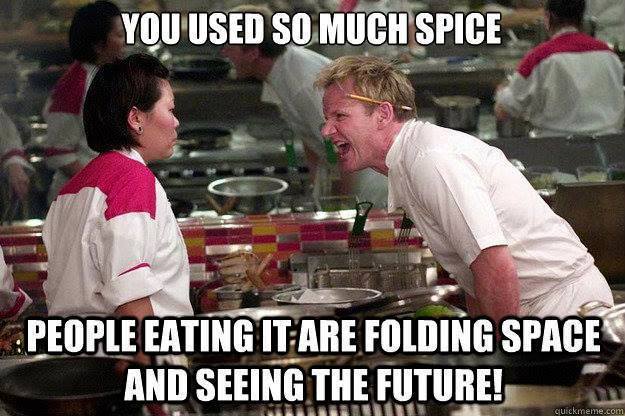
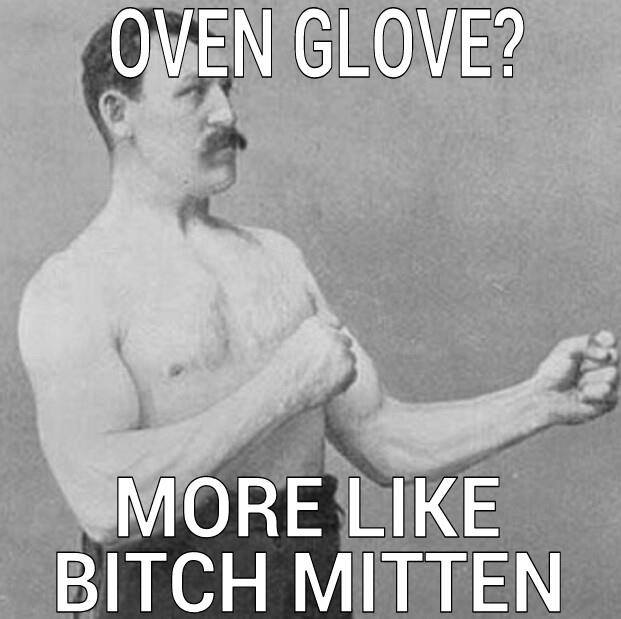
MEMES!

Legitimate blog entry next week, I swear!

Stay classy,

How To Order A Cake

Good evening, friends and neighbors! Due to (yet another) busy week at the 9 to 5, today’s intended pie-related post is being postponed until either Saturday or next week. Since I’ll be discussing some very visual elements, I wanted the opportunity to whip something up and provide pictures for you.

Instead, tonight I offer you a quick and hopefully helpful little how-to that I’ve had rolling around in my mind for a few months, and was finally requested- in detail- by my sister.

My older sister is getting married in the fall of next year. Of course, she asked me if I could provide the wedding cake (having a baker for a brother has significant perks!) I began asking her the typical questions- flavor, color, themes, servings, etc. All my sister had decided on, thus far, was just the look, and provided a picture. A picture alone does not a cake make. Confused and exasperated, she threw her hands to heaven and said “It’s too much- you should write a questionnaire or something!”

So I thought- “Why not? I’ve had nightmare experiences with people ordering cakes before. Why not just tell them what they should keep in mind when placing an order?”

Hence, this post.

Pulling on my own experience as a professional baker and the experiences of other professionals, I have comprised the following list based around the question: “What do you wish your customers would do when they place orders?” This applies for specialty cakes- that is birthday cakes, wedding cakes, or any kind of cake you want specially made for your event.

WHAT TO KEEP IN MIND WHEN ORDERING A SPECIALTY CAKE

1. Be decisive about flavor.
“I want chocolate!… no wait, Carrot!… no, Red Velvet…” When ordering a cake, bear in mind that different cakes are… well, different. Ingredients, time, characteristics, etcetera are all different. Know what cake you WANT to have when you show up.

2. Be honest about servings.
No one wants to admit that their family are heavy eaters. No one wants to admit that they might need a 40-serving cake for 20 people, and many think it’s low-class to say that they want leftover cake around afterward. Whatever ever the reason is, your baker will likely not care. What they DO need to know is how many servings the cake should make. It will affect the cake itself- obviously- and the invoice at the end.

3. Be as specific as possible.
A baker’s job is to make you the cake that you want. That said, you need to KNOW what you want. Have a clear picture in your head (or in hand, if you have one.) Colors, decoration, text, font, theme should all be at least pictured in your head, and you should let the baker know in as much detail as possible

4. Give a solid “yes” or “no” about alcohol in the cake.
Alcohol can do wonderful things in a baked good- Less so if one of your attendees is a recovering alcoholic, has liver damage, or is a minor. If you are concerned about the contents of a cake, or have reason to be, let your baker know. If you are getting multiple desserts, you can ask to make sure which, if any, have alcohol in them so you can provide necessary warning to those who are sensitive.

5. Be conscious of allergens.
This goes hand-in-hand with #4. Let the baker know well ahead of time if you have any allergy concerns- wheat, milk, eggs, nuts, etc. Know something about the cake you want to order- for example, do not order a German Chocolate cake if you have a guest that is allergic to coconuts.

6. State your price range and DO NOT HAGGLE.
Many people seem to think that, particularly when dealing with a small bakery or an individual baker, it is acceptable to haggle over prices. This is absolutely NOT the case. If you have an ideal price range, state that outright. Your baker will let you know what can be done. Trying to whittle down the price on a specialty cake is rude, ignorant, and frankly insulting. Bakers set the price of their cakes based on the ingredients, time necessary, their own labor, and many other costs. Telling a baker that they should charge a lower price (that likely means cheating themselves on time and labor) because you can “go down to the supermarket and get an cake for half that price” will likely only get you directions to the nearest supermarket and shown the door. If you want quality, be prepared to pay for it.

7. Do not expect free samples from a small baker
Larger, established bakeries or baking services tend to have extra cake lying around that they can give out as samples, or they do enough business where they can make small cakes or cupcakes and store them just for that reason. An individual baker, in all likelihood, does not. Recipes do not make a single cupcake- if you ask for a sample, the baker has to make either a full-size cake or a dozen cupcakes, and eat that cost- which rarely returns. Many small bakers simply will not provide samples, or if they do, will ask a token amount of a money for each to offset time, labor, and ingredients.

8. Be receptive to the baker’s judgement.
Your baker will (hopefully) have enough experience in the field to know what combinations and ideas work in different situations, and which ones don’t. As brilliant and wonderful as your idea may be, it may not be practical- or indeed possible. If the end, as always, the decision is yours- but if your baker is making suggestions about the practicalities of your idea, they are not being lazy, critical, or judgmental. They have simply “been there, done that, cleaned up the mess” and can spare you from paying for a disappointment.

9. Have logistics worked out ahead of time.
Once a cake is baked, it generally needs to travel to the event, and then be stored. Ask your baker if they can deliver the cake if you need it delivered. Make sure you have a place to put it once it arrives.

10. Have a realistic timeline- be aware good cake takes time. 
Cakes do not poof out of thin air. Nor do bakeries have 5-tier wedding cakes just lying around waiting to be decorated. Would you even want to EAT a cake that had been sitting in a freezer for 6 months, waiting to be bought? Good cakes take time- have a realistic timeline, and order WELL in advance. For small birthday cakes, I generally prefer a minimum three days notice. Larger cakes, multiple items, or event- obviously much longer. Do not be angry or surprised when you call and ask for an elaborate cake by the end of the day and get a “no.”

11. DO NOT TELL US TO DO “WHATEVER WE WANT.”
This is perhaps the cardinal rule of ordering cakes- do NOT tell the baker to “do whatever they think is best,” “make it look pretty,” or otherwise your decisions in their hands. The event is yours, and the cake is yours- all the baker has to do is make it happen. No baker wants to work hard on a cake, decorate in the way “they think is best” and deliver it only to have it refused because it “doesn’t look the way the customer thought it would.” You are paying for it- that means that you decide everything that happens. The baker may offer suggestions about style and will remind you of what is practical and possible, but it is not THEIR cake- it is YOURS. 

H
opefully this helps any of you who are looking to buy cakes in the future!

Stay Classy,