A new cook is told to chop leafy herbs, and they are given a cutting board and told to hone their knife. A bunch or two in, the new cook inevitably looks up at the Robo-coup (a.k.a. “Robocop” or “Robo”, a brand name for a heavy-duty professional food processor. Our version of a Cuisinart.) “This is friggin’ stupid. It would be way faster and more efficient to use the Robo-coup.”
An older cook looks up from their own prep and shakes their head. “Nope, it’s gotta be like this. The food processor doesn’t do it right.” To the new cook, this sounds like “peeling potatoes builds character” hazing bullshit. As soon as the chef isn’t looking, the new cook has taken down the heavy cube of a machine, affixed the bowl and blade, and is shoving bunches of parsley in while the older cook rolls his eyes, watches, and waits.
The machine IS powerful, and noisy. Chunks of green juice and herb splatter against the clear lid like alien guts while the very-pleased-with-themselves cook watches and uses his “expert opinion” to decide how long is enough. Soon, he tips out the bowl into a container and is about to load another couple of bunches in when the chef’s voice rings out. “The hell do you think you are doing?!”
Young Iron Chef freezes, they don’t understand. The parsley is getting chopped, right? They’re doing their job. They’re doing it faster than everyone else, right? That’s the point, isn’t it? Why are they in trouble? “Chopping the parsley like you said, Chef!”
Yesterday I was hurting for something to write about this week. It had been an exhausting week and there are always stand-by topics when it comes to food writing- exhaustion, mental health, how to not be a jerk when dining- the usual list. I’d covered most of these pretty well, though, so I wasn’t ready to cover old ground quite that churned up. I was about to head out for a walk when the following quote came across my social media: “You inherited more than generational trauma. Your ancestors also left you their wisdom and their strength.”‘
Given that I’m feeling very very Jewish at a moment when two entire cultures people have very recently had their generational traumas triggered at the same time by bad actors and pointed at each other (with a whole Western world primed to lay their own politics on the conflict no less,) the word “generational” leaves a strange feeling in the mouth. Whether regarding trauma or strength and wisdom, it comes packed with a lot of emotions that are best understood, managed, and then utilized- or dispensed with.
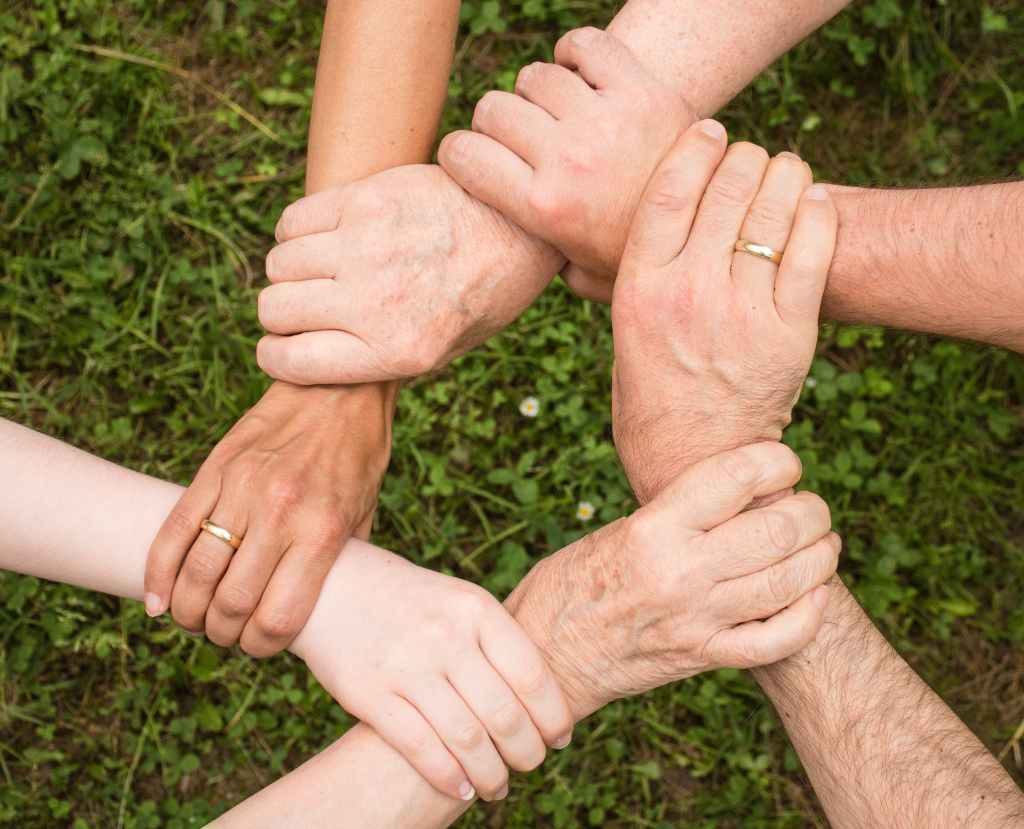
“L’dor v’Dor-” in Hebrew, “From generation to generation.” We keep living, we keep passing on what we are and what we learned, for good or ill.
I’ve written something about the specific nature of my Jewish upbringing in a fewblogposts. I don’t know that I always went into particulars, but “generational trauma” is something that Jews know a lot about and the lessons from it are some of the hardest, most spiteful lessons that we’ve had handed down. The kind that we describe to our Gentile friends with jokes like “Every Jewish holiday is based somehow on ‘They tried to kill us, we survived, let’s eat!” or “Why are Jews neurotic? It’s because we owe our survival to some of our ancestors waking up one morning and going, “the vibes are off- let’s get on a boat elsewhere right the fuck now.”
That’s dark humor right there. Combine that with some of the wisdom my grand-family handed down to me:
“Learn everything you can, Matt. Knowledge is something that can’t be taken away from you.”
“You‘ll always find bookstores in Jewish communities. Booksellers love Jews because we always have to remember the past.”
“Learn to be able to do a little of everything- you never know when it’ll come in handy.“
“You know your grandfather almost couldn’t practice medicine in this town because they wanted the town ‘Jew-Free,’ but they let him in because he was also a Freemason.”
Good advice for anyone, right? Then you read it again and you see the unspoken lesson- “Everything that we have can be taken away from us. We must never forget who we are and be ready to live wherever we go next.”
This all got ramped up to 11 after World War II when maintaining and rebuilding the community and Jewish identity became not just a necessity but (albeit understandably) a spite-driven burden to be explicitly handed down. I had female friends who were directly told that failing to find a Jewish husband and having lots of Jewish children would be “giving the Nazis a posthumous victory.” My previous blog post looked at this from a religious standpoint as spite is nothing to build a spiritual practice on, but from a cultural perspective this specific version of “never forget” became an obsession.
In my Jewish secondary schooling (which we called “Hebrew High,”) every year we’d be taught aspects of the culture and religion that were only touched on in the Jewish version of “Sunday school.” It almost became a joke that, every year, there’d be a class called “___ and the Holocaust.” “Art and the Holocaust.” “Music and the Holocaust.” “Film and the Holocaust.” “Holocaust Literature.”
A highly polished version of Israeli and Zionist history was included, of course. The timeline of those courses largely went “Dreyfus Affair, Herzl had a big brain idea, Britain was cool with it then wasn’t, America was okay about it, all the Arabs and Muslims hate us, but we fought them and won, still there now, so send money so we can plant more trees.” The division of the Middle East by the Entant after World War I was barely mentioned, nor was even the word “nakba.” The fact that Herzl was a bit of a classist with internalized antisemitism of his own, that Zionist philosophy has fractured 15 different ways since then, and that The Balfour Declaration was a (largely unsuccessful) ploy to get American Jews to pressure their government into joing the war were never mentioned at all.
As an aside, I’ve seriously had to unlearn more about Israel and Zionism than “activists” have picked up in hashtags and slogans since 10/7. If you don’t have skin in the game, your job is to listen- not lecture.
What does education like this create? What is being passed down “from generation to generation? The answer is a community held together by the holes poked in it. A religious and cultural community that keeps itself “strong,” but hypervigilant, spiteful, and scared. To quote Rabbi Zalman Schachter-Shalomi, when challenged by another rabbi in their discussions with the Dalai Lama that our insularity has made us strong- “There are terrible ways to be strong.”
“May Their Memory Be A Blessing”
When you are on the run, you learn to survive and pack light. You teach your children how to do the same. You teach them to do what you can with what you have, value knowledge and stories, and never forgetting who you are (because no matter what they say, the rest of the world will always remember.)
Persecution creates paranoia, and it creates ingenuity and resolve. Besides prizing knowledge and history, my parents and grandparents had more to say– about remembering that we had little, so when we have more we should give to those who don’t. Ashkenazic Jewish cooking itself is a story of Jews moving from place to place, making themselves a part of communities and learning how to enjoy the food as best they could.
We also learned that while the rest of the world marks Holocaust Rememberance Day from when the Allies liberated Aushwicz, in Judaism we mark it from the start of the Warsaw Uprising– when the Allies left us to our own devices and we as Jews fought back ourselves.
In Judaism, when we speak of someone who died, we don’t say “may they rest in peace.” We say “may their memory be for a blessing”- meaning that we should remember them when blessing the living. “You should be as strong as your Grandpa Larry.” “You should be the kind of woman your Bubba Mitzi was.” It’s one small way we pass more than pain l’dor v’dor- from generation to generation. We pass on gifts as well.
When and if I have children, though, I hope I live to have the presence of mind to pass the lessons on without the pain and spite, so they can enjoy the blessings more.
My name is Matt. I am a Jewish-American baker, writer, and raconteur. I love food, beer, whiskey, mead and meadmaking, the taste and smell of good pipe tobacco, talking to strangers, and telling stories.
If you are in Beaverton today, you might see a guy in an Irish sweater with a copper-shod walking stick, a tweed hat, and a long tan cloak sitting at a bar with a pint of dark beer, typing on an iPad disguised as a very beaten-up composition notebook.
There is a lot of darkness and sorrow in the world right now. I’m keenly aware of it- too keenly, maybe, according to my therapist who’s been reminding me to keep off of social media. I’ll probably write something later summing up my personal attitudes about it all, but I’ll just as likely keep that to myself. The world is not short of opinions right now.
It’s also not short of doomsaying, chest-beating, and heartstring-wringing. There’s plenty of people who will take it upon themselves to remind us of all the horror in the world, and that’s a good thing. We can’t go about with our heads in the sand, pretending the problems of others aren’t our concern and then getting indignant when “no one did anything” when they become our concern.
What goes too far is when these good-intentioned messengers take it upon themselves to berate others or themselves for finding joy where they can.“With so much suffering and pain in this world, how dare anyone be happy?! Don’t you care?!”
There are plenty of who don’t or are ignorant of the plight of others, to be sure- but so many of us do. Here’s the truth though: Denying yourself joy and happiness does nothing to help others, and it weakensYOUR resolve to endure.
My friend Victoria lives a life a lot of folks claim to dream of, myself included.
She lives in a house next to a state park, warmed by a wood-fired stove. She, her husband and toddler keep a garden and raise ducks and turkeys, the structures of which she and her husband built themselves. When she isn’t baking or cooking what her husband hunts and fishes, she and her business partner go hiking and foraging for the ingredients they use to make their botanical lotions and cosmetics as Wily Coyote Botanicals.
She is still a wife and mother, still maintains a household, and somehow has all the energy needed to maintain all these things AND co-run a business.
That Saturday had already put me in a funk, and it was no one’s doing but my own. Starting a new job comes with a lot of expectations- mine AND others- and it also comes with a lot to learn. A lot of that learning happens when you mess up… and it shows you where and who you really are.




 The Black Hat Baker