Killing Norman Rockwell

Hello, friends and neighbors.

There’s a lot to be said for (and against) going to culinary school if you want to become a cook or chef.

Most of the arguments in favor of it include a basis of skills, the amount of knowledge acquired in a short amount of time, dedicated teachers, and the connections that come with being part of a community.

The arguments against include going into debt, that school won’t teach the life skills that come with the kitchen (some of which are as necessary as technical skills), and wasted time and money for a piece of paper that, while impressive, doesn’t match up to hands-on experience in the eyes of employers.
To get a loan from a bank to start your own business, that’s arguable.

Both of these camps come from a point of emotionality and pride, and I can see the honest merit in both. I went to a local, excellent, less-expensive culinary school before I had my first cooking job, and I can tell you right now the first thing I learned there:

Norman Rockwell had to die.

Rockwell's

“And The Symbol of Welcome is Light” (1920)

Idealism Breaks Like Bad Custard

Don’t get excited. I love Norman Rockwell’s work, and I’m certain it will live forever. The man depicted the America we wish we could see out our window. The unofficial-official artist of the Boy Scouts of America, I grew up looking at his work with honest love and respect. His depictions of small-town America- the Mayberrys and Main Street, USA’s we all imagined of a “happier,” “simpler” time- are part of the national consciousness.

Even his darker, more evocative paintings had an idyllic serenity to them:
“Yes, THIS is what life should be like. THIS is how things need to be.”

My first visions of being a baker- handing over pies and cookies to mothers and their kids in my own little shop, swept clean and full of clean glass and wood shining brown like a pie crust- had that dream like quality. Like someone who wants to own a restaurant, and dreams of tasting the food, wandering through the dining room and greeting patrons- it’s the end product.
The “good bits.” Getting to that point is rarely pretty.

We got dragged into reality after the first year.

“You are in for it now. You’re not going to be Emeril. You’re not going to be Nigella. You’re not even gonna be Jamie Oliver. When you graduate, you will be someone’s b****. You will be someone’s b**** for years, and if you’re good at being their b**** you might have some little b****es of your own one day.
You may even become the biggest, best, and baddest b**** that the world ever saw- and you’ll still be someone’s b****.”

Understand, no teacher ever said ALL  these words verbatim… but it was understood.
“When and IF you graduate… you are at the BOTTOM. You will STAY there until you demonstrate the ability to crawl up.”

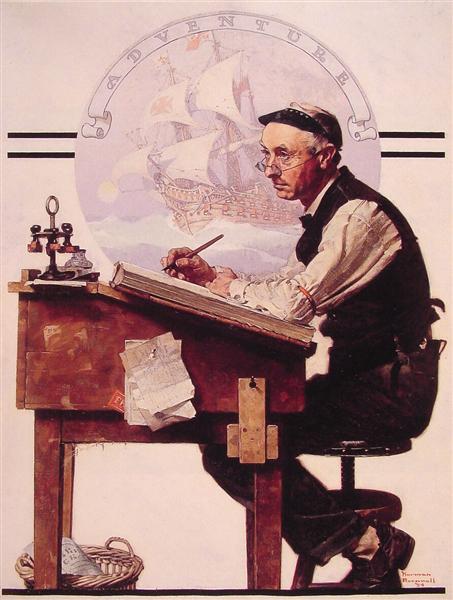
Rockwell's

“Daydreaming Bookkeeper (Adventure)”, 1924

The Pit

We were taught to cook and bake, of course. That was the job. Some teachers were easier than others- to varying degrees of success. We were also told some of the horror stories of the job.
We were taught to write our own.
We were given the “jail, hospital, or the morgue” mantra.

“You want to own your own bakery one day? Strap in, kid- here comes recipe costing, labor costing, suppliers, food safety, OSHA, tax law, local and state certifications…
What, you thought you’d just be baking pies all day? Hah, maybe if you’re working for someone else, and never want to do anything more.”

We got fed the reality. Convenience products. Suppliers. Cost management.
We read Down and Out in Paris and London, Kitchen Confidential, and ​The Apprentice. We mucked out trash cans,. We scrubbed dishes and cookware. The stronger guys had to carry out the stockpots heaped with 100 lbs of bones.

Because of my school’s proximity to the casinos and resorts of Atlantic City, the majority of us figured one of them would be our first gig out of school. For the most part, they didn’t need creative thinkers and dreamers. They needed warm bodies that could crank the recipes out and not mess it up.

Years later, I’d lament to a friend of mine here in Oregon that I did as well as I had at that- that I had pushed to get into some other creativity-based courses, and maybe not simply tried to gather “all the skills I could.”

My friend, who didn’t go to culinary school, disagreed. “Too many kids who graduate from schools leave trying to be artists first in everything, and craftsmen second. They wind up having issues with the menial stuff, and getting repetition and replication down. It’s AWESOME you got used to that first.”

We didn’t work ALL the time though. And some of us still dreamt. Maybe not the Norman Rockwell ideals we had… but something similar. Something NOT what we were led to accept.

Rockwell's

“The problem we all live with” (1963-64)

Rockwell Invictus

Most of us did go to the casinos, and some stayed for a while. Others built our names working for small restaurants and cafes.

Some of us started our own businesses, repainting Rockwell in our own image.

Some of us packed up our knives and began a wandering career, chasing the tides and where life might lead. We had skills, after all. Give us a kitchen and an oven, we could find work.

As I write this, I’m crashed on my couch with an absurdly snuggly black kitten. My wife is sleeping in the next room. We’re two thousand miles from anywhere we FIGURED we’d wind up. I found work in a restaurant, and when I’m not baking, I’m telling stories.

There isn’t any Rockwell hanging on my walls. Instead, I have my awards from culinary school.
A Ralph Steadman print of a man on a bicycle with baguette, wine, and a cold.
A poster from the podcast Emily and I binged on the drive from New Jersey.
Drawings by my friend Lillian, inspired by kimchi.
and an old tourism poster of Atlantic City.

I don’t think Norman Rockwell ever put any of his paintings IN his paintings either.
He painted a reality he wanted. WE made them dreams.

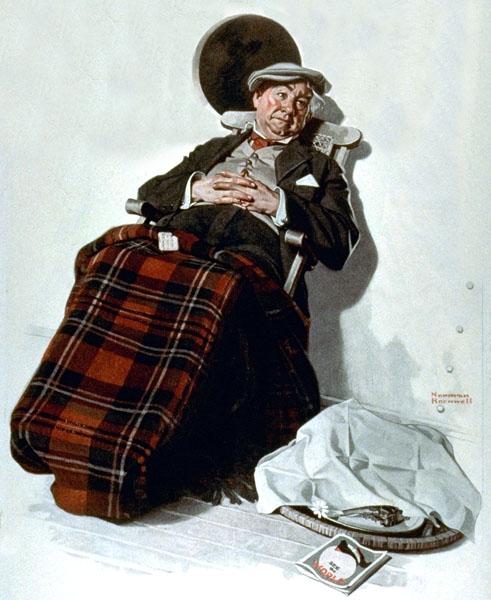
Rockwell's

“Relaxing in Chair”, 1923

How close to reality we can get them… that’s on us too.
That’s the tough bit.

​Stay Classy,

The BHB’s Top 5 Personal Development Books

Good evening, friends and neighbors!

“I really think that reading is just as important as writing when you’re trying to be a writer because it’s the only apprenticeship we have, it’s the only way of learning how to write a story.” – John Green

Back when I was in high school, one of my English teachers used a similar quote that I can’t remember the source of- “I’ve known many readers who don’t write, but I don’t know a single writer that doesn’t read.”

The logic then follows:
If you want to write stories, read a LOT of stories…
and if you want to write books that will help people, read a LOT of good personal development books.

PictureHunter S. Thompson pointing a gun. Caption reads

Great life lesson… maybe a bad role model.

Growing up, my mother had a veritable library of these- mostly about dieting, exercise, keeping calm, and personal empowerment.
I mean, she WAS a stay-at-home mom with three kids and a busy spouse for most of my childhood. So it kinda makes sense.

For a long time, I didn’t really give a hoot about “self-help” books. They had, and to a degree still do, have a stigma about getting them-

  • “Just a cash-grab.”
  • “…for people that can’t handle reality.”
  • “Common sense s***, put in a pretty cover and sold.”

Well I can say that, since growing up a bit, paying bills, and working in blue-collar field where you’d swear common sense was a friggin’ superpower sometimes:

  • If someone is honestly trying to help folks, nothing wrong with making a little money from it.
  • Reality SUCKS, and people who “handle” it maybe aren’t handling it so well.
  • and as distracted as we can get, sometimes a slap to the back of the head- “DUDE, FOCUS”- is needed.

In the last few months, my sister Stephanie Cansian has been on a bit of a personal development book-bender. Between trying to get her own business as a wellness coach going, being a barista, and keeping house, Steph tries to get in at least one hour of quality reading each day. Her husband Kevin, another side-hustler in progress, does the same. Personal development reading in the morning, and leisure reading at night before bed.

With me trying desperately to be a writer, the bug didn’t take long to jump over to me, so here’s a little list of my favorites so far!

1. “Born for This” and “The $100 Startup” by Chris Guillebeau

Chris Guillebeau is no stranger to this blog. I’ve referenced him and his works many times before, and he has the distinction of writing the first development works I ever bought for myself. These were them, and that’s why this is a two-fer:
The $100 Startup is business-minded, and offers the philosophy, concepts, and inspiration you might need if you want to kickstart your own small business. While perhaps a bit light on actionable steps (something he corrected in “Side Hustle”,) Startup  plants the seeds for you, and gets you to ask that all-important question- “Why not?” This is the book that inspired me to start The BHB. What happened afterward, I’ll say was a flaw in execution rather than intent.Born For This is a bit more focused on the personal. Perhaps you don’t want to be an entrepreneur, but you DO want to be more satisfied with your work and life in general. In this book, Guillebeau outlines his “Joy-Money-Flow” philosophy that he finds practiced by people who won the “job lottery”- folks that always seem excited to work, do it well, and make a happy living. You won’t get rich, possibly- but if you’re living a good life you love, who needs to be?

2. “Creative Struggle” by Gavin Aung Than

Gavin is also no stranger to this blog. I’ve loved and followed his main project “Zen Pencils” for years now, and always take joy and inspiration from his depictions of famous quotes.
In this, his third book, Gavin compiles cartoons he’s done about some of the great artists and thinkers of history- Leonardo DaVinci, Stephen King, John Coltrane, Mary Shelley, and more.
His cartoons are on-point, of course- but the additional histories he offers give them even more impact. For example- did you know Tchaikovsky HATED writing “The Nutcracker?” It was a total pot-boiler for him. He hated the story and the work itself, but it was a royal commission. However he “mastered his disinclination” and turned it in. Every Christmas, theaters fill around the world to watch it be performed.
If you just can’t womp up the will and inspiration to get your projects done, this might be what you need.

3. Endless Light: The Ancient Path of the Kabbalah” by David Aaron

I’ve written about my fraught relationship with my faith before, and about other texts on Judaism and Kabbalah. So throw the celebrity, red-string-bracelet, woogie-woogie crap out the door for a minute and get this:
Sometimes what you don’t need is “ANSWERS” per say, or “INSPIRATION”- but a RESTRUCTURING. What helps isn’t specific advice, but more a realignment in how you look at the world that lets you see answers in yourself that were hidden before.
In this book, Aaron offers that realignment through the lens of Kabbalah- Jewish mystical philosophy that bucks some of the staid, moralized lectures we are used to.
With amazing insights into Judeo-Christian thought, and helpful self-reflection questions for each chapter, you can start piecing things together- by removing yourself from the center.
Case in point- in Hebrew, the word “het” is translated as “sin.” In reality though, it literally means “miss”- as in “to miss a bullseye.” Crime, or mistake?

4. You Are A Badass by Jen Sincero

Stephanie SWEARS by this book, and this author. Sincere makes no bones about her personal journey, and doesn’t shy away from the real, weird, and looney moments along the way- going into debt doing self-help programs, jobhunting, impostor syndrome, the works.
With an acerbic wit, engaging voice, and enough of an understanding for the negatives of life that it’s hard to lump in with “positivity culture,” Sincero’s advice- if it doesn’t immediately inspire you- will at least encourage you to look at your stressors in a different way.

Also, Loincloth Man.

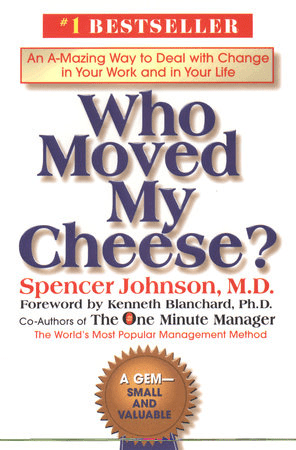
5. Who Moved My Cheese?” by Spencer Johnson, MD

Remember 20 years ago or so when EVERY businessman and CEO was reading this book, and “well, SOMEONE doesn’t like their cheese being moved” was a decent burn?

Well, there’s a reason for that. The book is THAT simple, and THAT good

A simple fable about mice, tiny humans and track suits, a big maze, and dealing with change- personal, professional, economic, etc.

The power of this book comes from the ease of its parable- and the starkness of the lessons. A reminder to keep on top of things, not to get too comfy with anything, and prepare to move on rather than wishing change wouldn’t happen.

That’s what I’ve got for you right now- what books do you all turn to? Think you’ll read some of these?

Stay Classy,

Contents Under Pressure- Anxiety in the Kitchen

Good evening, friends and neighbors.

I’ve been described a lot of ways since I was a kid.

  • “An old soul in a young body.”
  • Erudite
  • Driven
  • Inventive
  • Conscientious

There are probably a few others- especially from folks that don’t like me, but that’s their problem.
These are the ones that seem to drive recent revelations home for me right now.

The author graduating culinary school

The day I graduated culinary school. I’d been working as a nurse’s aide in a hospital and baking cakes out of my kitchen for nearly two years then.

While perhaps it wasn’t as obvious back when I was heavier, I’ve always been a pretty outgoing and busy person. I always had some new interest to study, a new hobby, a new fascination. if I was interested in something, I’d bite into it down to the bone.

Poetry. Cooking. Baking. Writing. Comparative Theology. Psychology. Model-building. Collections. Storytelling.

I may have been heavier and slower, with maybe a bit less physical energy- but I was always GOING. 

Now that I’m physically healthier and have more energy, it’s even more obvious:

  • “I’m going to write a blog! I’ll do one entry a week. No, TWO a week! One a day!… Nevermind, one a week is good.”
  • “I’m going to write a book! Ooh, I just had an idea for the NEXT book while I’m writing this book! #inspired”
  • “I need to get these eight tasks done by the end of the night. But there’s a list of extra stuff if I have the time? Oh, Challenge Accepted, motherf***er… “
  • “Hey, I bet I can make a living doing this, WHILE I’m baking full-time! Yeah, I just need to find a…”

Even as I’m writing all that down, and knowing I’m describing myself, it sounds pretty great. That’s the kind of person you THINK about when you imagine successful, driven, hardworking people. That’s the kind of person that winds up on book lists and talk shows, or doing lecture circuits.

From personal experience, it’s also the kind of person who knows how to be a neurotic wreck quietly.

Pwhen the prep guy accidentally throws out the best bits of your roast pork...

When the prep guy accidentally throws out the best bits of your roast pork…

“We have met the enemy, and he is us.”

With my work life starting to stabilize, and my attempts at self-care starting to slowly bear fruit (yeah, next step is decluttering my desk), I’m finally trying to turn my attention toward my “side work.”

Finding a therapist, or really any good professional, isn’t as easy as a Google search. You tend to want someone nearby, with hours you can manage, who’s handled issues like yours before- and is either covered by your insurance or has rates your budget can accommodate. My friend Rachel- herself something of a compulsive researcher/listmaker- helped me out by shooting me a bunch of resources. I’ll include some of them down below.

Before you show up in someone’s office, though, it can be a good idea to do a little homework yourself. It takes some mindfulness and honesty- occasionally painfully.
if you’re going to a therapist though- if you want to get better- then you want to dig up those hard truths.

This doesn’t mean you should diagnose yourself. Between being the son of a doctor and getting a B.A. in Psychology, that was drilled into my head well enough:

“You’re getting a copy of the DSM IV. Read it through if you want, but DO NOT try to diagnose your friends with anything, and DEFINITELY not yourself. By the end of the semester, you will think you have every disorder in the book and be demanding commitment to an asylum.” – one of my professors

Picture

Photo by Mubariz Mehdizadeh on Unsplash
So it all starts as the Delphic Oracle of Apollo said- “know thyself.”I knew I was a hardworker… but I could see how not working affected me. I have a tendency to link my self-worth with my productivity.
I knew I was driven and inventive… but I’d always lose steam when things got too tough or challenging.
I knew how patient I could be with everything and everyone (on a good day, anyway)… but I couldn’t reserve any of that patience for myself or my own failures.

I was energetic… but could never really relax.
I was detail-oriented… but with an all-or-nothing mentality. If it wasn’t perfect, it was garbage.
If I wasn’t perfect, I was lazy.

When I was looking for a job, I had to remind myself that I WASN’T a bum or a slouch… and I needed Emily to remind me of that too.

That’s an anxiety disorder talking.

“Oh, Do Your Research…”

PictureBased on what I’ve learned, “high-functioning anxiety” is not a clinical term. It’s more of a self-descriptor for a subset of behavior- people in whom their anxiety propels them, rather than shuts them down. The outward behaviors are extended, lifelong coping mechanisms that- to observers- seem like ordinary and desirable traits.

Imagine having noisy neighbors. To drown out their constant noise, you blast your favorite music as often as you can… and for some reason, everyone else then assumes you’re some kind of metalhead or a roadie for Slayer.

Throughout the day, a mind with anxiety doesn’t stop making noise:

  • “You’re a failure.”
  • “You’re a horrible friend and horrible person.”
  • “Can’t even do that right, can you?”
  • “You’re a hack. No one gives a crap about your writing.”
  • You saw [successful pastry chef younger than me]? THEY’RE good at their job. You? The hell are you doing?”

The “high functioning” anxious mind then decides to try to drown out these thoughts:

  • “Oh yeah? Well I just ran my fastest pace for the 5K yet!”
  • “No I’m not! See, I’m helping this lady with her groceries!”
  • “Well I got this other thing PERFECT!”
  • “Well I’m gonna keep rewriting it till it’s AWESOME!”
  • “Well I’m going to do extra stuff at work, and I’m going to join a professional group, and I’m going to…”

Repeat forever.


The Ring of Solomon- Putting Demons To Work

Let’s be real here. Doesn’t that sound like someone BORN for the kitchen?
A devoted, loyal, driven hard worker. They’re passionate, curious, made of 100% raw, uncut Hustle. New dishes? “Yes chef!” Need this crate of potatoes diced? “On it, Chef!”
Eager to do their best, eager to show off their skills, always laughing and joking. Eager to please.

They seem like they were born for this work. They love it. They’re emotionally invested in doing a good job.

Be honest… that’s the kind of person we ALL want working for us.

After a lifetime of quietly living with negative voices in their mind, these people have become VERY good at putting on a brave face and stomping out those voices with achievement and accolades. They are the Zen Masters of “fake it till you make it.” Without even being aware, they take Tyrion Lannister’s advice. They take their weaknesses and flaws and wear them like armor so nothing can hurt them.

Nothing except themselves, that is. The brain and body are not meant to have that kind of tireless, explosive energy forever… and these people burn energy at an incredible rate. Mentally, they are trying to marshal their thoughts to do what they want, and physically they exhaust themselves so the demons will fall asleep.

It doesn’t last, though.
Eventually, they run out of energy. They are physically and mentally burned out.
Maybe it takes a moment of intense external stress that causes a “snap,” or it’s a slow degradation, but the smiling and joking stops.
They lash out in anger and frustration, at others and themselves.
The work they love feels more like a burden, and they can’t help but express a lack of excitement for their tasks.
They make simple, silly mistakes… which frustrates them even more.

The demons wake up.
The stereo blows out, and they can hear the neighbors again, but now they’re screaming:

You want to help others, but you can’t even help yourself.”

It’s a lie… but they are too tired to fight it anymore. The perfect worker becomes a perfect mess.

graffiti wall painting of a screaming man

Photo by Aarón Blanco Tejedor on Unsplash

The Demon Hunter

The worst thing about this scenario is the fact that, well… it seems like so much good comes out of it. The person points to their demonstrated functionality and achievement and goes “Oh come on… yeah, I’m a little high strung, but a mental disorder?! I’m not a loonie, look at all I’ve done!”

Alternatively, if they ARE aware of it and they know something’s wrong, they might say, “Okay, I have some issues, but I don’t need help. I’m not THAT bad. Therapy and meds are for people who can’t function.” Worse, they might avoid getting help because they think it’s the SOURCE of their talent, like an addicted artist afraid to get clean. “Look at everything I’ve done… does this make me a fraud? What if I DO get better… people like me because I’m a hard worker! They keep me AROUND because of it.”

“I’m all about my work ethic… what am I WITHOUT it?”

I’d like to say that I have a perfect answer for this. A nice bright bow to tie up the entry with… but the fact is, I don’t. This is the point I find MYSELF at now.

The research I’ve done has made suggestions that, beyond therapy and possible medication, other answers include things like meditation, progressive muscle relaxation, mindfulness training, improving sleep habits and decreasing caffeine intake.

I’ll let you know how I manage to work those into kitchen life, and what happens next.

In the meantime, though, at least I know my demons have a face and a name- and that’s the first step to handling them.

Despite the macho-posturing and auteur myths we were all raised with, success does not require suffering.

There are more options than “lose the work you love” and “live in fear of yourself.”

Stay Classy,


Mental Health Resources
 (Thank you, Rachel!)

Finding a Therapist:

  • ​​Psychology Today:  The main search bar for finding a therapist in the US, from a heavy-hitter in the world of psychology academia. You can search by speciality, insurance, or method- but this is just a directory. Make sure you follow up with individual practitioners to make sure they are accepting patients, take your insurance, etc.
  • BetterHelp and TalkSpace: Generally affordable online-only counseling for a bit cheaper than an office visit.

Self-Care:

  • If you have a smartphone, there are apps like Aloe Bud (helps you remember to look after yourself) and Plant Nanny (reminds you to drink water) that can help you build and maintain health habits. Other apps like Daylio include journaling, personal organization for the scatterbrained, and such.

Peer-to-peer Help:

  • There are a number of groups on social media where you can simply talk with others who have issues and find community- Facebook and Reddit I know have them, I belong to a few myself. But I’m going to include a warning here, in Rachel’s own words because frankly they are excellent:

“It probably goes without saying, but just a note of caution when you dip your toes into the peer-to-peer arena: it’s easy to devote entirely too much of yourself to trying to help people who are not doing a great job of helping themselves. Put on your own life jacket before assisting others, and if you need to step back from the shared experiences in order to continue on your own path, then do so. Related to that, and something I’ve learned over time: everyone’s stories are equally valid and deserve space. There is no Mental Health Olympics, and I’m pretty sure you wouldn’t want to win any medal it’d offer. Even if imposter syndrome is telling you that there’s no way your story is as important as that one person’s story who’s spent months in their local psych hospital. Your story is allowed to take up the space it takes up. “

Media:
If you have some room in your day to listen to podcasts, Rachel recommends “The Hilarious World of Depression” and “Terrible, Thanks for Asking.” I can’t speak for these myself, since my own podcast choices are generally fictional/relaxing/escapist, but they are worth a listen at the very least.

A Crash Course in Chocolate Work

 Good afternoon, friends and neighbors.

I am annoyingly active on Facebook. “Annoying” certainly for myself, since I’d like to believe I have better things to do than scroll through an increasingly bleak news feed and let fear/ anxiety/ envy consume what remains of my energy. (Fun fact: I do, I just kinda suck at reminding myself to do them.)

One thing that Facebook HAS done for me, however, is connected me with a community of fellow professional cooks and chefs from around the world. I tend to haunt these conversations more than I talk- you wouldn’t believe just how much of being a good storyteller is listening, rather than talking.
The other day, though, I felt the need to pipe up.

One chef in the community was working in the kitchen of a hospital and had recently been put in charge of their pastry department as well as their hot kitchen. He was okay enough with the baking aspects- he knew how to follow a recipe, do the math, and so on. There was only one thing he was concerned about with his new duties- chocolate work.

The hospital had an EXCELLENT food program. They make chocolates and truffles in-house for their OB-Gyn unit- new mothers get a little box of specialty chocolates. The chef had chocolate on hand, tools, materials, equipment… but he knew NOTHING about working with chocolate.

Myself and another chef leapt in with a host of advice- tempering, flavoring, handling, sourcing, the works. The majority of my knowledge came from culinary school, and occasional experimenting in the casino under my friend Karen, but apparently it was more than my friend had ever gotten to hear.

Afterward, I got to thinking “You know, this is probably something a lot of folks would like to know. I should write something about it.”

Here we go, then. Strap in.


What is Chocolate?

Cacao Bean Podsfrom Wikipedia

Wikipedia defines chocolate as a typically sweet, usually brown, food preparation of roasted and ground cacao seeds. It is made in the form of a liquid, paste, or in a block, or used as a flavoring ingredient in other foods.”

That’s a good start. Chocolate begins its life as the seeds of the cacao plant, which are then fermented, washed, dried, and ground, and then combined with any number of additional ingredients to make the chocolate you find at your favorite candy store. Commonly, this is chocolate liquor (not alcoholic- this is the name given to the raw results of processing cacao), cocoa butter, sugar, and occasionally dairy product in order to make milk chocolate.

Often, people will describe a chocolate bar or a kind of chocolate with a percentage- 35%, 65%, 70%, and so on. This percentage indicates how much of that chocolate is the liquor in relation to everything else. While it absolutely has flavor and chemical ramifications for the professional to think about, for the average chocolate lover, you can think of this as “how chocolatey/bitter this will be.” 35% is where milk chocolate usually lands. 55% is semi-sweet, 65%-80% is “dark” or “bittersweet” chocolate, and 100% is baking chocolate- USUALLY inedibly bitter on its own. My former roommate Andrew can attest to this, as the previous gerbil for my culinary experiments.

Sorry, Andrew- I’m sure you’ll be able to taste things again one day.

Chocolate has a long and varied history as well, dating back to it’s first recorded usage as a drink by the pre-Olmec civilizations of Mexico as far as 1900 BC. Of course, its history is tragically colored by the impacts of colonialism, European exploitation, and slavery- even to today.

Buy small and local, folks… it doesn’t just stimulate your local economy, but also MUCH more likely to be ethically sourced.

While there are only three varietals of cacao harvested right now, the permutations of their growth, location, season, and harvesting process invite limitless flavor profiles and terroir not unlike fine wines or other crops.

No, not ALL chocolate tastes alike.


Keeping You In Suspense: Tempering, Blooming, And Using Chocolate

When you hold a chocolate bar in your hand, it seems like a single, unified substance. It is… well, “chocolate.”
Now you KNOW, however, that it’s a mixture of chocolate solids, cocoa butter, and probably a mess of other ingredients- sugar, dairy, emulsifiers, flavorings, childhood dreams, etc. All the same, it seems like one, unified solid. You’ve probably seen a case where that wasn’t quite true though- and I don’t mean melting.

If you eat chocolate (especially as a little kid,) you’ve probably poked around your house and found old Halloween candy, or a forgotten chocolate bar in the bottom of your bag that you got as a snack. You’ve picked it up, it felt solid, and went “Woo! Bonus chocolate!” You go to unwrap it and… wait, that doesn’t look right.

It’s all weird and mottled-looking. There’s white stuff on on outside, and it feels spongy. You break off a little bit, and it… just kinda bends and pulls? No satisfying snap. It’s dull-looking, not the shiny chocolate you remember.

Dang it… it’s gone bad” you think, and go to chuck it out.
Well, I’ve got good and bad news for you- the bad news is that, no, you wouldn’t want to eat that chocolate. It probably wouldn’t hurt you or make you sick, but it just won’t be enjoyable.
The good news is that, if you want, you can probably bring it back.

The chocolate you buy, in order to make sure it can sit on a shelf at room temperature for a good long while, goes through a process called “tempering-” where the chocolate is melted down, then cooled and reheated very carefully to make sure it can tolerate reasonable temperatures and stay one uniform mass. When chocolate is warmed up and DOESN’T cool down properly (such as being stuck in a wrapper at the bottom of your bag for 8 months), it loses its temper and “blooms.” The cocoa butter and sugar separate and rise to the surface on their own, creating that mottled look and gross taste

As melted chocolate cools, the cocoa butter in it starts to reform and crystallize. It may sound weird to think of fat “crystallizing”, but if you’ve ever fried bacon, poured off the fat into a container, and noticed that the surface of the fat looks sparkley, it makes more sense.

Cocoa butter crystals can take up to seven different forms, each more temperature-stable than the last, with the 6th and 7th ones being the hardiest and most resistant to temperature abuse. Tempering chocolate is a process where you do two things at once:

  1.  Raise and lower the temperature of the chocolate so that only those toughest, firmest crystals survive.
  2. Through physical manipulation (i.e. stirring and moving the chocolate), those crystals are constantly broken down to be as small as possible- so small that your tongue can’t detect their texture, and you wind up with smooth, tasty chocolate!

Bakeries and confectioners have large tempering machines- essentially a big spinning bowl with a thermometer and scraper that they can control the temperature of very slowly and keep it moving throughout. These machines can cost hundreds or thousands of dollars- but the process itself can be done very easily on a small scale with equipment you have at home!

You need:

1. Chocolate (duh.)

2. A double boiler– two pots of similar size, one of which rests securely inside the other.
Direct heat from a stove (even on low) is WAY too hot for handling chocolate and will burn it quickly. Using a double boiler, the lower pot is filled with water, which steams up and makes sure the upper pot (holding the chocolate) doesn’t get above 212*F (100*C.) If you don’t have two pots, you can use a heatproof bowl that fits instead. Just be careful grabbing it!

3. A heatproof spatula or wooden spoon (my personal favorite)

4. A good thermometer.
They make special glass “chocolate” thermometers, but you can absolutely use any instant-read probe thermometer- the kind you use to make sure your roast chicken is done.
Some folks, including me, have used infrared laser thermometers. They are cool and all, but they only tell you the SURFACE temperature of the chocolate, rather than of whole thing, so use your own discretion. Those can be bought at home improvement stores (they’re USUALLY used to detect drafts near windows.)

It’s kinda crazy how many great kitchen tools you can get at a hardware store.

Bending the Arc

Like I said above, tempering chocolate is just a matter of warming and cooling the chocolate and stirring it constantly to make sure only the strongest crystals of cocoa butter survive. There are multiple techniques for exactly HOW you do this:
  • Tabling– The melted chocolate is poured onto a heat-absorbing surface (like a slab of marble) and pushed back and forth across the surface. Quality of the temper is determined by the appearance and thickness of the chocolate as it cools. This is very much an “old world” method, and while it’s still used today, you need to have a LOT of experience with chocolate to do it reliably.
  • Inoculation/Vaccination/ Seeding Method- This is the method I use and the one I was taught in school. After being melted, chunks of already-tempered chocolate are pitched in as the batch cools. Their presence A. helps the chocolate cool (like dropping ice cubes in a hot drink), and B. inspires Stage 6 crystals to form by introducing some into the batch. This is the best way for a beginner, though it will require a little math and calculation if you are trying to only melt a certain amount of chocolate. It also, of course, requires having already-tempered chocolate on hand.

  • Resting– This “method” isn’t really a method, and I don’t think I’ve ever heard of it being used outside of my old textbooks. The melted chocolate is put in a bowl, at room temperature, gets stirred occasionally, and otherwise just sits there. Results are variable to say the least- I’ve never worked anywhere where this method was used- or even taken seriously. If you’ve had success with it, let me know.
      For tempering chocolate, different types (and indeed, different BRANDS) have certain temperature ranges they need to pass through in order for those good crystals to form, and all others get wiped out. This is called a “crystallization arc” or “tempering arc”- some brands like Callebaut and Valrhona will print a specific one for that chocolate on the back of their commercial packaging.

        For most purposes, however, temperature ranges are pretty consistent across brands for different types of chocolate- dark, milk, and white. This chart from the good folks at ChocolateAlchemy.com is the best I’ve found on the net:

A QUICK NOTE ABOUT DIFFERENT TYPES OF CHOCOLATE
Not all “chocolate” is CHOCOLATE. There are bunch of different types- from real chocolates formulated for specific purposes, to “chocolate-flavoured” candy melts. This is the kind that you find at craft stores more often than not. They’re not actually chocolate- just artificially flavored candy with a high amount of fat to make them easier to handle for the hobbyist or for simple decorative work. They do not need to be tempered, but if you decide to use them, follow THEIR heating instructions. Believe me, you don’t want to waste your time tempering crap, OR have a foul-smelling gritty mess on your hands.

Using whichever method you choose, once you’ve taken your chocolate (slowly) through those temperature ranges, you will notice the characteristics of properly-tempered chocolate!

  • It’ll be shiny.
  • It will harden up quickly at room temperature. You can drop a little bit on a sheet of paper and, within 5 minutes, see it harden, darken, and shine.
  • When cooled, at room temperature, it’ll break with a satisfying “SNAP!”

How To Use Chocolate (and generally not f*** it up)

Awesome! So now you know what chocolate is, what it’s made of, and how to temper it so it’ll stay firm and shiny!

Now… what do you do with it?

WHATEVER YOU WANT!

What follows is just a couple tips and ideas for what to do with chocolate:

Tips For Chocolate Working!

1. WATER IS THE DEVIL.
Water will cause your melted chocolate to cool way too quickly and “seize.” It’ll become gritty and gross, and there will be NO rescuing it. When tempering or using chocolate, keep water away as much as humanly possible. That includes the humidity of a refrigerator!

2. Oil-based Colors and Flavors
If you want to flavor your chocolate somehow, or color white chocolate, your colors and flavors will need to be oil-based, because WATER IS THE DEVIL. The most readily-available brand of oil colors I know is “Chef Rubber,” and you can use whatever flavored oil you’d like. Just be aware that flavored oils are expensive, and you will NEVER be able to make chocolate taste like anything BUT chocolate, with the addition of whatever flavor you are going for. Colors might need to be mixed with melted cocoa butter first, THEN added to white chocolate in order to make an even tone. You can buy cocoa butter bars separately from most suppliers (they look a lot like white chocolate, but lack sugar or dairy.)

3. Mise En Place!!
Once ready, chocolate needs to be held at it’s appropriate, “working” temperature. Unless you are REALLY sure of your ability to maintain that temperature, chocolate isn’t going to wait for you to get your tools, molds, bags, etc in order. Have all of your tools and materials ready and nearby! Once that chocolate is ready, it is GO TIME, and you don’t wanna be running around with chocolate on your hands trying to find the right tip for your piping bag.

4. Ganaches
Ganache is a beautiful thing. A mixture of hot dairy and chocolate that, depending on the ratios you make it with, can be a filling, a decoration, an icing, or whatever you need! It is pretty forgiving of flavoring (especially with liquor! A whiskey or rum ganache can be amazing), and can be piped, spread, or warmed up and used to enrobe!

Generally, ratios for a soft-solid at room temperature ganache are as follows:
Dark: 1:1 chocolate to dairy by weight.
Milk: 2:1
White: 4:1

You can tweak these ratios for the consistency you need. If you need the final product to be a bit more firm, use a little more chocolate, etc.
As for your dairy, you’ll likely find it easiest to start with heavy cream. Heat up your cream till it scalds, and pour it over the chopped chocolate in a heat-proof bowl. Cover in plastic and let it sit for a bit, then whisk till uniform.

Ganache is NOT shelf-stable, and DOES need to be refrigerated! It’s also VERY sensitive to temperature.

That’s about all I’ve got for you for right now! I’ll probably come back at a later date with some more pictures of this stuff when I have a chance.

In the meantime, there are TONS of blogs and chocolatiers out there who you can get more information from, and chocolate companies almost ALWAYS have information on their products available on their websites and in catalogs!

Best of luck, and

Stay Classy,