Good Food, Good Vibes, Good Business- My Dream Pie Shop

I get asked a lot of questions about my career as a baker.


Was it what I always wanted to do? (No- I remember wanting to be Indiana Jones for years.)
Aren’t the early morning hours rough? (They can be, but you eventually either get used to them, go mad, or advance far enough that you don’t have to work them anymore.)
Is it rewarding? (Absolutely.)

The most common one, however, is “do you want to run your own pie shop one day?”

The answer to that one is “…Maybe kinda?” I have kicked the idea back and forth in my head for ages, especially since I moved out to Portland and started surrounding myself with other entrepreneurs in the industry. Over post-shift beers and conversations across counters, I’ve gotten some solid insights into the life of a small business owner. It’s rewarding, and it can be fun, but it can also be a massive stressor and its own flavor of hell. You can’t really blame everything on the owner or boss, either- you know just how much of a screw-up that fella can be, but they’re trying hard.

All the same, it doesn’t hurt to dream. Between chats with other pros and a little soul-searching, I think I’ve got a good idea of what my dream shop would be like. It almost certainly won’t wind up quite like this, but I wouldn’t mind trying.
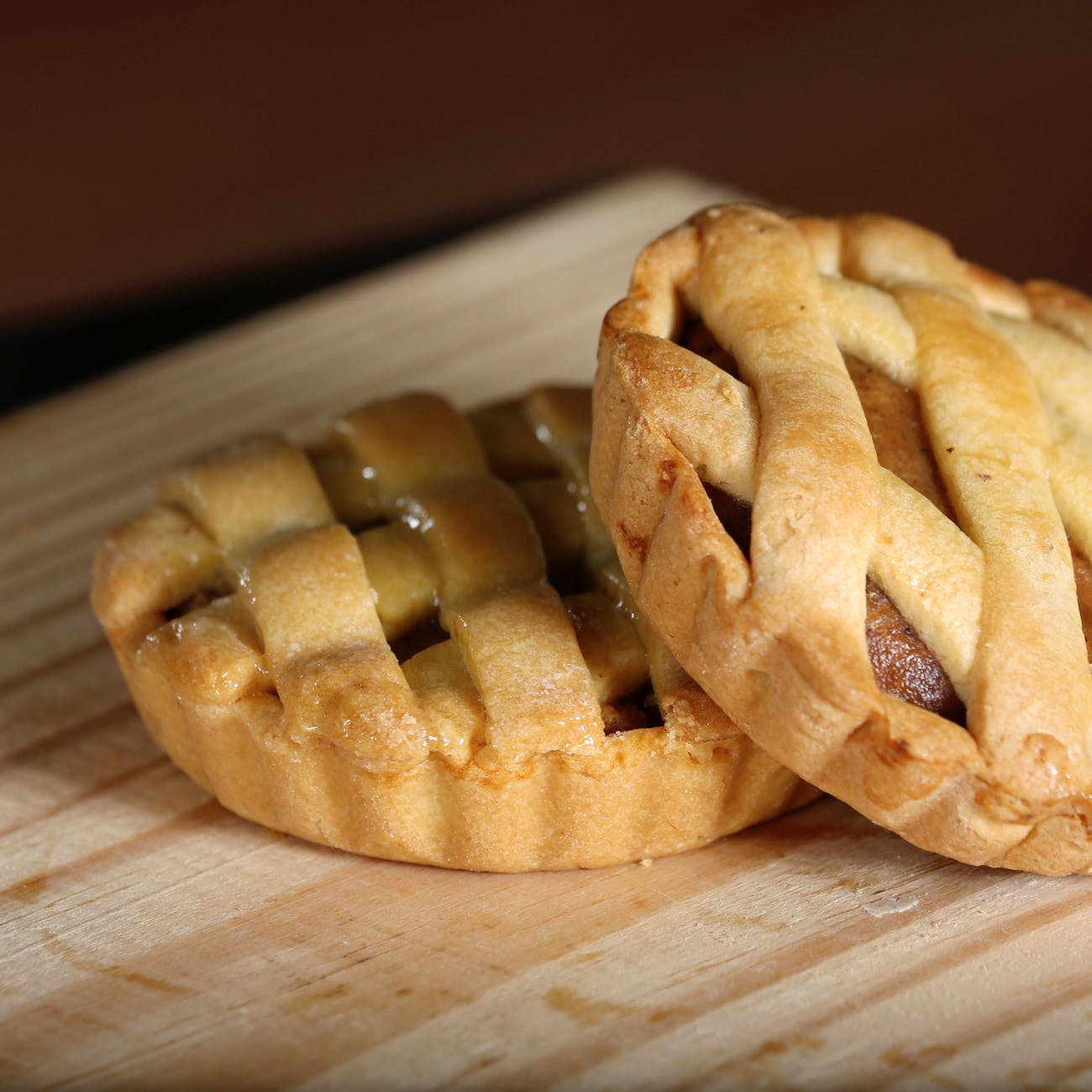
A close up of two beautifully baked tiny apple pies
Photo by Nishant Aneja on Pexels.com
Continue reading

Invention In The Kitchen- Mad Science At Work

The idea came simply and quietly at the usual time- when I was working on something entirely different.

One of our customers asked if we made any Handpies that could meet their lower-than-usual price point. They loved our pies- as did their customers- but the rising costs of ingredients meant that for a lot of our flavors they would have to charge more than they thought their customers would tolerate.

So rather than cut off the pies completely, they asked my owner- who in turn asked me- if we had any recipes that would 1. Be delicious, 2. Be popular with customers at a cafe, and 3. Wouldn’t use too much of our more expensive ingredients so they could be sold at the desired low point.

Necessity may be the mother of invention, but economics and desperation make fantastic midwives. As I went through our recipe books, checked with suppliers to see what ingredients cost what, and started spitballing ideas on our whiteboard (“Pineapple is cheap right now… a pineapple pie? What’s more expensive right now, berries or nuts? What can one person make quickly to reduce labor?”) three ideas from my past and present slammed into each other.

The father of invention had shown up, and it’s name was “Why Not?”

A pile of crispy brown nut filled pastries on a plate held aloft in a kitchen.
Behold- The Bachl-Amann!
Continue reading

My Quiet And Crusty Ministry

Thanksgiving in an American pie shop can best be described as the World Cup and the Super Bowl rolled up together- then stretched out over 21 days. Christmas, remarkably, tends to be less busy, but only slightly. I had to let my writing work slide for a couple weeks there because all my energy was being spent in the shop- physically, mentally, and emotionally.

The experience is always a trying one- I’m not complaining about that. My team and I handled it well, pulling off over 2000 pies in about a week. What it can mean, however, is exhaustion leading to strained nerves and losing sight of why the work we do is important. Not just to the world at large, but to ourselves personally.

You can’t blame a guy for not seeing the glory in the 500th pumpkin pie he’s made in a week, after all.

It’s almost providential then that, just before Thanksgiving, I rediscovered an important insight: “I chose this. I chose baking. I chose love. This is my calling.” Not many of us can say we work at our calling… but how many can also say their day job is their spiritual practice?

Continue reading

Cooking Like Yourself

You might think it’s odd for a baker to go out and find other bakeries on their day off. I bake all the time, and surely I can make anything I want at home for a fraction of the price. Why should I go check out other bakeries in the city?

You might as well wonder why musicians go to other peoples concerts. Baking is my skillset and profession, and I definitely make a commodity, but it’s also a craft- and I like seeing how others practice it.

The same as there are different genres of music or literature, there are different cuisines. Within those genres, everyone has their own style. A way they practice their art that’s all their own, or a kind of art that they just vibe with and respond to.

There’s lots of ways to do this cooking thing, after all.

Animated GIF of The Stranger from The Big Lebowski sipping his drink and saying “I Like Your Style, Dude.”
I can’t tell you how long I’ve been waiting to make another Big Lebowski reference.
Continue reading

“Whose Idea Was This?”- Looking At Vintage Recipes and Food History

Like most of the internet, I’ve gotten a real kick out of the Tik Tok videos of Dylan Hollis. The vintage style aficionado and self-described amateur food historian has carved a space for himself on the internet with his bombastic personality and humor while testing out recipes spanning the 1800s to early 2000s.

The recipes he tries vary wildly in quality, and the recurrence of typically timely ingredients (especially lard and gelatin) regularly turn into comedic gold. More than once, Dylan strikes oil in his search for tasty recipes (“magic” peanut butter cookies and an eggnog recipe from the 1800s spring quickly to mind) and I sometimes use his videos as inspiration for things I can make at the pie shop.

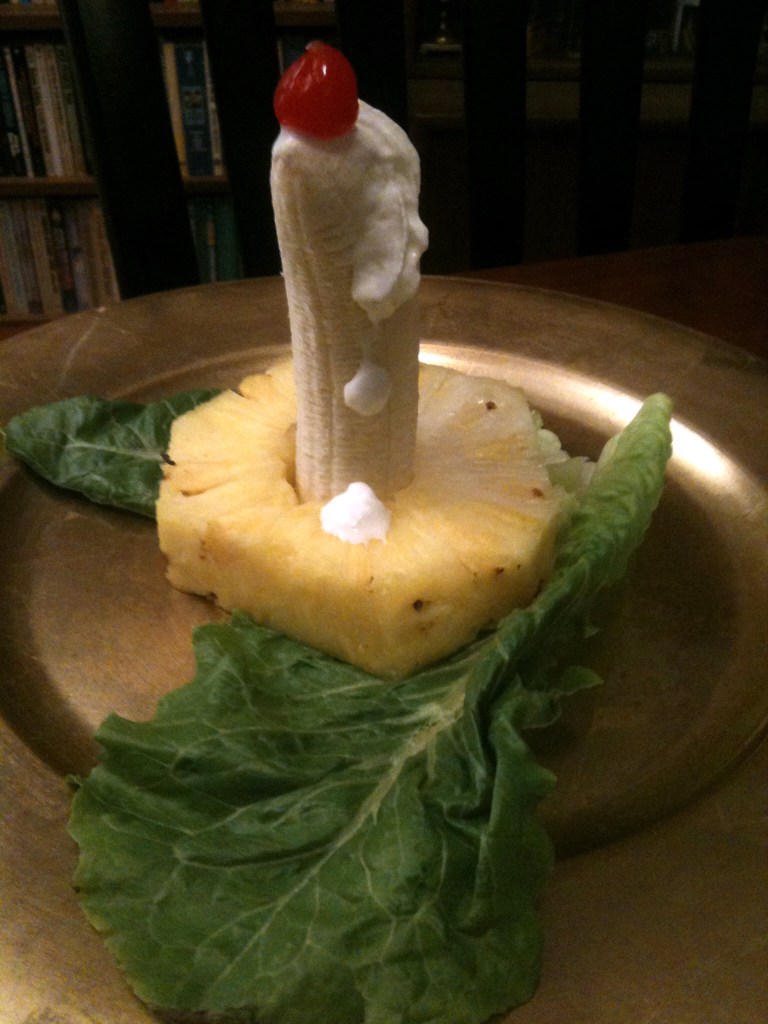
Most often, I find myself intrigued by the recipes he picks and the trends they exhibit. WHY so much lard in everything made before the 60s? Why so much gelatin in mid-century America? Just HOW freaking high, lonely, horny, or all three must someone have been to create the “Candlelight Salad?”

The answer is, simply, that these recipes- like the books, movies, and music that were enjoyed then- are products of their time. Foodways are a part of culture and one can track the history and trends of a period of time as easily in a cookbook as you could a textbook.

Someone back in the 1920s decided that this was a salad. James Beard described it as “culinary eroticism.”
Picture from Wikipedia.
Continue reading