What Does Quentin Crisp Know About Cooking?- Fashion Vs. Style in the Food World

I am not now, nor would I have ever called myself at any point in my life, fashionable. Not even in college when I started wearing those enormous pants with all the unnecessary straps and half-heartedly dyed my hair blue.

I might have been trend-chasing, and I’m sure I thought I was cool at the time, but I was never fashionable- and likely never will be as I slouch gracefully toward early middle age.

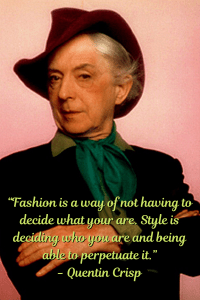
Instead, when people see the effort I do put into looking put together, they say I’m “stylish.” That is a lesson I learned from Quentin Crisp, and I think we as an industry will be happier when we learn to apply it to our food.

Color photo of Quentin Crisp with the text “Fashion is a way of not having to decide what you are. Style is deciding who you are and being able to perrpetuate it.”
Quentin Crisp pulled off a scarf and eyeliner way better than I pulled off those pants from Hot Topic.
Continue reading

Learning to Lead by Letting Go

Managing is a full-time job in itself, and going from being a cook or baker to a managing is more than a promotion. It’s a shift in mentality. After years of needing to be “hands-on,” I will no longer have the time, energy or focus to give every task personal attention. Ironically, one of the hardest lessons I will have to learn as a chef is how not to be in control.

"Leadership" written in chalk on a black background.
Photo by Anna Tarazevich on Pexels.com
Continue reading

What I Talk About When I Talk About Flavor

“Look, I’m just saying it’s missing something. I don’t know what, but it needs something else.”

The conversation next to my bench had been going on for close to 20 minutes. Our manager had just tried a spoonful of soup that we were going to selling tomorrow. It was a spicy African Peanut soup- dried ancho peppers had been infusing the pot with a smoky flavor, carried on the fat of the peanut butter and oil the veggies had been fried in. There was a suggestion for salt, but the recipe already had a lot.

Black pepper, sage, garlic, more cayenne, it went round and round. The owner looked over the pot and called me over. “Matt, taste this- what do you think it needs?”

I grabbed a spoon and took a taste. Smoke, peanut, and fried veggies washed over my tongue… but no heat. The heat from the anchos needed something to cut through the fat. “It’s good, but dull… you need some kind of acid in there to carry the heat and brighten it up. Got some lemon juice?”

The hot pepper might give the soup bite, but acid gave it jaws to bite with. When you become a cook, you start learning a different vocabulary for flavor, which is itself the vocabulary of food.

Picture of someone in a striped sweater mixing paints on an artist’s pallet.
Continue reading

The Right Hand Man- How To Be A Good Sous Chef

You would think that “servant leadership” would be immediately applicable to modern kitchen life, but as a leadership ethos it has yet to see the predominance it deserves. It is not at odds with the traditional brigade system as Auguste Escoffier envisioned it- though it is certainly at odds with the bullying and barbarism that has come to be associated with being “classically trained.” Hardly a terrible thing, since that “tradition” is itself at odds with little things like “health and safety of the worker” and “being a fucking human.”

“Servant leadership” is, at its core, an ethos that changes leadership from “Do what I tell you” to “This is what needs to get done- what can I do to help you do it better?” If you would like a masterclass in what that mentality can and should be like, look no farther than the sous chef– the second-in-command of a kitchen, and the chef’s “right hand man.”

Continue reading

Snapshots of the Bakeshop V- “Last Man Standing”

It’s been ten months since my day job changed to answer COVID-19. The last time I wrote one of these, the “A-Team” was in charge. We ran our asses off for 12-hour days, making ends meet for the dawn of the apocalypse.

Ten months later, and they’re all gone. Quit from stress and depression, walked out in a huff, or simply went on leave and never really returned.

It’s a new team now. Eager, curious, capable… and as a Great Old Sage of an employee at two years, I’m doing my best to help them keep their hands on the wheel. I thought being the “Last Man Standing” would be a heady, affirmative feeling- “I’m finally indispensable. I’m the one that could hack it.”

Instead, I feel beaten. Beaten, tired, and sad. The “last man standing” is usually pretty lonely.

Photo by Samuel Silitonga on Pexels.com
Continue reading