“The devil whispered in my ear ‘You can’t withstand the storm.’ I whispered back, ‘Big talk from someone who lost their golden fiddle to some rando in Georgia.'”
A brief but loud storm blew through Portland this afternoon. It put the kibosh on my plans to head out and enjoy some beers and sandwiches this afternoon, but if I’m honest that’s alright. I’ve been pretty good with my spending lately, and I don’t want to mess it up over beer and sandwiches that I already know where to get separately. Besides, I’ve been treating myself well lately. A new weight vest for running, trying out a whiskey bar tucked away in a basement in Southeast, showing some of the guys in my run group a food pod they knew about but never visited, and fucking them up for life over a plate of chicken and fried potatoes. Next week, they say, will have to be the french fry truck. My body is ready. Indoctrinating new foodies and being a weird sort of “food concierge” for Portland is one of my favorite parts of going out, meeting people, and talking to strangers.
Tonight, though, I’m ready to take it easy, be still and quiet for a bit, and dive into my writing. I’m finally back to working on the book on training and mentorship that I’d shelved after getting a job that A. Required me to test everything I thought I knew about the topic and B. Eventually drained every speck of creative energy from my body like a copper heat sink. “I’m still learning!” I told myself, “I can’t finish the book yet!” My wife, ever the voice of reason, then pointed out that if it was true I couldn’t write a book until I had full, complete, and absolute knowledge on a subject, there would be no such thing as autobiographies.
As I sat down to write, I looked to my left and saw a little brass incense burner with a tiny cone of sage incense inside. Em and I had received it years ago as part of one of an “itty bitty boxes” of whatever that are sold in bookstores and gift shops. This one was a sage space cleansing kit- a cone of incense, a burner, a fake leather cord to bind some actual sage if you got it, and a book about how to smudge. I didn’t want to appropriate Native American practice, and Judaism has plenty of notions of cleansing, sanctification, and the use of incense. I realized that with this nice new desk, a storm outside, a quiet mood, and a little whiskey on hand, this was the perfect time to “cleanse” the desk and workspace and dedicate it to the craft of writing.
The incense didn’t last terribly long and smelled cheap, but I lit it, said a prayer in Hebrew I half-made up, and here I am writing a blog post. The smell of incense, ozone, whiskey, and my wife making cashew chicken wafts through the room, and everything feels calm and right.
Go far enough down a rabbit hole, and you’ll find more than Wonderland. No subject or history happens in a vacuum and, if you are curious enough, you’ll find links to people, moments, movements, and concepts you might not have thought possible.
I’m reading an oddly engaging book that is, ostensibly, about a famous sibling rivalry in Battle Creek, Michigan at the dawn of the 20th century. The book is also about American foodways of the time, the history of medicine, and the beliefs of various Christian sects in America- namely the Millerites, the Grahamites, and the Seventh-Day Adventists.
You might think that’s a little far afield for a book on sibling rivalry- until you realize that the brothers in question were Dr. John Harvey and Will Kellogg. Together, they created the “wellness” industry, pioneered the mass production of food… and so helped give 21st-century weirdos something else to obsess over.
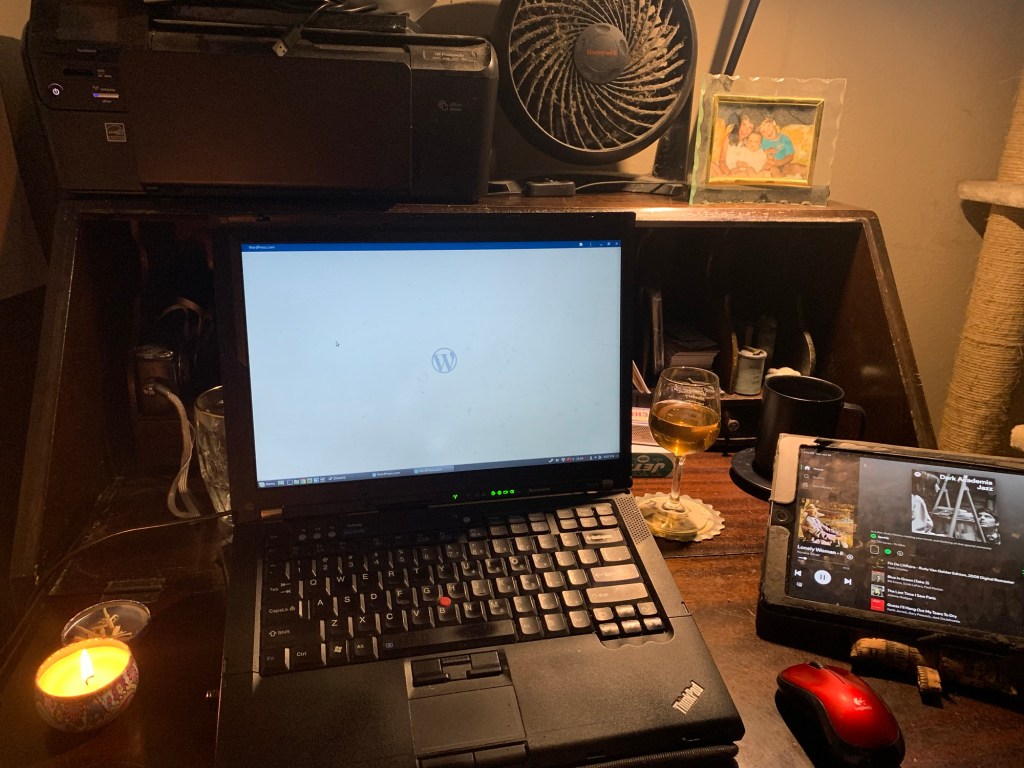
I’m writing this post while sitting at a beautiful new desk in the corner of my bedroom. It’s a 1940s Chippendale reproduction secretary desk- the kind that opens outward and contains cubbies, drawers, nooks, and secret compartments inside. It’s seen better days, but except for a little hardware and some polishing, the desk is in excellent condition.
It’s the kind of desk that fits my “dark academia hobbit” vibe perfectly. Sitting down at it just makes me want to write, and even better- I got it for free off of someone’s curb. It belonged to the original owner’s grandmother and it’s just “had its time with them.” They were glad it was being adopted by a writer though instead of winding up in a landfill.
I bring it up because, in the last week or so, various aspects of my life have turned for the better. I’m finally starting to lose weight again, my money management has improved so that I’m actually able to save again, and I’ve successfully pitched two new desserts at work in addition to getting a cost-of-living pay increase.
My dad would say “Don’t question it, just say thanks and carry on.” It’s a typically Jewish superstitious mindset- “When good things happen, don’t question it and don’t express too much happiness or it’ll all go away.” I catch myself in that all the time. I rarely say “everything’s great”- it’s always “I’m doing alright.” “Things could always be better” as a Jewish mental/emotional/spiritual/supernatural insurance against things getting worse.
I am starting to question and wonder about this, though, simply because this isn’t the first time it’s happened. A feeling of something “clicking” into place and unlocking a cosmic level-up. The best that I can tell, it’s because success cascades, and “winning” once can inspire you to succeed in other areas, consciously or not.
A better computer that can fit nicely inside with the front closed will be next, but you have to admit this is classy and cozy as hell.
Yesterday I was hurting for something to write about this week. It had been an exhausting week and there are always stand-by topics when it comes to food writing- exhaustion, mental health, how to not be a jerk when dining- the usual list. I’d covered most of these pretty well, though, so I wasn’t ready to cover old ground quite that churned up. I was about to head out for a walk when the following quote came across my social media: “You inherited more than generational trauma. Your ancestors also left you their wisdom and their strength.”‘
Given that I’m feeling very very Jewish at a moment when two entire cultures people have very recently had their generational traumas triggered at the same time by bad actors and pointed at each other (with a whole Western world primed to lay their own politics on the conflict no less,) the word “generational” leaves a strange feeling in the mouth. Whether regarding trauma or strength and wisdom, it comes packed with a lot of emotions that are best understood, managed, and then utilized- or dispensed with.
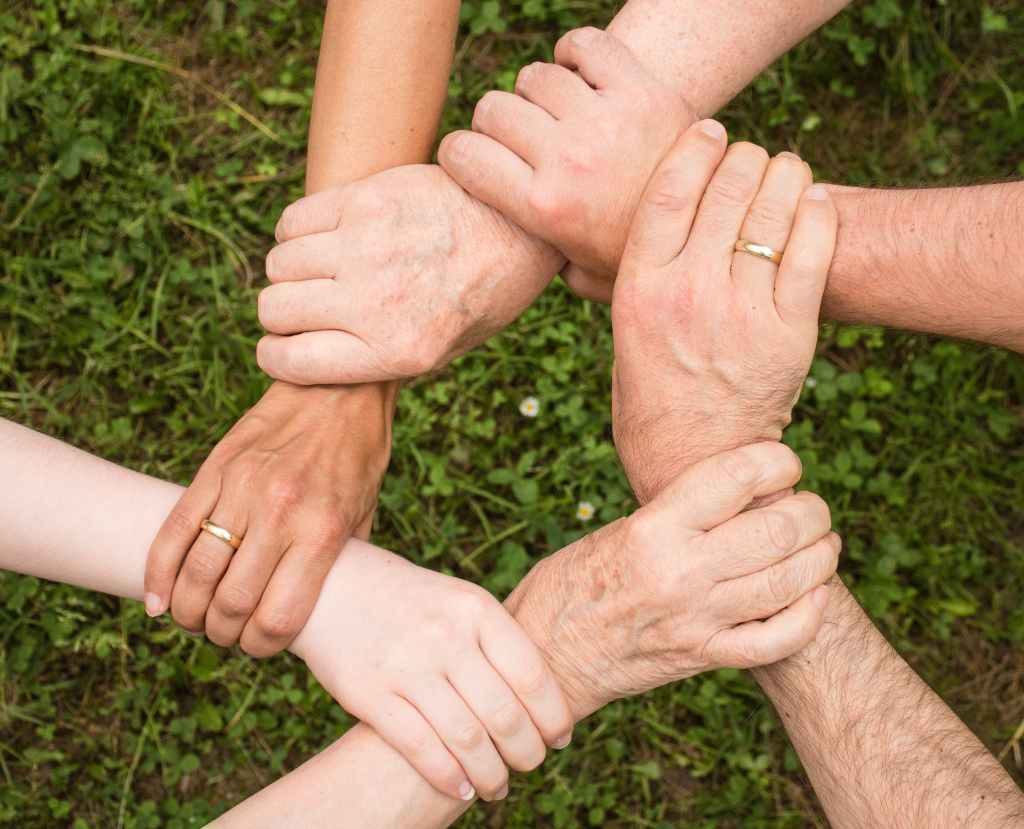
“L’dor v’Dor-” in Hebrew, “From generation to generation.” We keep living, we keep passing on what we are and what we learned, for good or ill.
I’ve written something about the specific nature of my Jewish upbringing in a fewblogposts. I don’t know that I always went into particulars, but “generational trauma” is something that Jews know a lot about and the lessons from it are some of the hardest, most spiteful lessons that we’ve had handed down. The kind that we describe to our Gentile friends with jokes like “Every Jewish holiday is based somehow on ‘They tried to kill us, we survived, let’s eat!” or “Why are Jews neurotic? It’s because we owe our survival to some of our ancestors waking up one morning and going, “the vibes are off- let’s get on a boat elsewhere right the fuck now.”
That’s dark humor right there. Combine that with some of the wisdom my grand-family handed down to me:
“Learn everything you can, Matt. Knowledge is something that can’t be taken away from you.”
“You‘ll always find bookstores in Jewish communities. Booksellers love Jews because we always have to remember the past.”
“Learn to be able to do a little of everything- you never know when it’ll come in handy.“
“You know your grandfather almost couldn’t practice medicine in this town because they wanted the town ‘Jew-Free,’ but they let him in because he was also a Freemason.”
Good advice for anyone, right? Then you read it again and you see the unspoken lesson- “Everything that we have can be taken away from us. We must never forget who we are and be ready to live wherever we go next.”
This all got ramped up to 11 after World War II when maintaining and rebuilding the community and Jewish identity became not just a necessity but (albeit understandably) a spite-driven burden to be explicitly handed down. I had female friends who were directly told that failing to find a Jewish husband and having lots of Jewish children would be “giving the Nazis a posthumous victory.” My previous blog post looked at this from a religious standpoint as spite is nothing to build a spiritual practice on, but from a cultural perspective this specific version of “never forget” became an obsession.
In my Jewish secondary schooling (which we called “Hebrew High,”) every year we’d be taught aspects of the culture and religion that were only touched on in the Jewish version of “Sunday school.” It almost became a joke that, every year, there’d be a class called “___ and the Holocaust.” “Art and the Holocaust.” “Music and the Holocaust.” “Film and the Holocaust.” “Holocaust Literature.”
A highly polished version of Israeli and Zionist history was included, of course. The timeline of those courses largely went “Dreyfus Affair, Herzl had a big brain idea, Britain was cool with it then wasn’t, America was okay about it, all the Arabs and Muslims hate us, but we fought them and won, still there now, so send money so we can plant more trees.” The division of the Middle East by the Entant after World War I was barely mentioned, nor was even the word “nakba.” The fact that Herzl was a bit of a classist with internalized antisemitism of his own, that Zionist philosophy has fractured 15 different ways since then, and that The Balfour Declaration was a (largely unsuccessful) ploy to get American Jews to pressure their government into joing the war were never mentioned at all.
As an aside, I’ve seriously had to unlearn more about Israel and Zionism than “activists” have picked up in hashtags and slogans since 10/7. If you don’t have skin in the game, your job is to listen- not lecture.
What does education like this create? What is being passed down “from generation to generation? The answer is a community held together by the holes poked in it. A religious and cultural community that keeps itself “strong,” but hypervigilant, spiteful, and scared. To quote Rabbi Zalman Schachter-Shalomi, when challenged by another rabbi in their discussions with the Dalai Lama that our insularity has made us strong- “There are terrible ways to be strong.”
“May Their Memory Be A Blessing”
When you are on the run, you learn to survive and pack light. You teach your children how to do the same. You teach them to do what you can with what you have, value knowledge and stories, and never forgetting who you are (because no matter what they say, the rest of the world will always remember.)
Persecution creates paranoia, and it creates ingenuity and resolve. Besides prizing knowledge and history, my parents and grandparents had more to say– about remembering that we had little, so when we have more we should give to those who don’t. Ashkenazic Jewish cooking itself is a story of Jews moving from place to place, making themselves a part of communities and learning how to enjoy the food as best they could.
We also learned that while the rest of the world marks Holocaust Rememberance Day from when the Allies liberated Aushwicz, in Judaism we mark it from the start of the Warsaw Uprising– when the Allies left us to our own devices and we as Jews fought back ourselves.
In Judaism, when we speak of someone who died, we don’t say “may they rest in peace.” We say “may their memory be for a blessing”- meaning that we should remember them when blessing the living. “You should be as strong as your Grandpa Larry.” “You should be the kind of woman your Bubba Mitzi was.” It’s one small way we pass more than pain l’dor v’dor- from generation to generation. We pass on gifts as well.
When and if I have children, though, I hope I live to have the presence of mind to pass the lessons on without the pain and spite, so they can enjoy the blessings more.
This week won’t be as heady or heavy as my previous posts have been. “It can’t rain all the time,” after all. Besides that, some version of whatever had Emily laid up for the last week or so has moved on to me. I don’t want to skip another week though, so instead I’m gonna pump myself full of DayQuil, chug broth, step back from the shitshow the world is being, and tell you about a project I’ve been working on and how you can get involved!




 The Black Hat Baker