It was the third time I’d made those damn tarts in a week. They were a fairly simple idea from my boss.
“Matt, what do think of offering seasonal upgrades on our holiday banquet menu? Like they can order your Chocolate Passionfruit Tartlets, but for a little more they could spring for some other more seasonal flavor?”
“Not a bad idea… what did you have in mind?”
“Hmm… how about apple? Just apple with some whipped cream and pecans? We can tweak the idea later- just spitballing right now.”
“Sure, I guess that’d work. I’ll figure out batching and stuff and we can discuss it.”
The next time it’s discussed looks like this:
“Hey Matt, we’re going to need about 20 dozen Roasted Apple Tarts for next week.”
“Um… since when? I don’t have a recipe or batching for that yet. Wait- did we already sell this?!”
“Just make a good apple filling and put it in some shells. We’ll figure out the rest later.”
In my world, “figuring out the rest later” means “throw together a basic recipe and, if you don’t have perfect math for everything yet, do the recipe as many times as it takes and keep notes.” It practically wipes out the point of production baking- doing one big batch only a few times, storing it, and pulling as needed- because I have only guesswork to go on. “This should make about this many, and we should be able to freeze leftovers for later…”
That’s a lot of “shoulds” and “abouts,” and if they are wrong suddenly I am remaking the product under more pressure. More pressure means more hurry, and more hurry means more mistakes. Haste makes waste.
The pastry chef in me sees this for what it is- a waste of time and a waste of resources spent on what comes down to the impatience and lack of communication that, alas, comes from working under others. That part of me also eventually says, “Fine. You want basic, you get basic.”
The good news is that basic by no means means “bad” if you know what you’re doing.

The biggest benefit to working under others- especially in corporate-owned but ritzy businesses like the winery- is that you have the latitude to get high quality ingredients. No Sysco bullshit and very little pre-packaged nonsense until the chefs involved agree that labor savings are worth it. I’m not clutching my metaphorical pearls over these mini tart shells coming from a box- I have shit to do today.
That means that when I need to make “basic apple pie filling,” I’m not opening a can of pre-made crap, or even thawing out a 30-pound box of frozen apple slices. What I’m doing is picking apples we bought from a local orchard, choosing a mix for color, flavor, and texture (I generally opt for a mix of Granny Smith, Gala, Pink Lady, and Fuji), peeling and dicing them the most efficient way I know, and making the filling based on a ratio I know by heart.
Would I have liked time to come up with something fancier? Sure. I might have liked to drop some brandy or whiskey in there, or tweak the apple mix to make the perfect tart filling. I could have even worked in some caramelization to make it reminiscent of a Tarte Tatin– before we started selling the damn things and the price point and expectations were functionally fixed.
Those may have been great, but this is good, and my biggest gripe will be working out the batch and scaling math over a couple tries. The ingredients are Good. The ratio is Good. The skills and people making it are Good. Therefore, this will also be good.
It’s definitely a situation where resentment can set in, if I’m honest. I could legitimately feel choked off from the opportunity to make something great or at least better than the basic because of haste and poor communication.
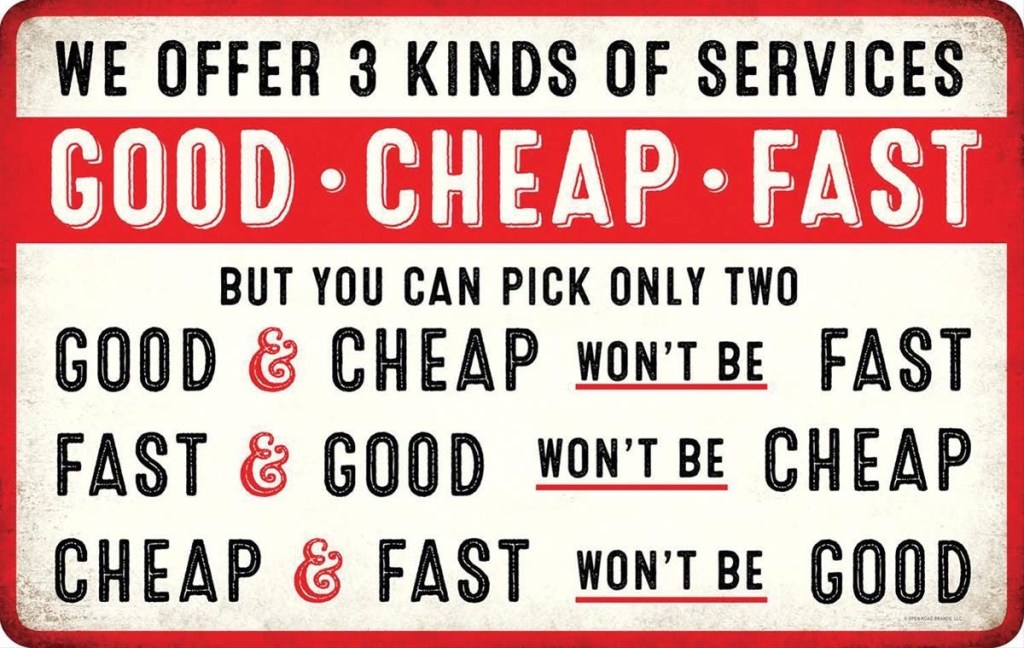
That’s ego talking though. The bosses de facto asked for basic, and I delivered the best basic possible. That had to be enough, and a craftsman should take joy in practicing that craft well and take it seriously- regardless of what they’re making.
So swallow the ego, lock in, look closer…
The apples are good. For what this tart is, I need to mince the apples fine. I could absolutely hand-dice it… but a food processor will render the result I need if used carefully.
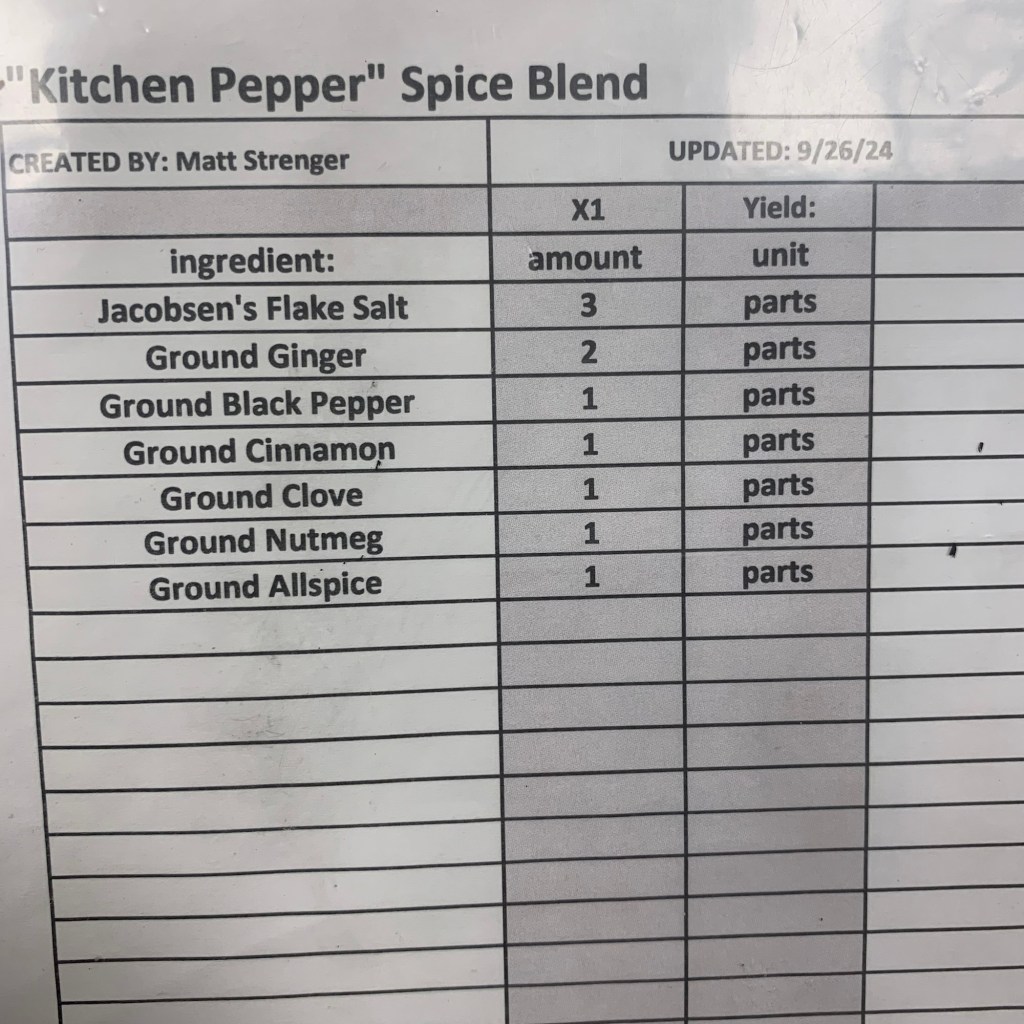
The spices will need to stand out since it’s just whipped cream and some candied pecans going on top. I’ve got a Kitchen Pepper blend that will fit the bill wonderfully.
The ratio still held true… all I needed to be concerned with was the batching. That’ll be frustrating and take time, but I can take notes and adjust. “Figuring out the rest later.”
The old wisdom “you get what you pay for” doesn’t just apply to selling crap retail, but I can promise you I’ll still make the best “crap” I can.
Stay Classy,

 The Black Hat Baker